I think that one of the things that's hardest for me to work out as we homeschool is: how much work will fit in a day? I spent a fair amount of time trying to figure this out over Christmas break as I worked up our new schedules. It's an important question: Hero is getting to the point where I need to start helping him to develop the skills to organize himself; he needs to start being a touch more independent about his school work.
But before I can hand him a schedule, I have to make one.

Showing posts with label planning. Show all posts
Showing posts with label planning. Show all posts
06 January 2019
20 July 2018
Hymns for 2018-2019


We'll be continuing to use the By Study and Faith hymn rotation this year, and one of the things I always find useful is to have a playlist. I try to have at least a couple days where we sit down at the piano and work on explicitly learning the words, but a lot of our hymn learning is informal, just listening to the playlist, and as we go along, I try to keep the current hymn right at the top of the list, so that when we turn it on, and we're paying the most attention, it's the new song that we're currently working on. This doesn't get us to a place where we all know 100% of the words 100% of the time, but it does get must of us to knowing most of the words. And my kids will sing their old hymns off and on, and that's success to me.
When I make these playlists, I do have some ideas in mind for how I'm choosing which videos go in my playlist. One thing you'll notice is that I avoid the Mormon Tabernacle Choir: I'm a bit of an aberration, I guess, because I just don't love the Choir. But also, I want the music to encourage my kids to feel comfortable with making their own music, and not being hung up on it being "perfect", so I make a point of including a good collection of home-grown videos when I can find ones that I enjoy listening to. I also enjoy folk instruments. Not only do I like that style, but my kids are learning violin, including folk songs, and I want them to look at the music and think, "I could learn to do that" so that they see themselves as potentially being the artist: it's too easy to leave music making to "professionals" and fall into the trap of not realizing that professional musicians are as retouched as professional models are Photoshopped, and try to hold yourself to an impossible standard that they used computers to retouch and remix and play with. There's a place for that music; much of it is extremely lovely. But I want my kids to know that regular music played by regular people is also good, so I include them when I can.
So here's my playlist for the year:

When I make these playlists, I do have some ideas in mind for how I'm choosing which videos go in my playlist. One thing you'll notice is that I avoid the Mormon Tabernacle Choir: I'm a bit of an aberration, I guess, because I just don't love the Choir. But also, I want the music to encourage my kids to feel comfortable with making their own music, and not being hung up on it being "perfect", so I make a point of including a good collection of home-grown videos when I can find ones that I enjoy listening to. I also enjoy folk instruments. Not only do I like that style, but my kids are learning violin, including folk songs, and I want them to look at the music and think, "I could learn to do that" so that they see themselves as potentially being the artist: it's too easy to leave music making to "professionals" and fall into the trap of not realizing that professional musicians are as retouched as professional models are Photoshopped, and try to hold yourself to an impossible standard that they used computers to retouch and remix and play with. There's a place for that music; much of it is extremely lovely. But I want my kids to know that regular music played by regular people is also good, so I include them when I can.
So here's my playlist for the year:
09 December 2017
A Bullet Journal For the Homeschool Mom
I've been getting a lot of questions about my bullet journal lately. A bujo is amazing -- but I decided at the outset that I can't have the kind that is secretly an art journal, like what you see on Pinterest and Instasgram: I need mine to be functional. First and foremost, it's my planner. But it's also that notebook that everyone says you ought to keep to keep track of things, write down ideas as they come, and track All The Things. They're right. But nobody sells a planner that does all the things I need it to do. Happily, a bujo is what I need -- and if my needs change and the thing that worked last month falls on its face this month... I build next month differently. It's responsive: as my planning needs evolve, so does my planner.

 I got started because I had a blessing a number of years ago that said I needed to learn to be a "master of time management". It's truly a case of the Lord taking weak things and making them strong: I used to double book routinely, and I've been known to triple book myself. The most laughable example was that time I had my visiting teachers AND a thing I no longer remember happening at the same time as a piano lesson. A lesson I taught at the same time every week. It was pretty embarrassing. It was very me.
I tried using my phone's calendar, but hated it. And I forgot to put things in it. And frequently neglected to look at it.
It was not effective.
A bujo, built in a $.50 notebook is.
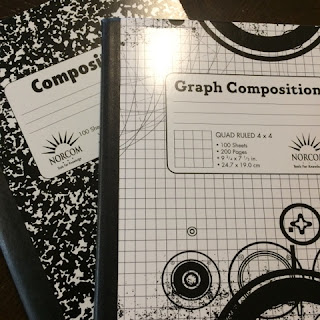
I cover it with scrapbook paper and contact paper because that makes it tough -- my scripture journal has been drug around to church and back and wherever else since 2013, and it's still going strong, so I knew a composition book could take the kind of beating a planner has to be able to stand up to.
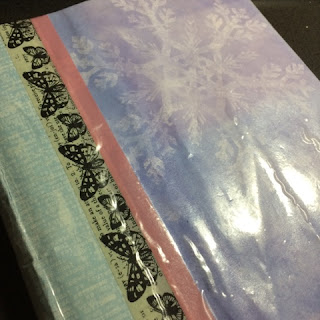
 This year, I found a notebook with graph paper. It rocks. I didn't buy enough; if my book gets full I may have to do something crazy and order one from Amazon or something, but it's totally be worth it, even if it costs more than the back to school sales I usually get my notebooks at. (It better last; the ones on Amazon are stupid expensive compared to the August sales!) Anyway. Get a graph paper composition book; you won't be sorry!
My bujo started out as a place to track my goals, and my long-term learning efforts, especially for Japanese. I actually didn't build the calendars right away; it was goal tracking I cared about first. A year later, the way I do it has evolved, but goals and long-term projects are still a huge part of my notebook. The instructional video for how to do a bullet journal says to set up your calendars first, but I don't follow directions well... I started out with what interested me: the "collections" or goal trackers.
It works great for that kind of thing: of the 14 goals that I listed a year ago, I've made satisfactory progress on most of them, and a several are completed. There are a couple of them that I gradually dropped: 14 is really quite a few, which I knew at the time that I made them. But I never have been good at moderation in the things I want to accomplish. I always bite off more than I can chew... but in attempting to do something huge, I usually end up actually accomplishing something satisfactory.

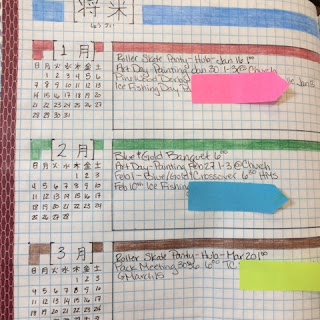
The monthly calendar is quick to build because it isn't anything fancy. When I did it in the notebook with lines I did it as a list; in my graphpaper notebook that doesn't work well, so I switched to a regular calendar format. Either way, I end up with a two pages, and room around the edges for notes. Space to jot notes has become a thing that I plan into my bujo in a couple of places. It would be nice to have a premade calendar, but this is almost the only page that it would work to do that, and so it's worth it to build these. It really doesn't take that long: probably about 10 minutes per month. For things further out than that, I have what's called a "Future Log" to keep track of them. There's not actually that much that gets scheduled that far out: dental cleanings, and Dragon's Tiger Scouts people had the whole year mostly planned out, a handful of things for our homeschool group... usually months will have 3-4 items on them when I go to put them on the bigger calendar, so you can get a lot of months on a page.
 Originally, I used a daily to-do list, and didn't build a weekly spread. But I found that daily lists meant that I was moving a lot of things to a new list a lot of days: although it worked better than the nothing I'd had previously, it wasn't efficient. However, I have tons of things I want to accomplish each week, but I just slide them in
the cracks where they fit, and that's hard to plan out super
specifically. However, the list helps make it happen more often. So I
didn't want to just drop the daily list, like this one from last year. Not entirely, anyway.
Originally, I used a daily to-do list, and didn't build a weekly spread. But I found that daily lists meant that I was moving a lot of things to a new list a lot of days: although it worked better than the nothing I'd had previously, it wasn't efficient. However, I have tons of things I want to accomplish each week, but I just slide them in
the cracks where they fit, and that's hard to plan out super
specifically. However, the list helps make it happen more often. So I
didn't want to just drop the daily list, like this one from last year. Not entirely, anyway.
So instead of a new to-do list every day, I've moved to a 2-page weekly spread that basically minds all my things that I want to accomplish in the week: appointments, things with deadlines, ongoing projects, lesson plans, daily chores, and space for notes. There's almost always some kind of notes that go with the week's events. I do the days of the week in Japanese, which has helped me to finally get comfortable using those. As I've figured out the vocabulary, some of my list headings are usually in Japanese, too: familiarity breeds fluency, and there's nothing like writing it out every week to make it familiar!

The main section on the first page is the weekly calendar: on the right, there's a list of appointments, with times and typically places. On the left is the to-dos that have a specific deadline: things that MUST be done by a certain time or on a certain day. This one (still only partly filled out) is for next week. I've already added a dentist visit, and I still need to look at the monthly calendar to see what else needs to be on here.

 Below that is my daily habits chart. I took the Sweep & Smile course that Mystie Winkler offers. (Totally worth the price, btw.) The best parts of that course are where she talks about the purpose of homemaking, and connects our work at home to our service to the Lord. But the most practical bits were the parts where she helped us to set up routines to get things done. It's been totally revolutionary: I actually kind of feel on top of my house from time to time now. Sometimes. (As opposed to always drowning.) That's partly attitude shift, but partly it's new skills. And I track and maintain those skills in this section. I also mind some of my self-care and my martial arts practice here.
Can I just say how much I enjoy coloring in those boxes? I keep the book open in my kitchen, next to a bag of colored pencils. I switch colors nearly every box. The more I do, the happier my page looks. I love coloring boxes; I will write things down after they're done just so I can color a box. It's ok to chuckle; I do. But it works.
 Next to my routine tracker, I track the ongoing study projects: I decide (kind of realistically) how much I think that I can do this week, and draw some boxes. Usually I have leftover ones, but typically over a couple of weeks everything gets at least a little bit of attention. Which is how I did so well on this year's Resolutions: small measurable goals, monitored regularly. And boxes that I love to color in.
It was 6 or 8 months from when I started using a bujo before it occurred to me to put my lesson plans in my notebook. I had them on my computer before, and it was an ok system, but it's hard to have them there, because then when a kid is on my computer (a couple of Hero's books are online etxts of classics that are out of copyright) I can't check on my plans and get the next thing ready. Now that Miss Kitty is starting to do a little bit of school, I find that I have to be much more efficient: I needed my plans more where I can get them when I need them. They are *much* more accessible in my notebook than they are on my computer. And in doing them, I needed a week-at-a-glance schedule because I have a plan for the week, but we don't do the same thing every day, and we don't hit everything every week. I asked the ladies of the Ambleside Online facebook group how they plan, they kindly showed me, and that's when things started to click for me with scheduling school in my notebook.
First, I make a grid for each of the kids that shows what books they're reading and what sections they should be doing each week. Hero's is pretty busy; Miss Kitty's is super simple. Dragon has one, too. Each one is customized to what that kid is studying. Subjects that are just "do what's next" kinds of things just get listed at the bottom, which helps me remember them when I make my weekly schedule of boxes to color.

In theory we do school six weeks on one week off year round. In reality, it often takes us 7 or even 8 weeks to work through my six week plan. This happens for a number of reasons: I'm an over-planner, perpetually optimistic about what we can accomplish. Inevitably something comes up (today we had cousins in town from Colorado unexpectedly). Life happens. The great thing is, I just cross off what we do, and pick up where we left off the next time. It works out great. We have certain things that are daily no matter what; the stuff on my schedule is kind of looped: we finish one week before doing much in the next one. I've got some larger-scale planning here on the blog that I refer to when I'm making this chart; I also use the Ambleside Online schedules when I make these. Not only are the book selections at Ambleside excellent, but they also have a very realistic sense of what can actually be done in a week, which is super helpful.
 I've also got a page that's supposed to help me do our drills for Japanese. In reality, this system needs tweaking still: I've got a breakdown between the planning and the actually doing it. But even with that issue, having it planned out means that I'm getting it done occasionally, which is more than we were doing before. More would be better; some is good.
Once I've got my 6 week schedule, it's time to make a weekly schedule. This means that I count up how many days I think it's going to take to do each thing, and draw a box for each one of them. Math and violin get 5 boxes each: they're done every day. The kids get some kind of writing every day, but it varies: Hero can expect to split his days between grammar work, spelling lessons, and written narrations -- sometimes more than one category in a day. Dragon's load is a little lighter: he's not doing written narrations yet, but he does copy work most days. Some readings we do only once a week. Plutarch and Shakespeare are actually looped, so we'll do several weeks of the one, then switch and do the other for a while.

When I put things on the schedule, I have three sections: one for each kid and one for the things we all do together. As always, because I'm a chronic overscheduler, there are going to be empty boxes at the end of the week. But because I cross things off the six week chart, the things that get missed in one week get hit another week. It's rare for something to be dropped altogether. I've developed a feel for how many boxes we should have colored in at any given point in the week, so I can monitor how much we're doing at a glance, and having the other chart keeps us on track over the long haul, so although they look a little bit duplicative, they're not really. I use washi tape between the lines because it makes a sharp distinction between the sets of work, and because it's pretty. Also it's fast and easy to put on.
 Under my lesson plans, I've got a block for taking notes: addresses for places we need to go, things I want to remember, stuff I want to ask somebody... all kinds of stuff ends up there. And next to that is my week's to-do list. I love the Japanese phrase for this: "things I want to do". That about sums it up perfectly. These are things that I'd like to accomplish or that I need to accomplish, but that don't have a particular deadline. If I want to work on a thing more than once, it gets a second box. This week was pretty typical: there were several boxes that didn't get colored. A half-colored box means that I worked on it, but it's not done.
At the end of each week, I build the next week's page. Takes about 20 minutes, but it's such an amazing tool for keeping things humming all week that it's totally worth the time. The boxes for lesson plans tend to be the last thing added, but I hate facing Monday morning without them, so I work hard to make sure they're ready to go before I sleep Sunday night.
 There's other stuff I do in my book, too. This will be the second year that I've done a list for Christmas cards. It is currently telling me that I need to get hopping. But it's set up so that I can mark each family as we write the card and again when it's actually mailed. That was so nice to be able to check on last year.
There's a page for menu planning. Which takes the thinking right out of it, and I can make a menu so much faster now (and without feeling the need to whine on Facebook!). Getting the menu made quickly and painlessly is good!
 The menu maker is stratigically located at the front of the notebook, as is my birthday calendar. This calendar was one place where I allowed myself to get a little arty. It's based on this layout I found on Pinterest. Making it arty makes it nice to look at, which makes me more likely to use it... and I've actually been kind of successful at calling people and telling them happy birthday since I made it! That's huge. It's another thing that I'm not at all good at doing, but I think the tool will help me be better at connecting with my family on their day.
 I've also used the notebook for taking notes at my little kids' violin lessons. Hero doesn't need that kind of support as much anymore, as he's moving nicely toward more independence in a number of areas, but for my younger kids, it was really nice to have notes on what their teacher had said. We're between teachers right now, which makes those notes especially important, as she gave them some things to work on until we find a new teacher.
I've planned out special projects in the planner as well. This page is one I did when I wanted to make pegdolls for A Winter's Tale, which was our most recent Shakespeare play.

This style of tracker I've somewhat moved away from, because my weekly page has taken it all in, but for much of this past year, these were the backbone of my progress: a list of things I want to do, with days across the top, and color in the boxes on the days when I get it done.

Hopefully peeking into my book is helpful to you. A bullet journal is a fantastic system. Good luck building one that will work for you!
 I got started because I had a blessing a number of years ago that said I needed to learn to be a "master of time management". It's truly a case of the Lord taking weak things and making them strong: I used to double book routinely, and I've been known to triple book myself. The most laughable example was that time I had my visiting teachers AND a thing I no longer remember happening at the same time as a piano lesson. A lesson I taught at the same time every week. It was pretty embarrassing. It was very me.
I tried using my phone's calendar, but hated it. And I forgot to put things in it. And frequently neglected to look at it.
It was not effective.
A bujo, built in a $.50 notebook is.

I cover it with scrapbook paper and contact paper because that makes it tough -- my scripture journal has been drug around to church and back and wherever else since 2013, and it's still going strong, so I knew a composition book could take the kind of beating a planner has to be able to stand up to.

 This year, I found a notebook with graph paper. It rocks. I didn't buy enough; if my book gets full I may have to do something crazy and order one from Amazon or something, but it's totally be worth it, even if it costs more than the back to school sales I usually get my notebooks at. (It better last; the ones on Amazon are stupid expensive compared to the August sales!) Anyway. Get a graph paper composition book; you won't be sorry!
My bujo started out as a place to track my goals, and my long-term learning efforts, especially for Japanese. I actually didn't build the calendars right away; it was goal tracking I cared about first. A year later, the way I do it has evolved, but goals and long-term projects are still a huge part of my notebook. The instructional video for how to do a bullet journal says to set up your calendars first, but I don't follow directions well... I started out with what interested me: the "collections" or goal trackers.
It works great for that kind of thing: of the 14 goals that I listed a year ago, I've made satisfactory progress on most of them, and a several are completed. There are a couple of them that I gradually dropped: 14 is really quite a few, which I knew at the time that I made them. But I never have been good at moderation in the things I want to accomplish. I always bite off more than I can chew... but in attempting to do something huge, I usually end up actually accomplishing something satisfactory.
Don't tell me the sky's the limit when
there are footprints on the moon.
-Unknown

The monthly calendar is quick to build because it isn't anything fancy. When I did it in the notebook with lines I did it as a list; in my graphpaper notebook that doesn't work well, so I switched to a regular calendar format. Either way, I end up with a two pages, and room around the edges for notes. Space to jot notes has become a thing that I plan into my bujo in a couple of places. It would be nice to have a premade calendar, but this is almost the only page that it would work to do that, and so it's worth it to build these. It really doesn't take that long: probably about 10 minutes per month. For things further out than that, I have what's called a "Future Log" to keep track of them. There's not actually that much that gets scheduled that far out: dental cleanings, and Dragon's Tiger Scouts people had the whole year mostly planned out, a handful of things for our homeschool group... usually months will have 3-4 items on them when I go to put them on the bigger calendar, so you can get a lot of months on a page.

 Originally, I used a daily to-do list, and didn't build a weekly spread. But I found that daily lists meant that I was moving a lot of things to a new list a lot of days: although it worked better than the nothing I'd had previously, it wasn't efficient. However, I have tons of things I want to accomplish each week, but I just slide them in
the cracks where they fit, and that's hard to plan out super
specifically. However, the list helps make it happen more often. So I
didn't want to just drop the daily list, like this one from last year. Not entirely, anyway.
Originally, I used a daily to-do list, and didn't build a weekly spread. But I found that daily lists meant that I was moving a lot of things to a new list a lot of days: although it worked better than the nothing I'd had previously, it wasn't efficient. However, I have tons of things I want to accomplish each week, but I just slide them in
the cracks where they fit, and that's hard to plan out super
specifically. However, the list helps make it happen more often. So I
didn't want to just drop the daily list, like this one from last year. Not entirely, anyway.So instead of a new to-do list every day, I've moved to a 2-page weekly spread that basically minds all my things that I want to accomplish in the week: appointments, things with deadlines, ongoing projects, lesson plans, daily chores, and space for notes. There's almost always some kind of notes that go with the week's events. I do the days of the week in Japanese, which has helped me to finally get comfortable using those. As I've figured out the vocabulary, some of my list headings are usually in Japanese, too: familiarity breeds fluency, and there's nothing like writing it out every week to make it familiar!
The main section on the first page is the weekly calendar: on the right, there's a list of appointments, with times and typically places. On the left is the to-dos that have a specific deadline: things that MUST be done by a certain time or on a certain day. This one (still only partly filled out) is for next week. I've already added a dentist visit, and I still need to look at the monthly calendar to see what else needs to be on here.

 Below that is my daily habits chart. I took the Sweep & Smile course that Mystie Winkler offers. (Totally worth the price, btw.) The best parts of that course are where she talks about the purpose of homemaking, and connects our work at home to our service to the Lord. But the most practical bits were the parts where she helped us to set up routines to get things done. It's been totally revolutionary: I actually kind of feel on top of my house from time to time now. Sometimes. (As opposed to always drowning.) That's partly attitude shift, but partly it's new skills. And I track and maintain those skills in this section. I also mind some of my self-care and my martial arts practice here.
Can I just say how much I enjoy coloring in those boxes? I keep the book open in my kitchen, next to a bag of colored pencils. I switch colors nearly every box. The more I do, the happier my page looks. I love coloring boxes; I will write things down after they're done just so I can color a box. It's ok to chuckle; I do. But it works.
 Next to my routine tracker, I track the ongoing study projects: I decide (kind of realistically) how much I think that I can do this week, and draw some boxes. Usually I have leftover ones, but typically over a couple of weeks everything gets at least a little bit of attention. Which is how I did so well on this year's Resolutions: small measurable goals, monitored regularly. And boxes that I love to color in.
It was 6 or 8 months from when I started using a bujo before it occurred to me to put my lesson plans in my notebook. I had them on my computer before, and it was an ok system, but it's hard to have them there, because then when a kid is on my computer (a couple of Hero's books are online etxts of classics that are out of copyright) I can't check on my plans and get the next thing ready. Now that Miss Kitty is starting to do a little bit of school, I find that I have to be much more efficient: I needed my plans more where I can get them when I need them. They are *much* more accessible in my notebook than they are on my computer. And in doing them, I needed a week-at-a-glance schedule because I have a plan for the week, but we don't do the same thing every day, and we don't hit everything every week. I asked the ladies of the Ambleside Online facebook group how they plan, they kindly showed me, and that's when things started to click for me with scheduling school in my notebook.
First, I make a grid for each of the kids that shows what books they're reading and what sections they should be doing each week. Hero's is pretty busy; Miss Kitty's is super simple. Dragon has one, too. Each one is customized to what that kid is studying. Subjects that are just "do what's next" kinds of things just get listed at the bottom, which helps me remember them when I make my weekly schedule of boxes to color.

In theory we do school six weeks on one week off year round. In reality, it often takes us 7 or even 8 weeks to work through my six week plan. This happens for a number of reasons: I'm an over-planner, perpetually optimistic about what we can accomplish. Inevitably something comes up (today we had cousins in town from Colorado unexpectedly). Life happens. The great thing is, I just cross off what we do, and pick up where we left off the next time. It works out great. We have certain things that are daily no matter what; the stuff on my schedule is kind of looped: we finish one week before doing much in the next one. I've got some larger-scale planning here on the blog that I refer to when I'm making this chart; I also use the Ambleside Online schedules when I make these. Not only are the book selections at Ambleside excellent, but they also have a very realistic sense of what can actually be done in a week, which is super helpful.
 I've also got a page that's supposed to help me do our drills for Japanese. In reality, this system needs tweaking still: I've got a breakdown between the planning and the actually doing it. But even with that issue, having it planned out means that I'm getting it done occasionally, which is more than we were doing before. More would be better; some is good.
Once I've got my 6 week schedule, it's time to make a weekly schedule. This means that I count up how many days I think it's going to take to do each thing, and draw a box for each one of them. Math and violin get 5 boxes each: they're done every day. The kids get some kind of writing every day, but it varies: Hero can expect to split his days between grammar work, spelling lessons, and written narrations -- sometimes more than one category in a day. Dragon's load is a little lighter: he's not doing written narrations yet, but he does copy work most days. Some readings we do only once a week. Plutarch and Shakespeare are actually looped, so we'll do several weeks of the one, then switch and do the other for a while.

When I put things on the schedule, I have three sections: one for each kid and one for the things we all do together. As always, because I'm a chronic overscheduler, there are going to be empty boxes at the end of the week. But because I cross things off the six week chart, the things that get missed in one week get hit another week. It's rare for something to be dropped altogether. I've developed a feel for how many boxes we should have colored in at any given point in the week, so I can monitor how much we're doing at a glance, and having the other chart keeps us on track over the long haul, so although they look a little bit duplicative, they're not really. I use washi tape between the lines because it makes a sharp distinction between the sets of work, and because it's pretty. Also it's fast and easy to put on.
 Under my lesson plans, I've got a block for taking notes: addresses for places we need to go, things I want to remember, stuff I want to ask somebody... all kinds of stuff ends up there. And next to that is my week's to-do list. I love the Japanese phrase for this: "things I want to do". That about sums it up perfectly. These are things that I'd like to accomplish or that I need to accomplish, but that don't have a particular deadline. If I want to work on a thing more than once, it gets a second box. This week was pretty typical: there were several boxes that didn't get colored. A half-colored box means that I worked on it, but it's not done.
At the end of each week, I build the next week's page. Takes about 20 minutes, but it's such an amazing tool for keeping things humming all week that it's totally worth the time. The boxes for lesson plans tend to be the last thing added, but I hate facing Monday morning without them, so I work hard to make sure they're ready to go before I sleep Sunday night.
 There's other stuff I do in my book, too. This will be the second year that I've done a list for Christmas cards. It is currently telling me that I need to get hopping. But it's set up so that I can mark each family as we write the card and again when it's actually mailed. That was so nice to be able to check on last year.
There's a page for menu planning. Which takes the thinking right out of it, and I can make a menu so much faster now (and without feeling the need to whine on Facebook!). Getting the menu made quickly and painlessly is good!
 The menu maker is stratigically located at the front of the notebook, as is my birthday calendar. This calendar was one place where I allowed myself to get a little arty. It's based on this layout I found on Pinterest. Making it arty makes it nice to look at, which makes me more likely to use it... and I've actually been kind of successful at calling people and telling them happy birthday since I made it! That's huge. It's another thing that I'm not at all good at doing, but I think the tool will help me be better at connecting with my family on their day.
 I've also used the notebook for taking notes at my little kids' violin lessons. Hero doesn't need that kind of support as much anymore, as he's moving nicely toward more independence in a number of areas, but for my younger kids, it was really nice to have notes on what their teacher had said. We're between teachers right now, which makes those notes especially important, as she gave them some things to work on until we find a new teacher.
I've planned out special projects in the planner as well. This page is one I did when I wanted to make pegdolls for A Winter's Tale, which was our most recent Shakespeare play.

This style of tracker I've somewhat moved away from, because my weekly page has taken it all in, but for much of this past year, these were the backbone of my progress: a list of things I want to do, with days across the top, and color in the boxes on the days when I get it done.

Hopefully peeking into my book is helpful to you. A bullet journal is a fantastic system. Good luck building one that will work for you!
18 August 2017
Morning Lessons and Long Afternoons

I've seen people talk about having mornings reserved for lessons, and long afternoons for kids to enjoy their own pursuits... and I've often wondered how people get all the work done in the morning! For a long time, I thought that maybe it was our odd schedule -- my husband's previous work was on a second shift schedule, and he held that position for over a decade, so we had very short mornings and late nights, in order to facilitate the maximum "daddy time", and allow him to participate in our bedtime routine. Had we been doing public school during those years, the kids would have only seen their dad on the weekends, which was not an acceptable alternative! So we had this odd, late schedule. And while it's been more than a year since he changed jobs and schedules, it's proving difficult to fix the schedule that the kids and I keep. So I assumed that part of the problem with our inability to get all our school work done in the mornings was lingering schedule issues. And probably some of it is.
However.
I was reading the Introduction to A Philosophy of Education today. I've read a fair amount of this volume before, but I typically skip introductions, so I missed this last time. This is what Miss Mason says:
This scheme is carried out in less time than ordinary school work on the same subjects. There are no revisions, no evening lessons, no cramming or "getting up" of subjects; therefore there is much time whether for vocational work or interests or hobbies. All intellectual work is done in the hours of morning school, and the afternoons are given to field nature studies, drawing, handicrafts, etc. Notwithstanding these limitations the children produce a surprising amount of good intellectual work. No homework is required.
-Charlotte Mason, 6:9
I turns out that Miss Mason and I define "academic work" very differently, and that's part of the "problem" that I've been puzzling over: she appears to be dividing the students' work in to academic and non-academic work... and I haven't been: it's all school work to me. Miss Mason includes Nature Study in non-academic work, done in the afternoon. I like to go out in the morning; the weather is typically better. We also need to travel to our Nature Study area -- not far, it's just a local park -- but the need to travel to get there means that we don't do a little bit every day, we tend instead to do it once a week, and use about three quarters of our school day on it when we go out. Drawing and art work in general is another thing that I tend to do at less frequent intervals for larger chunks of time because that works better for our family.
Additionally, I love this idea:
When a child grows stupid over a lesson, it is time to put it away. Let him do another lesson as unlike the last as possible, and then go back with freshened wits to his unfinished task.
-Charlotte Mason 1:141
The idea of arranging the day so that we typically move to a lesson that is unlike what we are currently doing is very appealing to me. In practice, what I actually do is put all our lessons on a markerboard, and let the kids choose what they want to work on next. It doesn't actually matter to me what order they do them in the majority of the time, so long as they are done at the end of the day, and the kids relish the opportunity to make those small choices. The distinction between lessons with Mom and independent lessons is, practically speaking, far more important in our day that Miss Mason's divisions of academic vs. nonacademic work. Independent work tends to be what we finish before lunch, simply because they don't have to wait turns to do it. Interestingly, when left to chose their own order, the kids nearly always order their days so that the next lesson is quite unlike the one just finished.
So it's really instructive to see what, exactly, Miss Mason is including in her afternoon work, because it makes me aware that the largest reason that we're "unsuccessful" at doing our lessons in the morning is because I don't make that kind of academic/nonacademic distinction, and in fact, leaving "nonacademic" projects for the afternoon would not work well for our situation for a variety of reasons. I am inclined to think that changing up the categories of lessons is not a critical alteration to the method: things like solid habits of attention and narration, the broad feast being spread, the respect of the individual student, and attention to the development of student character all strike me as being far more central to the classical education methods and philosophy that Miss Mason was teaching. While the specifics of our schedule doesn't exactly match hers, the principles that underlie: making sure that the important, but less academic, perhaps less obviously "educational" schedule items get adequate time, that is something that we both have in common on schedules that work for our specific situations.
Makes me glad that I read from her volumes; it's easy to start to worry that I'm somehow doing it wrong. But Miss Mason's ways are so gentle and lovely, it's well worth the effort of reading them yourself.
29 August 2016
Frog Study 2016-2017
I want to include some reading about and drawing critters, to help the kids be able to identify more when we are out and about. This will also help them to develop drawing and coloring/painting skills, as well as observation and classification skills, which are key to science work. We keep finding frogs when we are out and about - according to the DNR our State has 12 species of frog - so I think we'll start with some frogs This project will be done irregularly, in "off weeks" opposite Picture Study.
American Toad
Blanchard's Cricket Frog
Boreal Chorus Frog
Bullfrog
Cope's Gray Treefrog
Gray Treefrog
Green Frog
Mink Frog
Northern Leopard Frog
Pickerel Frog
Spring Peeper
Wood Frog
American Toad
Blanchard's Cricket Frog
Boreal Chorus Frog
Bullfrog
Cope's Gray Treefrog
Gray Treefrog
Green Frog
Mink Frog
Northern Leopard Frog
Pickerel Frog
Spring Peeper
Wood Frog
09 February 2015
Planing Early Modern History
A couple months ago, I sat down and correlated our history study for next year with church and family history. I have since realized that I need to do the same thing with the second half of the Story of the World 3. Church History in the Fullness of Times is abbreviated CHFT. So, here it is:
Chapter 22: The American Revolution
We'll be spending some time on this section of history. I am so excited about this!
Read Alouds: Johnny Tremain: A Story of Boston in Revolt by Forbes
Chapter 22: The American Revolution
We'll be spending some time on this section of history. I am so excited about this!
Read Alouds: Johnny Tremain: A Story of Boston in Revolt by Forbes
Traitor: The Case of Benedict Arnold by Fritz
Additional reading: Can't You Make Them Behave, King George? by Fritz
Our Declaration of Independence by Schleifer
Fight for Freedom by Bobrick
Herstory, the chapter on Deborah Sampson, by Ashby
Paul Revere: In their Own Words by Sullivan
Sam, the Minuteman by Benchley
Guns for General Washington by Reit
Additional reading: Can't You Make Them Behave, King George? by Fritz
Our Declaration of Independence by Schleifer
Fight for Freedom by Bobrick
Herstory, the chapter on Deborah Sampson, by Ashby
Paul Revere: In their Own Words by Sullivan
Sam, the Minuteman by Benchley
Guns for General Washington by Reit
George Washington: The Crossing by Levin
God's Hand in our Nation's History by Benson
Family History: Edward Ruttledge, signer.
Chapter 23: The New Country
Additional reading:
Chapter 30: Freedom in the Caribbean
Chapter 31: Different Kind of Revolution
Hillsdale Economics 101, lecture #2
Learn Liberty: Why Does 1% of History Have 99% of Wealth?
Chapter 32: The Opened West
Additional reading: Lewis and Clark in Their Own Words (library book)
Who Was Johnny Appleseed (library book)
YouTube Documentary: Louis and Clark
Chapter 33: The End of Napoleon
Additional reading: A Timeline of the War of 1812 (library book)
Presidents and Prophets, chapter on James Madison
Chapter 34: skip
Chapter 35: skip
Chapter 36: The Slave Trade Ends
Additional Reading: Herstory, the chapter on Sarah and Angelina Grimke.
Amos Fortune: Free Man, by Yates
Presidents and Prophets, chapter on James Monroe
Atlantic Slave Trade in Two Minutes
Chapter 37: Troubled Africa
Additional Reading: African Fairy Tales
Presidents and Prophets, chapter on John Quincy Adams
Chapter 38: American Tragedies
Additional reading: Brother Eagle, Sister Sky by Jeffers
Soft Rain: The Cherokee Trail of Tears by Cornelissen
Presidents and Prophets, chapter on Andrew Jackson
Church History: The First Vision from JS-H
CHFT 37, 1st paragraph; Joseph's Preparation & Interem Events, pg 41-42
Chapter 39: skip
Chapter 40: Mexico and Her Neighbor
Additional Reading: Davy Crockett: In Their Own Words by Sullivan
Susanna of the Alamo by Jakes
Presidents and Prophets, chapter on Martin Van Buren
Church History: Lost Pages, CHFT 45-49
God's Hand in our Nation's History by Benson
Family History: Edward Ruttledge, signer.
Chapter 23: The New Country
Additional reading:
Who Was George Washington? by Fritz
Shh! We're Writing the Constitution by Fritz
Presidents and Prophets, chapter on George Washington, by Winder
The Great Prologue by Peterson
FHE Lessons for the Bicentennial of the Constitution
A More Perfect Union (Movie)
The Great Prologue by Peterson
FHE Lessons for the Bicentennial of the Constitution
A More Perfect Union (Movie)
Chapter 24: Sailing South
Read Aloud: Maoriland Fairy Tales by Librivox
Chapter 25: Revolution Gone Sour
Presidents and Prophets: chapter on John Adams
Chapter 26: Catherine the Great
Additional reading: Russian Folktales
Herstory, chapter on Catherine the Great
Chapter 27: A Changing World
Presidents and Prophets: chapter on Thomas Jefferson
Chapter 28: skip
Chapter 29: The Rise of Bonaparte
Additional reading: Lyrical Ballads, Wadsworth
YouTube Documentary on Beethoven and listen to a selection of his music
Chapter 28: skip
Chapter 29: The Rise of Bonaparte
Additional reading: Lyrical Ballads, Wadsworth
YouTube Documentary on Beethoven and listen to a selection of his music
Chapter 30: Freedom in the Caribbean
Chapter 31: Different Kind of Revolution
Hillsdale Economics 101, lecture #2
Learn Liberty: Why Does 1% of History Have 99% of Wealth?
Chapter 32: The Opened West
Additional reading: Lewis and Clark in Their Own Words (library book)
Who Was Johnny Appleseed (library book)
YouTube Documentary: Louis and Clark
Chapter 33: The End of Napoleon
Additional reading: A Timeline of the War of 1812 (library book)
Presidents and Prophets, chapter on James Madison
Chapter 34: skip
Chapter 35: skip
Chapter 36: The Slave Trade Ends
Additional Reading: Herstory, the chapter on Sarah and Angelina Grimke.
Amos Fortune: Free Man, by Yates
Presidents and Prophets, chapter on James Monroe
Atlantic Slave Trade in Two Minutes
Chapter 37: Troubled Africa
Additional Reading: African Fairy Tales
Presidents and Prophets, chapter on John Quincy Adams
Chapter 38: American Tragedies
Additional reading: Brother Eagle, Sister Sky by Jeffers
Soft Rain: The Cherokee Trail of Tears by Cornelissen
Presidents and Prophets, chapter on Andrew Jackson
Church History: The First Vision from JS-H
CHFT 37, 1st paragraph; Joseph's Preparation & Interem Events, pg 41-42
Chapter 39: skip
Chapter 40: Mexico and Her Neighbor
Additional Reading: Davy Crockett: In Their Own Words by Sullivan
Susanna of the Alamo by Jakes
Presidents and Prophets, chapter on Martin Van Buren
Church History: Lost Pages, CHFT 45-49
04 August 2014
Bilingual Calendar Time

The kids have been taking swim lessons this summer at the local pool, and while they've been swimming, I've been picking the brain of a friend of mine. Mrs. C teaches in a local bilingual (Spanish-English) classroom, and we've had some great conversations about the challenges posed by bilingual instruction. I've also been reading about some of the ideas and controversy around Welsh-English bilingual instruction in Wales, which popped up in my Facebook feed. Really, I've just had an amazing amount of things around, all the sudden, suggesting the benefits of trying to take our efforts at a Japanese-English pidgin more in the direction of attempting full-fledged bilingual instruction. Looking at it all, I'm realizing that this much, all at once, is probably Providential, and I'd best sit up and pay attention. There's also calendaring and this word wall idea, which I put onto the blog's Facebook page a while back:
Post by Baby Steps Blog.
I'm not gonna lie; the idea of attempting real bilingual instruction is terribly intimidating.
I'm. Not. Fluent.
I know enough to know that my speech is full of grammar errors, and the levels of formality which are so important to good manners in Japanese... they're difficult. You have to learn multiple words fro the same stuff, and different conjugations, depending on who you're talking to. And then you have to figure out when it's right to use which forms. That is particularly difficult, since I don't currently count any native speakers among my friends, and very few who speak at all. And my vocabulary, while growing, is still quite limited. Still, having decided that the Lord is beckoning me down this path, we're forging ahead. I picked Mrs. C's brain about how they deal with teaching content in a language their students, initially, don't speak. She was so encouraging! I can't tell you how nice it is to hear, from someone who actually knows something about what's involved, "You can totally do that."
So here's my plan. We're going to take the calendaring that is commonly done in pre-K and K, and we're going to do it in Japanese. It's limited and focused. It's short duration, but it's a daily thing. We'll have the poster with the calendar in Japanese. I'm going to have to create some things, because I can't figure out any search terms that turn up printables, and I plan to share them, in case someone else wants to do something similar. I think we'll start with doing the weather in Japanese. I'm taking the vocabulary cards here, cutting off the English, and mounting them on another paper with Japanese vocabulary printed on it. Then we can put it on a "What's the weather like today?" section similar to the one segment of this. I'll put up some pictures when I get it made. Hopefully, we can start that in about 2 weeks, when we start our full schedule again (family in town has us on break right now). By the first of September, I hope to have an actual calendar going. Japanese calendar numbers are different from the rest of their numbers, so I think it'll be important to start on the first, so the kids don't get overwhelmed by all the strange numbers. Add a song to that, and I think we'll have a good start. That much, in Japanese, I can do. And it will help us all to improve. This is a long-haul project; little bits count. It will add up.
Even if we don't make it all the way to real bilingual instruction, we'll be closer for having tried, and that is success.
**There's a progress report on these efforts here.**
P.S. I'm so glad you stopped by to read about the adventures at our house! If you want more, "Like" my blog on Facebook to get posts (and the articles n things I wish I had time to blog about) in your feed. Wanna see all the projects and ideas that I may or may not get around to? Follow me on Pinterest. Thanks for stopping by!
31 July 2014
Artist Study
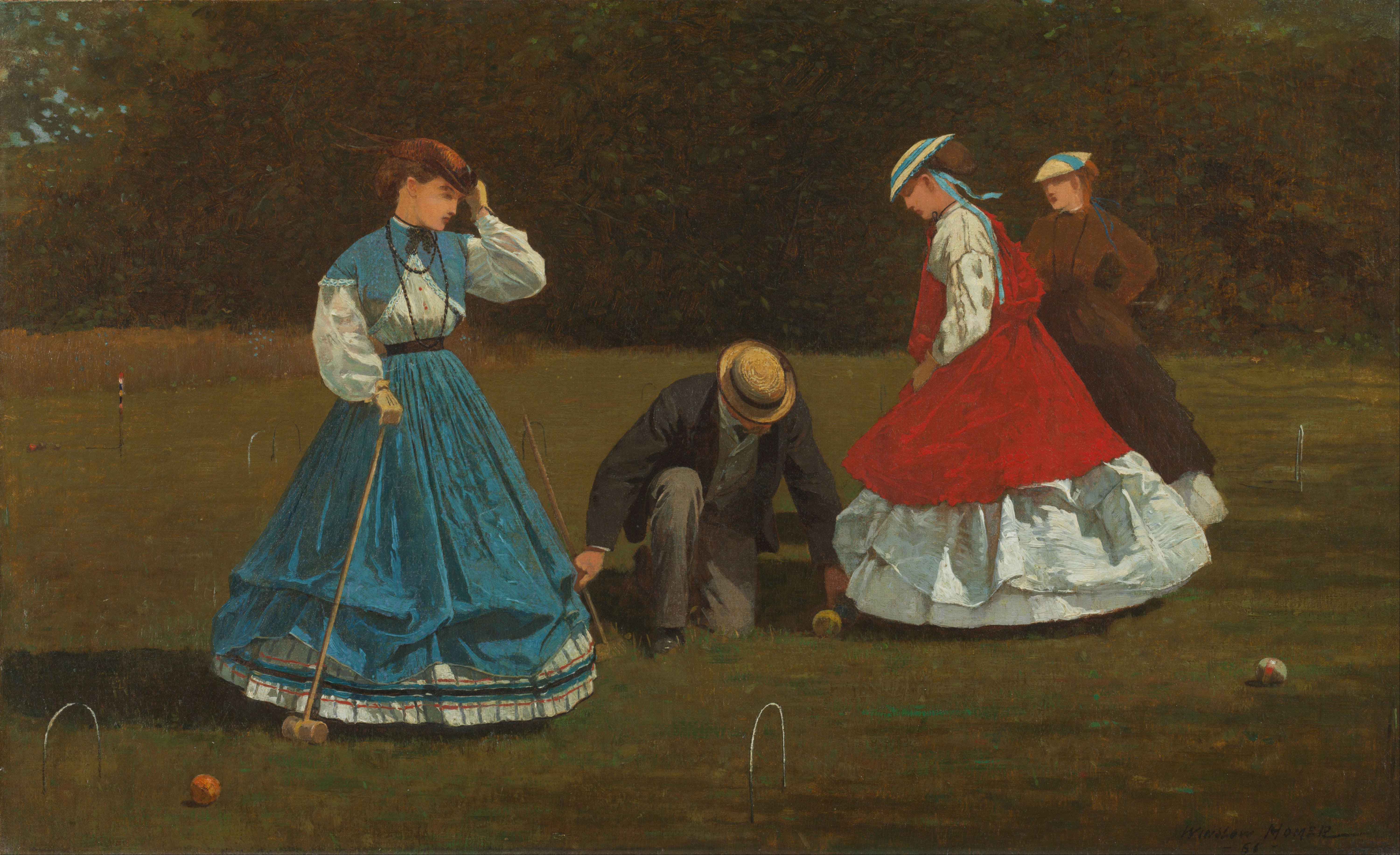
Look at a picture for a couple minutes, then tell all you can about it. That's artist study, in a nutshell. It sounds so easy; such a simple way to do art appreciation. Yet, I am so bad at getting it done. We're trying agin. This time, my strategy is to put a reminder in my phone -with an alarm- to remind me that we should be looking at some art. In addition, we're looking at watercolor artists, since we like to play with watercolors. I think we're going to start with Winslow Homer. He liked to paint the sea. A couple of these are even in Chicago, which is where my sister and her family live, and we're overdue for a visit to see them.
So. Winslow Homer. Here are a few of his paintings that we will be looking at:
We'll get started with that. See if we can make this thing happen. If we're really ambitious, maybe we'll make Mondays an art day, and see about watching a watercolor painting movie on YouTube and messing around. Maybe even put a favorite in a Book of Centuries. Could get crazy!
P.S. I'm so glad you stopped by to read about the adventures at our house! If you want more, "Like" my blog on Facebook to get posts (and the articles n things I wish I had time to blog about) in your feed. Wanna see all the projects and ideas that I may or may not get around to? Follow me on Pinterest. Thanks for stopping by!
So. Winslow Homer. Here are a few of his paintings that we will be looking at:
 |
| Herring Net |
 |
| Croquet Scene |
 |
| Northern Point Light |
 |
| Fog Warning |
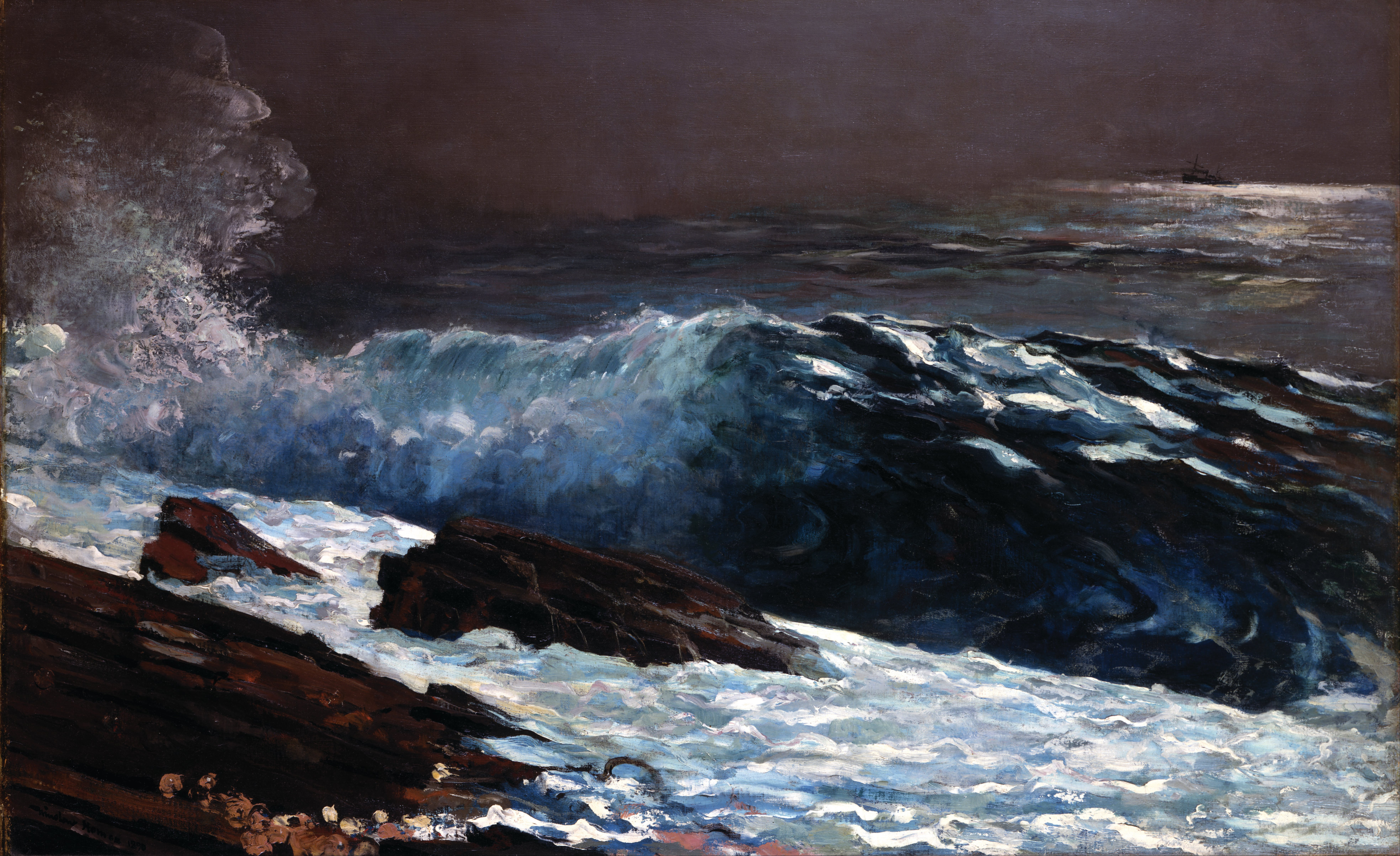 |
| Sunlight on the Coast |
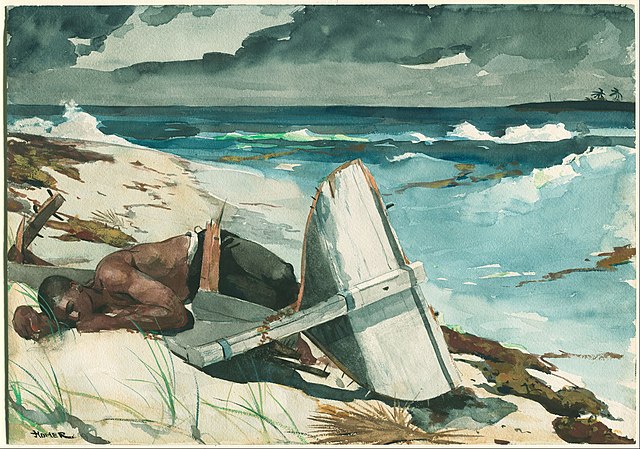 |
| After the Hurricane |
 |
| Gril with Pitchfork |
We'll get started with that. See if we can make this thing happen. If we're really ambitious, maybe we'll make Mondays an art day, and see about watching a watercolor painting movie on YouTube and messing around. Maybe even put a favorite in a Book of Centuries. Could get crazy!
P.S. I'm so glad you stopped by to read about the adventures at our house! If you want more, "Like" my blog on Facebook to get posts (and the articles n things I wish I had time to blog about) in your feed. Wanna see all the projects and ideas that I may or may not get around to? Follow me on Pinterest. Thanks for stopping by!
04 April 2014
Planning Modern History Study
You can't buy books if you don't have some idea of what you're planning to study. So I'm trying to figure out what we're going to study in the final year of our first trip through our history rotation. It'll be quite some time before we get to actually learning this stuff, but it will also take some time to figure it out and then we have to buy the books. So now is a good time to start figuring out what we're going to learn. We'll be using Story of the World 4 as our spine. Books I do not have are in italics. Church History in the Fullness of Times is abbreviated CHFT.
Unit 1: Britain's Empire (Sepoy Mutiny 1857)
Read-alouds: The Secret Garden
Biography: At Her Majesty's Request: An African Princess in Victorian England
Church History: Danish translation of the Book of Mormon (1851). Note family history connections.
Teachings of the Presidents of the Church: Brigham Young (bio. sketch, choose any chapter)
A Short History of Wisconsin ch 1-2
Presidents & Prophets: William Henry Harrison, John Tyler
Unit 2: West Against East (Crimean War 1853-1856)
History Reading: Commodore Perry in the Land of the Shogun
Biography: Florence Nightingale(On My Own Biographies)
Church History: Handcart companies rescued (1856) and Johnston's Army (1857-1858)
Family History: Watch Mountain of the Lord. This includes the account of Johnston's Army, the burying of the Salt Lake Temple foundation, and the problems this caused, as well as Archibald Gardner's council to dig it out and start again.
Short History of Wisconsin ch 3-4
Presidents & Prophets: James K. Polk, Zachary Taylor
Unit 3: British Invasion
Literature: The Jungle Book
Biography: David Livingstone: Courageous Explorer
Presidents & Prophets: Millard Fillmore, Franklin Pierce
Unit 4: Resurrection and Rebellion (Taiping Rebellion 1850-1864)
Church History: Tabernacle completed (1867) Read an address from conference on Oct 6 1867
Additional topic: Fugitive Slave Law/The Underground Railroad. What was the Underground Railroad. The Last Safe House by Greenwood
Dread Scott Decision (We the People: Civil War Era)
Literature: My Indian Boyhood by Little Standing Bear
Short History of Wisconsin ch 5-6
Presidents & Prophets: James Buchanan
Unit 5: American Civil War (1861-1865)
Church History: CHFT chapter 30 deals with the Civil War. Joseph's prophecies to Douglas
Lincoln-Douglas Debates (We The People: Civil War Era)
Biographies: Ulysses S. Grant by David C. King, and in the series, also Stonewall Jackson and Robert E. Lee.
Additional Reading: (Little Women). Behind Rebel Lines, Abraham Lincoln & Frederick Douglas: The Story Behind an American Friendship. More from A Short History of Wisconsin.
Church History: Abraham Lincoln and the Church from this BYU essay.
Short History of Wisconsin ch 7-8
Presidents & Prophets: Abraham Lincoln
Abraham Lincoln: the Gettysburg Address
Additional topics: Read Riders of the Pony Express by Moody, Old Yeller by Fred Gipson, Germ Hunter: A Story About Louis Pasteur
Unit 6: Two Tries for Freedom
Presidents & Prophets: Andrew Johnson
Additional Literature: Mountain Wolf Woman: A Ho-Chunk Girlhood
Unit 7: Two Republics, Three Empires, One Kingdom
Movie: The Scarlet Pimpernel
Presidents & Prophets: Ulysses S. Grant
Unit 8: Becoming Modern
Biographies: DK Biography: Thomas Edison
Literature: Ten Mile Day And the Building of the Transcontinental Railroad
Church History: CHFT chapter 31 deals with the coming of the transcontinental railroad; All That Was Promised by Yorgason
Family History: The diary of Robert Gardner includes a section on his family's sacrifices to provide wood for the St. George Temple.
Units 9 & 10: Two More Empires, Two More Rebellions;
A Canal to the East, and a Very Dry Desert (Suez Canal 1869)
Additional Reading: Krakatoa by Nardo
Family History: The Life of Archibald Gardner
Units 11 & 12: The Far Parts of the World;
Unhappy Union
Additional Reading: Feed the Children First by Lyons
Additional Topic: Booker T Washington: Great American Educator
Church History: Signers appear to Wilford Woodruff; Death of Brigham Young. CHFT 416-421.
Unit 13:Old Fashioned Emperor & the Red Sultan
Unit 14: Two Czars & Two Emperors
Additional Reading: Before the Communist Revolution by Kallen
Discuss commentary on communism by prophets and apostles in A Glorious Standard
Church History: A Decade of Persecution (1877-87), CHFT 422
The House of the Lord: Cache Valley and the Logan Temple(DVD) (1884)
Additional Topic: Statue of Liberty (1885) Lady Liberty: A Biography
Unit 15: Small Countries with Large Invaders
Teachings of the Presidents: John Taylor (bio. sketch, choose any chapter)
Additional Reading: Ellis Island: An Interactive History Adventure
Additional Topic: Segregation/Plessy v. Fergussin (1896) Plessy V. Ferguson: Separate But Equal? (Landmark Supreme Court Cases)
Church History: The Case of Brigham H. Roberts of Utah & The Reed Smoot Hearings CHFT465-470
Unit 16: Expanding United States
Additional Reading: Caddie Woodlawn by Brink; Little House in the Big Woods by Wilder. People of the Big Voice: Photographs of Ho-Chunk Families, Native People of Wisconsin, They Came to Wisconsin. More from A Short History of Wisconsin.
Church History: Salt Lake Temple - Mountain of the Lord(DVD) Note family history connections.
Units 17 & 18: China's Troubles
Europe and the Countries Just East
Church History: The Manifesto, CHFT 439
Teachings of the Presidents of the Church: Wilford Woodruff (bio. sketch, choose any chapter)
William McKinley 2 Inaugural Addresses (1897, 1901)
Additional Topic: Klondike Gold Rush (1897). Call of the Wild by London
Church History: President Woodruff dies; Lorenzo Snow becomes Prophet: CHFT 452
Solving the Church's Financial Problems: CHFT 454-456
Teachings of the Presidents of the Church: Lorenzo Snow (bio. sketch, choose any chapter)
Unit 19: China, Vietnam - and France
Legend of the Teddy Bear by Murphy
Additional Reading: Water Buffalo Days by Nhuong
Church History: 1909 Statement by the First Presidency on the Origins of Man & Evolution CHFT 488-489
Additional Topic: The Wright Brothers: A Graphic Novel
Biography: DK Biography: Marie Curie
Additional Literature: Cheaper By the Dozen
Teachings of the Presidents of the Church: Joseph F Smith (bio. sketch, choose any chapter)
Unit 20: Revolution in the Americas... War in the World
Additional Reading: Where Poppies Grow by Grandield
Stubby the War Dog by Bausum
In Flanders Fields by Granfield
DK Eyewittness: World War I
Woodrow Wilson's 2nd Inaugural Address (1917)
Unit 21: A Revolution Begins, and the Great War Ends
Additional Reading: Cher Ami: WWI Homing Pigeon by Dunn
Additional Literature: Chitty Chitty Bang Bang, Cricket in Times Square
Biography: Albert Einstein by Wishinsky,
Unit 22: National Uprisings
Additional Reading: Gandhi by Demi, The Kingfisher Treasury of Irish Stories, by James Riordan
Unit 23: "Peace" and a Man of War
Additional Reading: The Russian People in 1914
Unit 24: The King and Il Duce
Additional Reading: Fascism by Downing
Unit 25: Armies in China
Franklin D. Roosevelt's 1st & 2nd Innaugural Addresses (1933, 1937)
Unit 26: The Great Crash and What Came of It
Additional Reading: American Voices from the Great Depression by Ruggiero
Church History: The Church in the Great Depression CHFT 509-516. The First Presidency and the New Deal: Letter to the Treasury in 1941 Speech: The Law of Consecration by Victor L. Brown
Teachings of the Presidents of the Church: Heber J. Grant (bio. sketch, choose any chapter)
Unit 27: Civil War & Invasion
Additional Reading: Armistice: 1918
Unit 28: The Second World War
Additional Literature: Number the Stars by Lois Lowery, World War II by Willmott
Teachings of the Presidents of the Church: George Albert Smith (bio. sketch, choose any chapter)
Unit 29: The End of World War II
Additional Reading: 1000 Paper Cranes, The Berlin Wall by Grant
Dwight D. Eisenhauer's Inaugural Addresses (1953, 1957)
Unit 30-34: skip
Unit 35: The Cold War
Additional Reading: The Space Race by Collins
JTeachings of the Presidents of the Church: David O. McKay (bio. sketch, choose any chapter)
Speech: Socialism and the United Order by Marion G. Romney
Unit 36: Struggles and Assassinations
Additional Reading: SB Fuller: Pioneer in Black Economic Development; SB Fuller's speech: "It's Not Racial Barriers That Keep Blacks From Prospering." Linda Brown, You Are Not Alone
Lyndon B Johnson's Inaugural Address (1965)
OK. That looks like plenty. More than enough. It's so hard to guess where we need to be in a year and a half or more. Maybe I should enroll myself in "Overachievers' Anonymous." But hey, no matter what I plan, we'll likely do less, so it makes more sense to me to make ambitious plans and have good achievement, than it does to make moderate plans and do only an adequate amount. In any case, we'll adjust as we go along when we get there. And planning now lets me buy the books a bit at a time. My budget likes that.
Unit 1: Britain's Empire (Sepoy Mutiny 1857)
Read-alouds: The Secret Garden
Biography: At Her Majesty's Request: An African Princess in Victorian England
Church History: Danish translation of the Book of Mormon (1851). Note family history connections.
Teachings of the Presidents of the Church: Brigham Young (bio. sketch, choose any chapter)
A Short History of Wisconsin ch 1-2
Presidents & Prophets: William Henry Harrison, John Tyler
Unit 2: West Against East (Crimean War 1853-1856)
History Reading: Commodore Perry in the Land of the Shogun
Biography: Florence Nightingale(On My Own Biographies)
Church History: Handcart companies rescued (1856) and Johnston's Army (1857-1858)
Family History: Watch Mountain of the Lord. This includes the account of Johnston's Army, the burying of the Salt Lake Temple foundation, and the problems this caused, as well as Archibald Gardner's council to dig it out and start again.
Short History of Wisconsin ch 3-4
Presidents & Prophets: James K. Polk, Zachary Taylor
Unit 3: British Invasion
Literature: The Jungle Book
Biography: David Livingstone: Courageous Explorer
Presidents & Prophets: Millard Fillmore, Franklin Pierce
Unit 4: Resurrection and Rebellion (Taiping Rebellion 1850-1864)
Church History: Tabernacle completed (1867) Read an address from conference on Oct 6 1867
Additional topic: Fugitive Slave Law/The Underground Railroad. What was the Underground Railroad. The Last Safe House by Greenwood
Dread Scott Decision (We the People: Civil War Era)
Literature: My Indian Boyhood by Little Standing Bear
Short History of Wisconsin ch 5-6
Presidents & Prophets: James Buchanan
Unit 5: American Civil War (1861-1865)
Church History: CHFT chapter 30 deals with the Civil War. Joseph's prophecies to Douglas
Lincoln-Douglas Debates (We The People: Civil War Era)
Biographies: Ulysses S. Grant by David C. King, and in the series, also Stonewall Jackson and Robert E. Lee.
Additional Reading: (Little Women). Behind Rebel Lines, Abraham Lincoln & Frederick Douglas: The Story Behind an American Friendship. More from A Short History of Wisconsin.
Church History: Abraham Lincoln and the Church from this BYU essay.
Short History of Wisconsin ch 7-8
Presidents & Prophets: Abraham Lincoln
Abraham Lincoln: the Gettysburg Address
Additional topics: Read Riders of the Pony Express by Moody, Old Yeller by Fred Gipson, Germ Hunter: A Story About Louis Pasteur
Unit 6: Two Tries for Freedom
Presidents & Prophets: Andrew Johnson
Additional Literature: Mountain Wolf Woman: A Ho-Chunk Girlhood
Unit 7: Two Republics, Three Empires, One Kingdom
Movie: The Scarlet Pimpernel
Presidents & Prophets: Ulysses S. Grant
Unit 8: Becoming Modern
Biographies: DK Biography: Thomas Edison
Literature: Ten Mile Day And the Building of the Transcontinental Railroad
Church History: CHFT chapter 31 deals with the coming of the transcontinental railroad; All That Was Promised by Yorgason
Family History: The diary of Robert Gardner includes a section on his family's sacrifices to provide wood for the St. George Temple.
Units 9 & 10: Two More Empires, Two More Rebellions;
A Canal to the East, and a Very Dry Desert (Suez Canal 1869)
Additional Reading: Krakatoa by Nardo
Family History: The Life of Archibald Gardner
Units 11 & 12: The Far Parts of the World;
Unhappy Union
Additional Reading: Feed the Children First by Lyons
Additional Topic: Booker T Washington: Great American Educator
Church History: Signers appear to Wilford Woodruff; Death of Brigham Young. CHFT 416-421.
Unit 13:Old Fashioned Emperor & the Red Sultan
Unit 14: Two Czars & Two Emperors
Additional Reading: Before the Communist Revolution by Kallen
Discuss commentary on communism by prophets and apostles in A Glorious Standard
Church History: A Decade of Persecution (1877-87), CHFT 422
The House of the Lord: Cache Valley and the Logan Temple(DVD) (1884)
Additional Topic: Statue of Liberty (1885) Lady Liberty: A Biography
Unit 15: Small Countries with Large Invaders
Teachings of the Presidents: John Taylor (bio. sketch, choose any chapter)
Additional Reading: Ellis Island: An Interactive History Adventure
Additional Topic: Segregation/Plessy v. Fergussin (1896) Plessy V. Ferguson: Separate But Equal? (Landmark Supreme Court Cases)
Church History: The Case of Brigham H. Roberts of Utah & The Reed Smoot Hearings CHFT465-470
Unit 16: Expanding United States
Additional Reading: Caddie Woodlawn by Brink; Little House in the Big Woods by Wilder. People of the Big Voice: Photographs of Ho-Chunk Families, Native People of Wisconsin, They Came to Wisconsin. More from A Short History of Wisconsin.
Church History: Salt Lake Temple - Mountain of the Lord(DVD) Note family history connections.
Units 17 & 18: China's Troubles
Europe and the Countries Just East
Church History: The Manifesto, CHFT 439
Teachings of the Presidents of the Church: Wilford Woodruff (bio. sketch, choose any chapter)
William McKinley 2 Inaugural Addresses (1897, 1901)
Additional Topic: Klondike Gold Rush (1897). Call of the Wild by London
Church History: President Woodruff dies; Lorenzo Snow becomes Prophet: CHFT 452
Solving the Church's Financial Problems: CHFT 454-456
Teachings of the Presidents of the Church: Lorenzo Snow (bio. sketch, choose any chapter)
Unit 19: China, Vietnam - and France
Legend of the Teddy Bear by Murphy
Additional Reading: Water Buffalo Days by Nhuong
Church History: 1909 Statement by the First Presidency on the Origins of Man & Evolution CHFT 488-489
Additional Topic: The Wright Brothers: A Graphic Novel
Biography: DK Biography: Marie Curie
Additional Literature: Cheaper By the Dozen
Teachings of the Presidents of the Church: Joseph F Smith (bio. sketch, choose any chapter)
Unit 20: Revolution in the Americas... War in the World
Additional Reading: Where Poppies Grow by Grandield
Stubby the War Dog by Bausum
In Flanders Fields by Granfield
DK Eyewittness: World War I
Woodrow Wilson's 2nd Inaugural Address (1917)
Unit 21: A Revolution Begins, and the Great War Ends
Additional Reading: Cher Ami: WWI Homing Pigeon by Dunn
Additional Literature: Chitty Chitty Bang Bang, Cricket in Times Square
Biography: Albert Einstein by Wishinsky,
Unit 22: National Uprisings
Additional Reading: Gandhi by Demi, The Kingfisher Treasury of Irish Stories, by James Riordan
Unit 23: "Peace" and a Man of War
Additional Reading: The Russian People in 1914
Unit 24: The King and Il Duce
Additional Reading: Fascism by Downing
Unit 25: Armies in China
Franklin D. Roosevelt's 1st & 2nd Innaugural Addresses (1933, 1937)
Unit 26: The Great Crash and What Came of It
Additional Reading: American Voices from the Great Depression by Ruggiero
Church History: The Church in the Great Depression CHFT 509-516. The First Presidency and the New Deal: Letter to the Treasury in 1941 Speech: The Law of Consecration by Victor L. Brown
Teachings of the Presidents of the Church: Heber J. Grant (bio. sketch, choose any chapter)
Unit 27: Civil War & Invasion
Additional Reading: Armistice: 1918
Unit 28: The Second World War
Additional Literature: Number the Stars by Lois Lowery, World War II by Willmott
Teachings of the Presidents of the Church: George Albert Smith (bio. sketch, choose any chapter)
Unit 29: The End of World War II
Additional Reading: 1000 Paper Cranes, The Berlin Wall by Grant
Dwight D. Eisenhauer's Inaugural Addresses (1953, 1957)
Unit 30-34: skip
Unit 35: The Cold War
Additional Reading: The Space Race by Collins
JTeachings of the Presidents of the Church: David O. McKay (bio. sketch, choose any chapter)
Speech: Socialism and the United Order by Marion G. Romney
Unit 36: Struggles and Assassinations
Additional Reading: SB Fuller: Pioneer in Black Economic Development; SB Fuller's speech: "It's Not Racial Barriers That Keep Blacks From Prospering." Linda Brown, You Are Not Alone
Lyndon B Johnson's Inaugural Address (1965)
OK. That looks like plenty. More than enough. It's so hard to guess where we need to be in a year and a half or more. Maybe I should enroll myself in "Overachievers' Anonymous." But hey, no matter what I plan, we'll likely do less, so it makes more sense to me to make ambitious plans and have good achievement, than it does to make moderate plans and do only an adequate amount. In any case, we'll adjust as we go along when we get there. And planning now lets me buy the books a bit at a time. My budget likes that.
21 November 2013
Planning.
I see a lot of people worrying about lesson plans, but I admit that I'm doing that less and less lately. I still use my planning guide, but the way I use it has been morphing. Lately, I've had the feeling that Hero's need for "white space" is higher than it has been. And there's been more time where the boys play together than there ever has been, and I love the way their relationship is developing. I have waited school more than once because I didn't want to mess up the good things they were doing together.
My Hero is very mathy, and I have yet to successfully plan math more than a week or two in advance, if that. I suspect that Dragon is also going to do quite well with numbers, and we're starting him right out in Miquon, rather than Math Expressions. Anyway. I'll think I've got a good pace, but then Hero sponges it up and gets bored, so we move on. Fast. So I just roll with it. Lately, I've been asking him, "Do you want to do fractions or multiplication today?" I just got some graph paper, and I'm going to see if I can interest him in some of Vihart's doodle games. We'll see.
Our science is very un-schooly. It has been for a long time now. I hated the animal encyclopedia that TWTM recomended for the 1st grade animal study: too basic. Oh. And the boy had eyes only for birds of prey. We spent nearly the whole time on birds of prey. Dissected an owl pellet. Went out to the local eagle's nest. He's never really stopped loving the birds of prey, and they come up as a topic from time to time still. We were interested in astronomy, so we tried to do astronomy after the animals (he didn't care about bodies or anything else from the 1st grade year, so I figured we'd come back later). And kind of we did, but you'd never know it to look at my lesson plans, LOL! When I did come back around the to human body, thinking that we'd do a section on that, it turned out that our conversations we had - the baby was in the NICU with a collapsed lung, so we talked about lungs, and another time we talked about how skin works, and the interactions of muscles and bones... how intestines work. We hit enough stuff in just conversation that the body encyclopedia that TWTM recommended was too simple. Lately, he's discovered Bill Nye the Science Guy and he can't get enough of him. He'll watch episode after episode, for hours. And want more the next day. Real science kick. It's really cool to watch. But I didn't plan it. I don't even remember why it is that I introduced him to Bill Nye. They've had 4 or 5 tonight. They're "looking" for the one on the water cycle, but they haven't found it yet today. They've watched it several times now, and it spawned an experiment this morning predicting and observing water condensation, all Hero's idea. I just helped him structure his experiment a little, and took notes for him. He's got another one that he wants to do. I'm helping him do the scientific method process. One of these days I need to introduce him to the term "the scientific method."
Anyway. Anything you buy a curriculum for --in our case that includes Story of the World, All About Spelling, Rod n Staff grammar -- you just open to the next page. Anything you are doing in an interest lead kind of way, you ask the kid what they want to learn and then figure out how to make it happen. That's my process at this point, and I have yet to get it to plan nicely. When I pre-plan and write it all down, I open the book and make a note of what's next, and I try to predict the pace he'll want to go, and guess at the rabbit trails we might enjoy. Other times, I track what we did do as much as what I think we'll do. We hit most things most days, and I don't sweat it if we have a day - or even a series of days - where we miss the same subject. We'll get back around to it. I've learned that interest is cyclical: this week Hero is inhaling science and he can't concentrate on language arts. But when the intense need for one kind of information is satisfied there will be room for other kinds. One time he wanted a whole week of math. Later he was reading so much that there wasn't room for much else. There were a couple days where he wanted tons of Japanese. Now he wants science. That other stuff will come back around again, and I don't want to spoil the joy of learning by breaking his Zone. Other times we'll buzz along, hitting everything nearly every day for a couple weeks or even a month or two. And both "schedules" are ok.
P.S. I'm so glad you stopped by to read about the adventures at our house! If you want more, "Like" my blog on Facebook to get posts (and the articles n things I wish I had time to blog about) in your feed. Wanna see all the projects and ideas that I may or may not get around to? Follow me on Pinterest. Thanks for stopping by!
My Hero is very mathy, and I have yet to successfully plan math more than a week or two in advance, if that. I suspect that Dragon is also going to do quite well with numbers, and we're starting him right out in Miquon, rather than Math Expressions. Anyway. I'll think I've got a good pace, but then Hero sponges it up and gets bored, so we move on. Fast. So I just roll with it. Lately, I've been asking him, "Do you want to do fractions or multiplication today?" I just got some graph paper, and I'm going to see if I can interest him in some of Vihart's doodle games. We'll see.
Our science is very un-schooly. It has been for a long time now. I hated the animal encyclopedia that TWTM recomended for the 1st grade animal study: too basic. Oh. And the boy had eyes only for birds of prey. We spent nearly the whole time on birds of prey. Dissected an owl pellet. Went out to the local eagle's nest. He's never really stopped loving the birds of prey, and they come up as a topic from time to time still. We were interested in astronomy, so we tried to do astronomy after the animals (he didn't care about bodies or anything else from the 1st grade year, so I figured we'd come back later). And kind of we did, but you'd never know it to look at my lesson plans, LOL! When I did come back around the to human body, thinking that we'd do a section on that, it turned out that our conversations we had - the baby was in the NICU with a collapsed lung, so we talked about lungs, and another time we talked about how skin works, and the interactions of muscles and bones... how intestines work. We hit enough stuff in just conversation that the body encyclopedia that TWTM recommended was too simple. Lately, he's discovered Bill Nye the Science Guy and he can't get enough of him. He'll watch episode after episode, for hours. And want more the next day. Real science kick. It's really cool to watch. But I didn't plan it. I don't even remember why it is that I introduced him to Bill Nye. They've had 4 or 5 tonight. They're "looking" for the one on the water cycle, but they haven't found it yet today. They've watched it several times now, and it spawned an experiment this morning predicting and observing water condensation, all Hero's idea. I just helped him structure his experiment a little, and took notes for him. He's got another one that he wants to do. I'm helping him do the scientific method process. One of these days I need to introduce him to the term "the scientific method."
Anyway. Anything you buy a curriculum for --in our case that includes Story of the World, All About Spelling, Rod n Staff grammar -- you just open to the next page. Anything you are doing in an interest lead kind of way, you ask the kid what they want to learn and then figure out how to make it happen. That's my process at this point, and I have yet to get it to plan nicely. When I pre-plan and write it all down, I open the book and make a note of what's next, and I try to predict the pace he'll want to go, and guess at the rabbit trails we might enjoy. Other times, I track what we did do as much as what I think we'll do. We hit most things most days, and I don't sweat it if we have a day - or even a series of days - where we miss the same subject. We'll get back around to it. I've learned that interest is cyclical: this week Hero is inhaling science and he can't concentrate on language arts. But when the intense need for one kind of information is satisfied there will be room for other kinds. One time he wanted a whole week of math. Later he was reading so much that there wasn't room for much else. There were a couple days where he wanted tons of Japanese. Now he wants science. That other stuff will come back around again, and I don't want to spoil the joy of learning by breaking his Zone. Other times we'll buzz along, hitting everything nearly every day for a couple weeks or even a month or two. And both "schedules" are ok.
All that means that more and more, I'm tracking, rather than planning. I think it's going to end up being a balance thing. Maybe some things will need more planning, and other topics will work better with tracking. After all, this homeschooling thing is a work in progress.
The child is obsessed with....
I think children learn differently from adults. They often go at One Thing hammer and tongs for an extended period of time, exhaust it, then move on. Heck, they even eat this way. "He only eats pb&j right now." This makes adults anxious and controlling because we think they'll be that way forever. Nope. This is what children do. No need to correct unless it's dangerous. They outgrow it. Don't let it make you nuts. Just roll with it, stay observant, give additional wholesome choices, and be patient. This passes.
The Libertarian Homeschooler
P.S. I'm so glad you stopped by to read about the adventures at our house! If you want more, "Like" my blog on Facebook to get posts (and the articles n things I wish I had time to blog about) in your feed. Wanna see all the projects and ideas that I may or may not get around to? Follow me on Pinterest. Thanks for stopping by!
09 March 2013
Figuring Out Artist Study
Figuring out how to study Art is not an easy thing. We had a go at it just over a year ago, when I discovered smashbooks and we made some artist books using the concept. That was cool, and we did a little bit, but I didn't know how to make it last, so it didn't. Those lovely books have been gathering dust on my shelf. But I'd really like to do more than that with them. Really really.
So I'm studying a little more about it this time. The idea of doing Artist Studies comes out of the Charlotte Mason philosophy, at least, that's where I got the idea. I started on Pinterest, and one of the awesome pins I found was this one: How to Plan Artist Study for the Semester. Why, that's exactly what I need! As I started reading that, there were links to follow, and I had other questions too, so I'm googling other stuff too. Turns out people have written quite a bit about it.
There's a lens on Squidoo: Artist Study, Charlotte Mason Style. Right off the bat is a suggestion that would make my life easier: stay with the same artist for quite a while. Four weeks at a minimum. We did Peter Brueghel for a while, using a library book, but then I never figure out what to do after we looked at the book. But at the time, I thought that we'd do a bunch of different artists, maybe one a week or more. I can see that not needing to choose a new one all the time would at the very least aid consistency. This lens also pointed out some pages in Miss Mason's books that deal with working with art.
Miss Mason has a lesson plan, build around the painting Alexander And Diogenes. She mentions an interesting backstory, but only sketches it out. I found a more detailed version here, and its a fun story. This is how Miss Mason suggests studying this picture, through a process she calls "picture talk" .
She has more lesson plans; the next exercise is designed to help the kids make a clear mental picture, and then put that picture on paper. She emphasizes the importance of teaching the kids to really see the world around them through this sort of activity, so that they may take pleasure in it.
Jimmie also shares what this sort of thing looks like in their homeschool. The example she shares comes from their work with Renoir, which includes daily work looking at his paintings, and also a project recreating one of his works. I really like a number of things she says, but this one, in particular, resonates:
Another useful link is this list of questions to ask about the work. I would not have thought of most of these. There's some good conversation starters.
This blog post points out that it's easier to remember to do something if it's done daily, rather than weekly, and she also says not to get too hung up on choosing the artist.
As for who we'll make our fisrt artist? I don't know. My husband suggested Dan Scott. I'm thinking that this artist is one whose art will appeal to Hero, and that seems especially important for the first artist, so we may just do that.
For updates on how our artist study is going, follow me on Facebook.
 |
| Peter Brueghel's Tower of Babel |
There's a lens on Squidoo: Artist Study, Charlotte Mason Style. Right off the bat is a suggestion that would make my life easier: stay with the same artist for quite a while. Four weeks at a minimum. We did Peter Brueghel for a while, using a library book, but then I never figure out what to do after we looked at the book. But at the time, I thought that we'd do a bunch of different artists, maybe one a week or more. I can see that not needing to choose a new one all the time would at the very least aid consistency. This lens also pointed out some pages in Miss Mason's books that deal with working with art.
The minds of children and of their elders alike accommodate themselves to what is put in their way; and if children appreciate the vulgar and sentimental in art, it is because that is the manner of art to which they become habituated. -Charlotte Mason (Vol. 1, Page 308)
 |
| Sir Edwin Landseer's Alexander And Diogenes |
Picture-Talk
Objects
Step 1 - Ask the children if they remember what their last picture talk was about, and what artist was famous for animal painting. Tell them Landseer was acquainted with animals when he was quite young: he had dogs for pets, and because he loved them he studied them and their habits -so was able to paint them.
- To continue the series of Landseer's pictures the children are taking in school.
- To increase their interest in Landseer's works.
- To show the importance of his acquaintance with animals.
- To help them read a picture truly.
- To increase their powers of attention and observation.
Step 2 - Give them the picture 'Alexander and Diogenes' to look at, and ask them to find out all they can about it themselves, to think what idea the artist had in mind, and what idea or ideas he meant his picture to convey to us.
Step 3 - After three or four minutes, take the picture away and see what the children have noticed. Then ask them what the different dogs suggest to them: the strength of the mastiff representing Alexander; the dignity and stateliness of the bloodhounds in his rear; the rather contemptuous look of the rough-haired terrier in the tub. Ask the children if they have noticed anything in the picture which shows the tine of day: for example, the tools thrown down by the side of the work-man's basket suggesting the mid-day meal; and the bright sunshine on the dogs who cast a shadow on the tub shows it must be somewhere about noon.
Step 4 - Let them read the title, and tell any facts they know about Alexander and Diogenes; then tell them Alexander was a great conqueror who lived BC 356-323, famous for the battles he won against Persia, India, and all along the coast of the Mediterranean. He was very proud, strong, and boastful. Diogenes was a cynic philosopher. Explain cynic, illustrating by the legend of Alexander and Diogenes; and from it find out which dog represents Alexander and which Diogenes.
Step 5 - Let the children draw the chief lines of the picture, in five minutes, with pencil and paper.(Vol. 1 Pg. 309-310)
 |
| Jean Monet's Woman With a Parasol |
Jimmie also shares what this sort of thing looks like in their homeschool. The example she shares comes from their work with Renoir, which includes daily work looking at his paintings, and also a project recreating one of his works. I really like a number of things she says, but this one, in particular, resonates:
I pointed out all the ways that her rendition matched Renoir's original and praised her. Then I asked her to place her work alongside his and point out what was different or lacking in her version. In this way, I am not criticizing her work but I am teaching her to look critically at art.
Another useful link is this list of questions to ask about the work. I would not have thought of most of these. There's some good conversation starters.
This blog post points out that it's easier to remember to do something if it's done daily, rather than weekly, and she also says not to get too hung up on choosing the artist.
As for who we'll make our fisrt artist? I don't know. My husband suggested Dan Scott. I'm thinking that this artist is one whose art will appeal to Hero, and that seems especially important for the first artist, so we may just do that.
For updates on how our artist study is going, follow me on Facebook.
06 March 2013
Staying on Track
It's been very useful to me in the past to see others talk about how they do the practical, day-to-day things in their homeschools, so I thought I'd share the way that I do my lesson plans and daily lists for Hero. This is my planning grid. It shows 2 weeks of Hero's work, and I recently started to put ABC games and art projects down the extra space for "tot school" for Dragon, who insists that he not be left out.
The very top line is phonics, though we won't be needing that for Hero too much longer; his reading is better and better all the time. I just put a check mark by the days that we do phonics. I've got a spot to mark every day, but we've never done it quite daily. More like 3-4 times in a week.
 Next is math, which is the hardest for me to plan because Hero is like a sponge in math; I can't seem to keep on top of where he needs to be. I seldom plan more than a week or two at a time, because if I do I'll just end up needing to re-plan it after he's seen what I'm showing him once or twice.
The rest of the subjects go like that: handwriting & drawing are related skills, so I've combined them, and we do that about 4 times a week. I'll be switching out geography for artist study on the next batch of charts that I print; I feel like we get a lot of geography in the context of our history, and it's far more useful and memorable when it's in context like that. Artist study is something that I've been wanting to do for a long time now, but haven't been able to make it work. We're about to try again. Science and History have the largest blocks because I have to make notes about what activities I plan to have us do. As you can see from the pink arrows, it's not set in stone. Sometimes stuff gets skipped, or in this case, forwarded into the next week.
I generally write in pencil because it's more flexible. If I write in pen I invariably end up looking for my whiteout! I plan out what I'd like to see happen in the week on this chart, but don't commit to specifics as far as the days for most things. That way, if we're engrossed in something we can stay with it for the day without messing everything up, and if we've got plans to be out or something unexpected comes up, our school schedule can absorb it pretty easily. Most weeks it takes us from Monday to Friday. Occasionally, we finish on Thursday, sometimes we've got a little mop-up that needs to be done on Saturday. It's a pretty flexible system, and it's been working nicely.
 When we get up each morning, I make a list for the day, like this one we're using today. Hero knows that certain things have to wait until after school, like screen time, so he has motivation to get his work done. He chooses (mostly) what order to do things in. Some days he can do this much in about 2-2.5 hours. Other days there's lots of breaks and we're finishing up school around dinner time. I don't worry about it too much, as long as we're consistently getting things done. I do monitor to make sure that there's plenty of free play time, but it makes very little difference to me if he wants to do his school all at once or a little at a time over the day.
The second, short list on the right of the picture is my list of stuff I want to do with Dragon today. That's for my own reference; I don't think he's aware that he's "doing school" most of the time. Today I planned to play some letter games, read some stories, and I had him play with our pattern blocks. The list keeps me organized enough to actually remember to do stuff like that with him; without it I can get really bad about forgetting to do even basic stuff like reading the poor kid stories. Thank goodness for being able to make lists! I never used to do it, but the more I have to accomplish, the more useful I'm finding my various lists.
To follow me on Facebook or Pinterest, click the links on the top right of this page.
The very top line is phonics, though we won't be needing that for Hero too much longer; his reading is better and better all the time. I just put a check mark by the days that we do phonics. I've got a spot to mark every day, but we've never done it quite daily. More like 3-4 times in a week.
Next is math, which is the hardest for me to plan because Hero is like a sponge in math; I can't seem to keep on top of where he needs to be. I seldom plan more than a week or two at a time, because if I do I'll just end up needing to re-plan it after he's seen what I'm showing him once or twice. The rest of the subjects go like that: handwriting & drawing are related skills, so I've combined them, and we do that about 4 times a week. I'll be switching out geography for artist study on the next batch of charts that I print; I feel like we get a lot of geography in the context of our history, and it's far more useful and memorable when it's in context like that. Artist study is something that I've been wanting to do for a long time now, but haven't been able to make it work. We're about to try again. Science and History have the largest blocks because I have to make notes about what activities I plan to have us do. As you can see from the pink arrows, it's not set in stone. Sometimes stuff gets skipped, or in this case, forwarded into the next week.
I generally write in pencil because it's more flexible. If I write in pen I invariably end up looking for my whiteout! I plan out what I'd like to see happen in the week on this chart, but don't commit to specifics as far as the days for most things. That way, if we're engrossed in something we can stay with it for the day without messing everything up, and if we've got plans to be out or something unexpected comes up, our school schedule can absorb it pretty easily. Most weeks it takes us from Monday to Friday. Occasionally, we finish on Thursday, sometimes we've got a little mop-up that needs to be done on Saturday. It's a pretty flexible system, and it's been working nicely.
When we get up each morning, I make a list for the day, like this one we're using today. Hero knows that certain things have to wait until after school, like screen time, so he has motivation to get his work done. He chooses (mostly) what order to do things in. Some days he can do this much in about 2-2.5 hours. Other days there's lots of breaks and we're finishing up school around dinner time. I don't worry about it too much, as long as we're consistently getting things done. I do monitor to make sure that there's plenty of free play time, but it makes very little difference to me if he wants to do his school all at once or a little at a time over the day. The second, short list on the right of the picture is my list of stuff I want to do with Dragon today. That's for my own reference; I don't think he's aware that he's "doing school" most of the time. Today I planned to play some letter games, read some stories, and I had him play with our pattern blocks. The list keeps me organized enough to actually remember to do stuff like that with him; without it I can get really bad about forgetting to do even basic stuff like reading the poor kid stories. Thank goodness for being able to make lists! I never used to do it, but the more I have to accomplish, the more useful I'm finding my various lists.
To follow me on Facebook or Pinterest, click the links on the top right of this page.

Subscribe to:
Posts (Atom)
LinkWithin
