09 10
Showing posts with label Ancients. Show all posts

04 April 2017

Shepherd, Potter, Spy, and the Star Namer {Crew Review}


Shepherd, Potter, Spy--and the Star Namer {Peggy Consolver}
I haven't read any historical fiction that centers on the Bible in a very long time, so when we were asked to review Shepherd, Potter, Spy--and the Star Namer from Peggy Consolver - Author, I was looking forward to it. And the book did not disappoint.

The author's story is fascinating: she'd been interested in writing about the Gibeonites for a while, but was having a hard time placing them in their historical and geographical setting when she had the opportunity to travel with the Associates for Biblical Research and work on a dig in the Holy Land. She tells her story on their website, and it, like so much else on that site, is pretty interesting.


"I had begun writing historical fiction about the Gibeonites of Joshua 9 and 10 from the point of view of a young shepherd boy and his family of potters. Struggling with describing the historical and geographical setting one day, I quipped to my husband, 'If I really write this story, maybe I should go there.'"
-Shepherd, Potter, Spy and the Star Namer


I knew the story of the Gibeonites -- but not their name -- so I had a quick refresher, which was easy, because the relevant chapters are right on the back of the book: the Gibeonites are the ones that trick the Israelites. They dress up in old, old clothing, and they take old food, and they tell Joshua and the elders that they're from far, far away, when in reality they're from right there, neighbors with Jericho. And they make an alliance, though they should not have been able to, had they not deceived the Israelites. (I've always been a little amazed it worked, and that Joshua didn't say, "Wow. You low-life lying scum. You can't do that!" and attack them anyway -a fraudulent contract isn't really a contract, I thought- but that's not how the story goes. Which makes me ponder modern ideas of honor.)

The story deals with the horrors of the worship of Molech, but does so in a very delicate way: my 10 year old did not pick up on what was going on, though to me, already knowing, it was pretty obvious. I suspect that the story could probably be read aloud to a group with younger kids in it without needing to explain that worship of Molech involved infanticide, though we already had a read-aloud going, so I didn't actually read it to my younger kids. I would be comfortable doing it in the future, though, when we had time for it. 


While I really liked the insights into the situation that the book offered (more on that in a minute), I didn't like the way that the story ended. On the one hand, it was a foregone conclusion: they make the alliance, and for their duplicity, they're condemned to slavery. But, although the characters had been three-dimensional and relatable throughout, in the last chapter or two they're suddenly content with slavery:  turns out there's a family curse that condemns them to be slaves, but in this case slavery is salvation because it turns out that the vague belief in a "star-namer" deity (certainly far preferable to Molech) is actually a tradition that more or less becomes worship of the Hebrew God, and within a few hours of arriving at the Israelite camp the main character, a thirteen year old young man, has more or less reconciled himself to his slavery. He shows insight and adaptivity that a tribal elder would struggle to display... I just can't buy it from a thirteen year old that's just been given as a hostage and is suddenly a slave, rather than the son of a respected craftsman, tribal leader, and freeman. I like the story - lots, really; I could see myself re-reading this book in a year or two. But the ending was much more tidy than real life really is. There's not a lot to go on in the Bible, as far as the reaction of the Gibeonites to their new status, and I think that figuring out how to do the ending might be the hardest part of doing this particular story, and I'm not sure that I could do it better. But it felt too pat. Too easy. The rest of the story had been complex and intriguing, but then the ending was tied up in a nice bow, perfect and tidy. Real life isn't tidy, and this is a (dramatization of a) real story.

Overall, though, I think that the book is well worth reading anyway. It was really interesting, watching the story unfold from the point of view of the condemned peoples. Challenging. The rumors, as the Israelites are still a ways out, the terror from the miraculous crossing of the Jordan and the stunning destruction of Jericho. Anger. Fear. Refugees. I'd never considered the refugee situation that it would have created as people fled. Food shortages. Shortages of everything. Extra work trying to defend against the unstoppable force of the Hebrews' god. Reading the book made me think about the Conquest in a whole new and challenging way. Watching the family the story follows try to cope with this impossible situation really made the story come alive. It made me think deeply about a passage of scripture that I'd previously just read, scratched my head at the different customs, and moved on. I will never look at this story quite the same way. This book makes the Gibeonites and other Canaanites into real people. It takes them from being a faceless mass of people who are easy to perceive as just a mob of Bad Guys, and transforms them into a group of father and mothers and cousins and neighbors -- and it does that for both the Gibeonites and, to a somewhat lesser extent, the Israelites. That's valuable.

I had Hero read the story, then asked him three questions:

1. Describe your favorite scene in the story.

My favorite scene is "When the Sun Stood Still", the last chapter. It was where Joshua and the Hebrews chased King Zedek's men, and chased them until they were all dead. And the reason is, at this point, the potters of Gibeon were servants to the Hebrews, and the Hebrews were defending their servants, and, it's not as bad as it sounds. And so, when the battle was going on, Zedek's men were blindsided, and Keshub got a new bronze sword. And then, Joshua looks at the sun, and just after he'd issued a command to kill every one of Zedek's men, I think it's because Zedek's men would continue to hunt and kill the Gibeonites and Hebrews, and then, after he'd issued the command, he went up to a nearby hill, lifted his arms, and told the sun to stay still.

2. Tell something that the main character, Keshub, learns in the story.

Probably the biggest thing that Keshub learned is that what the Gibeonites called the "Star Namer" is really the Hebrew God. And he could call him that, because Heavenly Father does know each of the stars by name.

3. Who do you think would like this book?

People who like historical fiction would probably like Shepherd, Potter, Spy and the Star Namer.

It took a long time for Hero to read this book, for reasons I never did figure out, so we didn't do tons with it, but there is a nice study guide to go with the book. However, he was quite interested in the weapons videos that are included in the study guide resources, and I wouldn't be surprised to see him and his best friend try to make a bow this summer or attempt to make a sling. His friend has already been researching how to do it from PVC, and they've been plotting. It's amazing the stuff they come up with!

To read more reviews on this book, and to see how other families used it in their homeschool, please click the link below:

Click to read Crew Reviews


Crew Disclaimer

15 March 2017

Odd Bits: Folk music, Archaeology, and More...


::1::

One of the things that homeschooling has done for me is to introduce me to some lovely folk music. I'd like to learn to play it on the Banjo, a lot of it, but so far, that's an item on my to-do list that isn't so easy to get crossed off. In the mean time, I'm absolutely loving listening to Jesse Ferguson, who sings Scottish folk songs. Have a listen; he's lovely. I always wonder if my Scottish ancestors knew or loved any of these songs.


::2::

On the first of every month, I post a collection of thoughts from my commonplace book, which is one of my favorite self-education tools. I love that using it is participating in the great English and American tradition of self-education, and continuing personal development. Occasionally, I'm asked what it is. The article I've taken this quote from has a pretty good explanation, some pictures, and instructions for how to start one.


A commonplace book is essentially a scrapbook / compilation of information that the creator deems relevant. Commonplace books became popular with thinkers in 15th century England and were eventually promoted as a scholarly tool by major universities such as Yale and Harvard.
-Jamie, Project: Start a Commonplace Book


::3::

I stopped buying cereal a couple years ago, and breakfast, which the kids mostly take care of on their own, continues to be a little hap-hazard. Lots of times, the kids will eat leftovers, or open a can of fruit. But if we're low on those things, it can get interesting. I think I might try this idea out: homemade instant oatmeal. Looks like a piece of cake to make, which is perfect: I love that the kids are gaining independence and confidence in the kitchen by making their own breakfasts. She's got instructions on masking tape on her jars, which is brilliant. And it looks like it'd be easy to switch up the flavors, too.


::4::

Archeology is cool. Archeology that shows up just in time to dovetail with our work on Greece and Greek civilization is even better. And that's what this article about a warrior's grave they found in Greece is. And there's a Roman makeup case, with fingerprints visible in the cream that's still in it. Gotta love the never-ending search for the perfect beauty product! And there's the whole kingdom from Arthurian legend that they found. That's pretty awesome, too. Makes me want to go read something about King Arthur: it's been a while. Archeology is good stuff.


::5::

Marginalia. I only recently learned that there's a word for all the stuff that you write in the margins. They told us not to write in our books in school, cautioned that there would be Serious Consequences if we did, because Those Books Are Very Expensive. The caution stuck: I have never really been one to write or highlight in my books, and when I shop, I generally want a clean book, even used. The only book that I've seriously annotated is my scriptures, which I love "making tracks" through, because it helps me to remember what I've learned, find it later, and retain it longer. And it's a visual reference for which sections I've given serious attention to, and which ones still need that kind of treatment. But I think I'm going to start making more notes in other books, too:

I like to think of these little jottings as being little messages to Jemimah from those same ancestral tombs, that through them she will get to know these people from her history a little better.  She will know how they thought about things, and how they interpreted knowledge, and she will get their input into the very same words that she is reading.  When she reads How They Brought the Good News from Ghent to Aix, she will know to listen for how "the light, rollicking metre almost produces the effect of the hoof beats of the galloping horse" because her Great Grandmother will have told her to listen.
-Jeanne, A Peaceful Day: Marginalia

I love the idea that the notes that their family made in their books has become a connection between the generations, a way for departed loved ones to continue to teach long after they've left us. That's a beautiful, all by itself. It makes me wonder (again) whatever happened to my Grandmother's library, and if she made notes in any of her books. What would they tell me about her? Those little notes can have impact, especially if the reader is receptive, or has a connection to the note-taker:


As I read Rebecca’s copy of the book, I started to notice how her notes changed the way I was reading. The passages she chose to mark, and the notes she wrote at the end of chapters, framed the way I was reading the novel. ... I’ve read books in the past with marginalia – usually used books that had previous owners unknown to me – and while those notes also pointed out passages to me that I otherwise may have skimmed over or which may not have been necessarily significant to me upon first glance, I never really paid attention to it beyond those pauses. ... This experience – of reading Rebecca’s copy of The Engagements – was markedly different, though. Because we’re not just Book Riot colleagues, but also good friends, not only was my perception of the novel changed, my perception of Rebecca – as a friend, as a woman, as a reader – was also changed.
-Rachel Manwil, To Note or Not to Note: How Marginalia Changed the Way I Read


::6::

I ran across this interesting post about the difference between an educational system and an educational method. She's talking about how the Charlotte Mason philosophy is a method, not a system, and there are a lot of good insights about the reason the distinction is important, but the thing that struck me was the way that this applies to language learning. Around 2 or 3 years ago, I changed, dramatically, the way that I learn languages, and started studying sentences, harvested from either my dictionary's sample sentences, or from real native Japanese text and native speakers. I make flashcards from whole sentences, and study vocabulary, syntax, usage, and all that all in a single go. If that's all I did, it would still just be a system, but the other half of the idea was to create an immersive environment - a Japanese bubble - so that we also are hearing correct pronunciation, more correct grammar and syntax, and interacting with the languages in ways that are natural, organic, and fun. Fun, guilty pleasure (example: Minecraft videos) is actually desirable in this case. The combination is amazing. Families who successfully pass a heritage language generally do a couple of things, but one of the big ones is to arrange for roughly a third of the day to happen in the minority language: and that is surprisingly doable in a situation like ours where we are all learning together. Obviously, it would be faster and better if we had more live feedback, regular access to someone who knows more than me, but we are making good progress even with minimal contact with people who are fluent, which is pretty amazing.


Getting good is good. Those things are all good. It’s nice to be full and it’s nice to have a big vocabulary. It’s just that you’re more likely to eat more if you focus more or less totally on making and procuring tasty food than “efficient”, “filling” food. Similarly, if you focus just about exclusively on having fun through the language, while you still suck, while you’re not full yet, you’ll naturally “eat” more of it, and eat more often, and naturally get “fuller” faster.
-Khatzmuto, Why Don't You Learn Like You Eat?, emphasis original (content warning: this article is clean, but if you browse his site, be aware he's sometimes rude, and occasionally pretty crude)


25 February 2017

Odd Bits: Spring Birds, Audiobooks, and More

Odd Bits: A Baby Steps link round up of interesting tidbits dealing with spring birds, audiobooks, and much more.


::1::


Odd Bits: A link round up of interesting tidbits dealing with spring birds, audiobooks, and much more.
American White Pelican, courtesy WikiPedia

I've always had a hard time knowing what to do outside, but counting birds for the eBird project has become a favorite. So far this year I've seen ten species (and I didn't hardly peep a foot outside in January, because it was so miserable), and but surprise was that there are already American White Pelicans in the area this year. I looked them up, and they're not common in our area until closer to April, though it's not unheard of to see them around the area now, either. Pelicans are cool. They have a really distinct way of circling around overhead, always near our river. I like watching them; this year we'll have to see if we can't get down to the waterfront while they're there so we can watch some of the other things they do. Pelicans are fun to watch.


::2::

There's some cool free audiobooks out there. LibriVox has several of our favorites, such as Children of Odin, and The Golden Fleece and the Heroes Before Achilles. Those are some that the kids go back to over and over. This week, I found another free one that I want to have a listen to: Lafayette and the Revolution, about how a French Marquis came to be fighting in the American Revolution.


::3::

So, NASA's been finding planets around other stars for a while. I even had an app on my phone for a while that would show me things about them, before I deleted it in favor of language learning stuff. Now, they've found some cool ones: planets that might have water. And they're not even that far away. I need to figure out where Aquarius is, because that's where NASA says this Trappist system is located, and it'd be cool to know how to stare in their general vicinity.


::4::

The kids invaded and nabbed my electrical tape to enhance their sticks. The big guy has created a pilum; the small two immediately copied him, but theirs are swords, they tell me. It's really quite remarkable what a little electrical tape can do to a stick. And the things they come up with in "play"; I certainly didn't tell them to recreate ancient weapons. I just said to go outside to play! I'll be interested in seeing how long these stick around: they are carefully stacked outside the door, after I told the kids that their "weapons" were not allowed in the house.


Odd Bits: A link round up of interesting tidbits dealing with spring birds, audiobooks, and much more.


::5::


I'm a Constitutionalist, and I learn foreign languages for fun: I believe that words matter. They have meaning and how you put them together is important. But it still sometimes catches me by surprise to see how big a difference it makes to change the structure of a sentence, even just a little bit. With a little bit of mindfulness, we can avoid teaching (or at least avoid reinforcing) ugly stereotypes by tweaking the way that we speak about groups of people: The "zarpies" example in this article is particularly interesting. Reading that article made me think of the research on teaching colors that I read a while back - the one that explained why color is so difficult to teach, and why kids often will take a lot longer than you'd expect to really get the hang of it. Turns out that some linguistic mindfulness will go a long way here, too.


20 February 2017

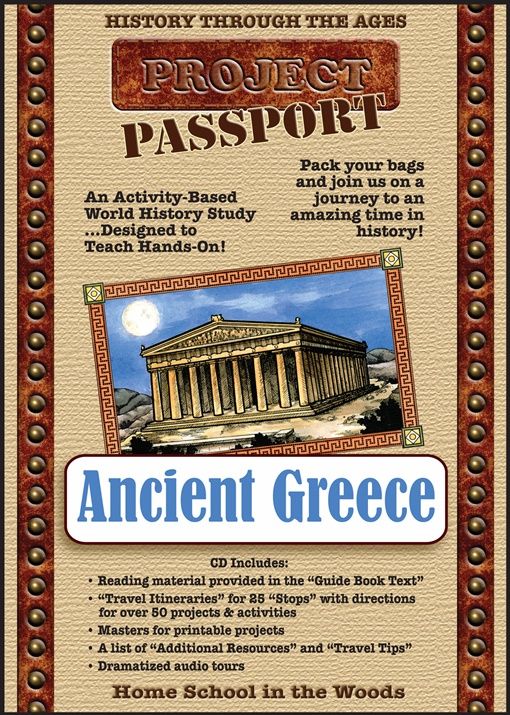
Project Passport World History Study: Ancient Greece {Crew Review}


We love  history, and learning about ancient civilizations is a particular favorite, so when we were asked to review HISTORY Through the Ages Project Passport World History Study: Ancient Greece, everybody was excited.

HISTORY Through the Ages Project Passport World History Study Reviews


Home School in the Woods has done a really beautiful job creating this history study pack. We were given the downloadable version, which was really easy: download, double click the file called "start" and it came right up in Firefox like a webpage: everything I need, all right there. The Project Passport is organized into 25 "stops" or lessons, and the first one is longer, because it's a lot of set-up. For the first stop, we made some "Scrapbook of Sights" binders, and printed out the included timeline to start them out. The included printables are uniformly beautiful, generous, and well-organized, so that finding them when you need them is a snap. Both Hero(10) and Dragon(6) are doing this. It's designed for kids in grades 3-8, but there is no way that Dragon is going to sit this one out, so I didn't even ask him to, even though he's only in first grade. Hero even went to the trouble of looking up Greek-style lettering for the front of his folder, which I thought was really cool.


A Homeschool Review Crew review of the Ancient Greece Project Passport World History study offered by Homeschool in the Woods.
Binders with printed "scrapbook" covers from the Passport Project.

Peanut(4) gets a scaled-down version for similar reasons: if we are painting, coloring, cutting, and pasting, she needs to be in it, doing school (ask her and see). So the boys both got binders, according to the directions, and I sewed the timeline into a file folder for her with my sewing machine, and let her do a map, which we glued into the folder. Just enough for her to feel included. That ended up working out really well, because I did most of the work on it, so it became a sample for the boys to look at. (It did cause some problems later, as she "participated" but had no where to put things; I discretely recycled a few pages later on in the project.) The maps took us a long time, because the kids all decided that they wanted to paint them. We love maps, and the Project Passport has two maps right at the start: one a close-up of Greece, and one larger that shows most of the Mediterranean Sea. We also had a look at our globe at this point, to place Greece on a global scale. There are several additional maps later in the stops, as well. Dragon has done some map work on Egypt, as he'd also been learning about ancient Egypt recently, and it was especially fun to see him make connections, and begin to realize that the Greek stories and the Egyptian stories have places where they touch and connect.

A Homeschool Review Crew review of the Ancient Greece Project Passport World History study offered by Homeschool in the Woods.
One of the days we when worked on the maps that detail just Greece.

The process of doing the maps and building the binder this way took a long time - we probably worked on them 2-3 times a week for 2 weeks, but I feel like it was time well spent: the boys had enough time to really see the maps. And it was so pleasant; one week we even looked up "Ancient Greek music" on YouTube (not part of the stop) and listened to what various artists think their music might have sounded like while we worked on our maps, which lead to some really great conversation. Because the various maps all got labels on different days, the names and locations are becoming familiar: if we talk about the Aegean Sea, they know exactly what I'm talking about and can find it pretty readily on both maps. They have taken a lot of ownership of and pride in these projects, and the beautiful printables really encourage that.


A Homeschool Review Crew review of the Ancient Greece Project Passport World History study offered by Homeschool in the Woods.
Working on our collection of maps - this shows both boys work, plus my sample.
Dragon's work is the binder at the top; Hero's is on the right. Mine is at the bottom.

I had Dragon use the included labels, and glue them onto his painted map. I was a little concerned about all the labels that needed to go on the map, but with the printed labels, it's not a big deal, even though he's a little young for the project. I painted Peanut's, but she was excited to do the label gluing herself. There are actually quite a few labels, and instructions in the teacher notes about when to add them to the map. These pictures were taken after the first stop, so the maps are still pretty simple. I like that we'll add things as we talk about them, rather than doing it all at once in a barrage of strange place names without meaning. This way, they only add a place after it's been discussed in the text and has some meaning for them.

A Homeschool Review Crew review of the Ancient Greece Project Passport World History study offered by Homeschool in the Woods.
This is Dragon(6)'s detail of the Greece area, showing the map and the labels.

A Homeschool Review Crew review of the Ancient Greece Project Passport World History study offered by Homeschool in the Woods.
This is Hero(10)'s version, with the hand-written labels.

There was a reading -there's one for each stop- with narrations from both boys. The readings we typically do are more narrative than factual, but that wasn't a problem. Both of them did great with a more nonfiction type of reading, and the level was great for them both. We laid some great groundwork, and some good conversations about the geography, and the whole first stop was extremely pleasant.

One feature that I especially liked from the reading was that they discuss the traditional settlement of Noah's sons following the flood being in ancient Greece. Having been educated in the public schools myself, I often don't know about connections like this between Biblical history and secular history, but the distinction between "Biblical history" and "secular history" is artificial. There is only history; real history includes both aspects. I love it when the materials we use treat it as the one interconnected whole that it is. One of the booklets we made for the lapbook is a family tree of Deucalion/Noah's son Hellen, and we built it to be color coded to the map of the areas that they settled, which was pretty interesting to see. I had never realized that Greece had "tribal" areas before. The booklet was fiddley to put together - well beyond what Dragon could assemble on his own, though he did get some fine motor practice in helping to cut things out, but I felt like, once I'd made it, it enhanced his understanding of what was going on, and he is two years younger than the recommended age for the project. He thought it was pretty cool that you could make a little book like that, and was able to explain the family structure when it was finished. We came back a different day and added the various places mentioned to our other maps. Hero did his a different day, and much more independently, because he was sick again when Dragon and I did this. These booklets will be assembled, with several others, into a lapbook later in the Project. For now, we just tucked them into the front of the binder to keep them safe.


A Homeschool Review Crew review of the Ancient Greece Project Passport World History study offered by Homeschool in the Woods.
Dragon(6) with booklet of Hellen's family and their tribal areas in Greece.

Periodically through the project, the kids receive "postcards" from ancient figures. When I first saw these, I was pretty skeptical about their value, and almost decided to skip it. However, after the boys received the first one, from Agamemnon, they had turned on a Librivox recording of a retelling of the Trojan War, and both boys immediately recognized Agamemnon in the story, and were excited to hear what happened to the character that had sent them their first postcard. I was pleasantly surprised at how well this simple activity laid the groundwork for getting more out of the literature they were listening to. There's an option to print these with a border on the back and have the kids draw on them, but my printer hates to print double-sided, so I skipped that. So far, it's the only activity that my cranky printer has made problems for. The printables are uniformly well-done and beautiful, and all the assembly we've done so far (such as the post card rack here) has great instructions. Older kids probably would be able to do it pretty independently; my younger kids were able to do it with minimal instruction.


A Homeschool Review Crew review of the Ancient Greece Project Passport World History study offered by Homeschool in the Woods.


Another project that gets assembled early on then added to as you go along is the "Greek Weekly" newspaper. I decided that only Hero would do this section, but because he's been quite sick, he hasn't started it yet. Although it's geared for grades 3-8, there's a lot of things in the Project Passport that are easily adaptable to younger kids, but my first grader just isn't ready for this kind of activity. The instructions have some cool ideas for assembling it to look like a real newspaper, and suggest printing on fancy paper, front to back, so that you can turn the pages properly, but in the end I decided to just keep it simple: a file folder cut down a little became a divider in the Scrapbook of Sights binder, and I just hole punched the pages and put them in his book. I like that there's a place for writing in this, and I also like that the areas given on the pages are small enough to not overwhelm my reluctant writer. I think that, if you had a more enthusiastic writer or an older student, it would be a simple thing to make up a few pages for the stories to continue, as newspapers frequently say, "Story continued on B-13" in real life. There is no included printable for that, but finding lined paper, or even printable lines if you're using fancy paper, shouldn't be a difficulty at all.


A Homeschool Review Crew review of the Ancient Greece Project Passport World History study offered by Homeschool in the Woods.


One thing I would love to have seen more of is links to museums for samples of scripts and art, though they do include some line drawings of various artifacts and clothing. However, the text includes some great vocabulary that could easily become key-words for searching online collections that so many museums have generously put out there. Additionally, I wish there was more literature or Librivox (or other audiobook) recommendations that line up with the "stops" on our trip. There are a book titles mentioned in the "Additional Resources" section, but a "this story fits here" where those resources belong in the timeline would be really useful. (I think there is some of that, in later stops, but because we spent the bulk of February fighting influenza, we haven't gotten as far in the project as I had hoped, and if it's there, I haven't found it in the later materials that I've looked through so far.) We love stories: literature is so much more memorable than the textbook-style text that's included; it's personalities that stick, not places and dates, and so literature tends to impact the student far more strongly than texbooks, and it would be nice to have more recommendations. On the other hand, I feel like the activities helped build some framework for where the stories belong, both in terms of on the maps, and also in the discussion of their government, housing, and clothing, and quite a few others, which all have a place in the many included activities. There's even some recipes to try. Our regular studies include quite a bit of Greek myths and epic tales of all sorts are a favorite that my kids go back to repeatedly whether I assign them or not. The activities at the stops are adding a whole lot of depth and context to what they learn in the stories as they are exposed to them. 

With 25 stops, this Project Passport is really packed, and to really do it justice, it needs to be planned a couple times a week over a longer of time, probably several months. I don't want to rush things. We learned quite a bit during the review period, and had a lovely time doing it. My kids are excited when they see Greece on the schedule, and we are all -including me- learning a whole bunch of new things.


HISTORY Through the Ages Project Passport World History Study

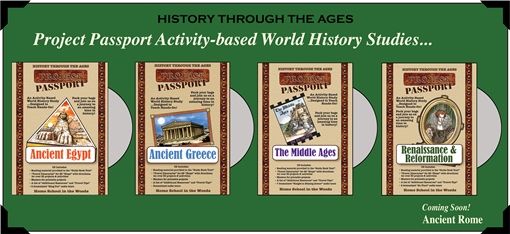
This is one of several different Project Passport kits that Homeschool in the Woods offers, and the Review Crew members were fortunate to be able to try all of them, so if  you want to know what other families thought of Ancient Greece, or any of the other Projcet Passport kits, click on the banner below to read about it.

Click to read Crew Reviews


Crew Disclaimer

02 February 2017

Snapshots From Our Day

Just an ordinary day, doing ordinary things.

Both boys practiced math facts. We're working toward mastery, which includes speed drills for Hero, though Dragon's not ready for those. Listening to Andrew Pudewa's talk, Mastery Learning and Ability Development, has reenforced my decision to require the kids to do timed tests. There's a lot of value in knowing the facts cold -- and he shares a cautionary tale from his own family about what happens when kids don't know their facts, but move into harder math anyway, including how it affects his daughter's perception of herself and her abilities. Math facts and speed drills are a good thing.

A candid peek into a day in our Christian Classical homeschool education.


We're having a watercolors phase, and they've been out on the table nearly constantly for several days now, except when I insist on clearing things off for meals. This is Hero's current project, the goddess Artemis. It's a coloring sheet we printed, and he's having a great time painting it. Lots of Greek stuff going on -- looking forward to writing more about it when I share the review that I'm working on, near the end of the month.

A candid peek into a day in our Christian Classical homeschool education.


So much reading going on lately; it's just lovely. Hero's been re-reading a number of the sci-fi series he has recently, plus devouring classic fiction that I assign. Here he's working on Gone Away Lake, from the Ambleside Online free-reads list. So many good books on their curriculum! So glad I finally figured out how to use it.

A candid peek into a day in our Christian Classical homeschool education.


A while back I started asking Dragon to read to Peanut. Turns out they both love it (even if she was distracted when I caught them doing it), and it's been huge: he doesn't really want to read to me, much, but he will cheerfully read to her. So I ask him to. And his reading is really taking off. I love this part, where they discover that they love reading.

A candid peek into a day in our Christian Classical homeschool education.


This has got to be the cutest "gate" ever invented. It's actually open in the picture. When they wanted to close it, they'd spread out their feet as far as they would go, and the two of them can cover a lot of ground! Surprisingly effective... but I have long legs.

A candid peek into a day in our Christian Classical homeschool education.


Lunch. Baked potatoes. Yum.

A candid peek into a day in our Christian Classical homeschool education.

And the "meat" of the day. Good stuff.


Hope you liked your peek into our day of school today! How's your day been?

19 October 2016

Cuneiform


Last week we read about writing in Mesopotamia; this week we're playing around with trying some. Dragon was pretty into it. 


We just used play dough this time, not baked clay like when I did this with Hero, but it's still a fun project. 

23 August 2012

Rome Online

It's always interesting to see what sort of fun resources I can find online for the topics we're studying. Here are some that I collected for Rome.

The Stories Coins Tell - in interactive thing about different Roman coins and the stories they tell.

This one's not interactive, but it is a clear explination of the way the Roman Republic worked. This is good information because I'm looking forward toward the time when we're teaching about the American Republic, and this will lay some groundwork for that, so we'll spend some time talking about this, and I'll have him do a narration when we're done.


This documentary from National Geographic has some general information about the peak of Roman civilization, and contrasts the reigns of Trajan and Hadrian.


22 August 2012

Roman Reenactment

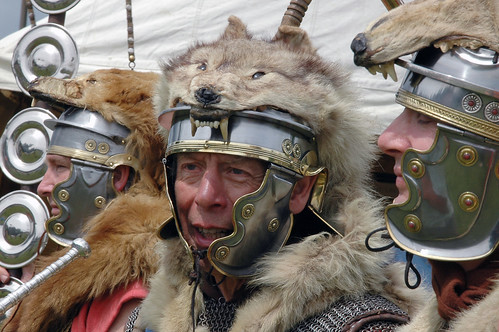
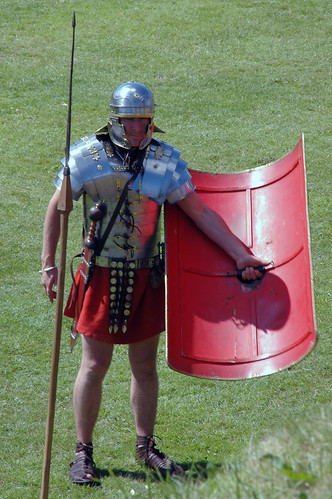
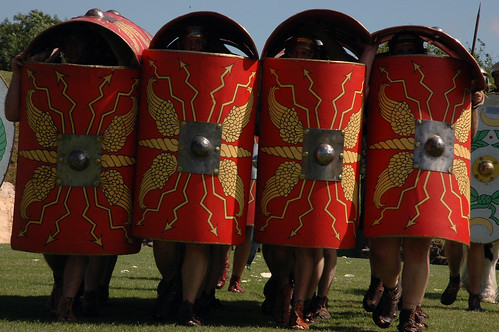
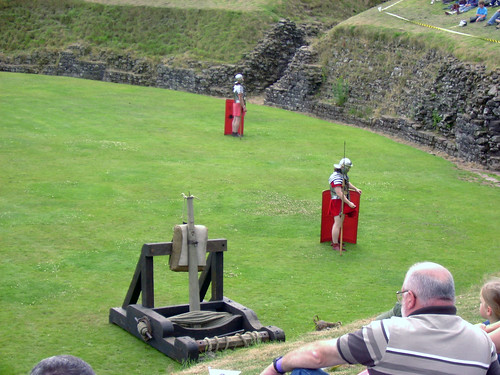
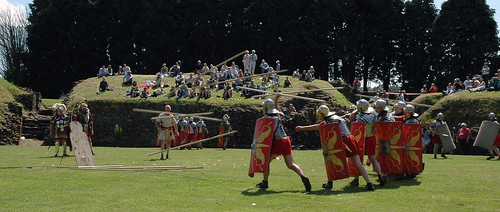
We're finishing up our study of ancient history by looking at Rome. In the process, we discovered that there are groups that do reenactments of Roman battles, and it looks like they've spared no expense. Hero picked a few pictures to share; they all come from this flicker photo stream.

Roman Military Spectacular, Caerleon


Roman Military Spectacular, Caerleon


Roman Military Spectacular, Caerleon


He says someday he'd like to build a catapult. Maybe we can find one of those models and make a mini one.
Roman Military Spectacular, Caerleon

Roman Military Spectacular, Caerleon


01 August 2012

Alex the Geat and Fractions

We've been focusing on history a lot this summer, trying to finish up the Ancients before fall. Not that you'd know it to read my blog! But we have. We've made it through Alexander the Great, who, it turns out, is really very interesting. So, we're reading along and learning about all the areas that he conquered (all of the known world, basically), and what he did in the areas that he conquered, and we learned that he had them pay tribute. The book estimated that it was about 10% of their production that the conquered areas had to pay. Now, we've talked some about fractions, but they're pretty tricky, so we stopped and talked about that. It went like this:

"The conquered areas had to pay one tenth of their production. Do you understand how much is one tenth?"

"No."

"Ok. So, if they have 10 cows [I draw 10 really ugly cow-like-objects on the markerboard], then one of them gets sent to Alexander. [I color one of the "cows" purple.] How would you write one tenth?"

We figure that out.

"If Alexander was really nice to the people, then they might only pay one ninth for tribute."

I think this sounds like a good time to talk a little more about fractions, so I go grab several pages of paper, which we pretend into chocolate bars, and some scissors for dividing them.

"OK. Which do you think is more, 1/2 or 1/3?"

"1/3."

"OK. Let's see if you're right."

I cut the first "chocolate bar" into 1/2s, and the second one into 1/3.

"Which one is bigger?"

He points to the 1/3; I set it on top of the 1/2.

"You'd rather have 1/3 of a bar, instead of a 1/2 of a chocolate bar?"

"NO!!" [giggle]

"OK. I'm going to divide the next one into quarters. Are they going to be bigger or smaller than the 1/3s?"

"Bigger."

"OK." [cut cut cut] "Here it is. What do you think? Is it bigger?"

"No."

"What if we make fifths? Will those be bigger?"

"No."

"OK." [cut cut cut] "Fifths are tricky to cut. These aren't perfect. But they're pretty close. What do you think, are they bigger or smaller than the fourths?"

"Smaller."

"Why?"

He had to think about that one for a while. If the numbers we were writing on the bottom were getting bigger, why weren't the pieces bigger and bigger? That was a tricky question. We talked about how that bottom number was talking about how many pieces we are making, and so what if we had 1/100? That's dividing our chocolate with 100 people! My goodness, that piece is going to be the size of an M&M! He thought that was pretty funny, and was now quite confident that he'd rather have 1/2, versus 1/100 of our "chocolate bar." So we went back to the original question: Would it really be nicer if Alexander was to ask the people for 1/9, rather than 1/10? Now, he was able to say he'd rather pay 1/10, and understand why that's actually a smaller number. I was pleased. And we continued to read about this interesting guy that took over the world 300 years before Christ.


01 May 2012

Boustrophedon

Nope, it's not a dinosaur; it's a cool word. It's the way the Ancient Greeks used to read: forwards and right to left on this line, then backwards and left to right on the next. Boustrophedon means "as the ox plows" - that is when you turn at the end of the row and go the other way. This and other interesting stuff is in the new book I bought on Saturday: Ox House Stick: the history of our alphabet.

21 April 2012

Teaching the Passover

It's been a zoo of a week: everyone is a touch under the weather, and our roof is leaking. (Someone's coming tomorrow to help us figure out a fix for that lovely issue.) I'm hoping tomorrow will have enough room in it to teach Monkey about the Passover, since my history schedule is ambitious, and requires that we start learning other stuff next week. So, tonight I'm trying to gather up some stuff to teach about the Passover. It's interesting. Very interesting. One great thing about teaching is all the cool things I get to learn. For instance:

Heart of Wisdom has this cool .pdf that they've shared. I've actually only read about 8 pages so far, but those first eight pages include a great chart of ways that the Passover lamb symbolizes Christ, as well as some fascinating commentary on symbolism in the plagues. Heat of Wisdom has also shared a little Passover booklet and a nice one for the 10 Plagues that we'll be adding to our lapbook.

I also spent some time browsing around at LDS.org, and they've got some good stuff there. For instance, Passover - Was It Symbolic of His Coming? has some great observations about the phrase, "meridian of time" and other things dealing with time, as well as actual Passover symbolism. Moses and the Passover has a little simpler explanation, which may be better suited to Monkey, though he surprises me often enough with the things he can understand! This coloring sheet from the Friend may be just what we need for the front cover of our book. 

Then, it's back to Heart of Wisdom for another lapbook component, God Leads His People, which deals with the pillar of fire and cloud.


18 April 2012

Planning History

I'm still working out what exactly I'm going to do with History. We've been taking our time, followed some interests, and lingered in both China and Egypt. It's been very pleasant, but now I'm at th point of needing to decide some things. I'd like to finish the Ancients by the end of September, which leaves me 23 weeks (or so), and 28 lessons, plus some things from Old Testament history that my husband and I have agreed are important and ought to be covered as well. Hence the large lapbook that we are working on as we cover Moses this week and probably next week too.

But, if we are to finish the year in an organized fashion, rather than haphazardly, I need to make some kind of plan.

Week 1: Moses Lapbook part 2 (40 Years' Wandering/Entering the Promised Land)
  • Old Testament Story Book
  • The Bible and Book of Mormon
  • lapbook resources both found and created
  • Book of Centuries entry
  • Museum visit with my sister & her husband (primarily Egyptian exhibits)
Week 2: Israelite History/The Phoenicians
  • SOTW ch 15 w/staind "glass" projects & possibly pita bread
  • OT Stories: Ruth, Samuel, Saul, David, Solomon, & the Temple
  • OT Stories: Elijah & Elisha
  • Book of Centuries entry
Week 3: The Return of Assyria
  • SOTW ch 16
  • Seven Voyages of Sinbad the Sailor
  • OT Stories: Jonah; The Divided Kingdom
  • Jonah  craft from my Pinterest collection
  • 2 Kings 17 (the Assyrian captivity & repopulation of Samiria)
  • Book of Centuries entry
Week 4: Babylon
  • 2 Kings 22-23. Josiah
  •  SOTW ch 17: Babylon Takes Over Again!
  • 2 Kings 24-25. Zedekiah
  • Book of Mormon Stories: Lehi Leaves Jerusalem; Crossing the Sea
  • OT Stories: Daniel
  • Book of Centuries entry
Week 5: Crete and Greece
  • SOTW ch 18: Life in Early Crete
  • Atlantis: the Lost City
  • The Hero and the Minotaur 
  • SOTW ch 19: The Early Greeks
  • D'Aulaire's Book of Greek Myths
  • BoM Stories: Enos
  • Book of Centires entry
Week 6: Greece
  • SOTW ch 20: Greece Gets Civilized Again
  • The Librarian Who Measured the Earth
  • Black Ships before Troy?
  • D'Aulaire's Book of Greek Myths
  • Book of Centuries entry
Week 7: Medes & Persians
  • SOTW 21: The Medes & the Persians
  • King Midas and the Golden Touch
  • The Persian Cinderella
  • Cookie map of Mesopotamia from Pinterest
  • OT Stories: Esther
  • Book of Centuries entry
Week 8: Greece
  • SOTW ch 22: Sparta & Athens
  • D'Aulaire's Book of Greek Myths
  • SOTW ch 23: The Greek Gods
  • An Ancient Greeke Temple
  • The Gods & Goddesses of Olympus
Obviously, there is more to plan, but this is all I can get done right now.
 

14 April 2012

Old Testament History: Moses

Seeing as the Old Testament is such a huge part of the gospel, and so much refers back to it, we want to make sure that we do a good job of teaching Old Testament history as we're teaching, which is of particular interest this year while we're covering ancient history. It's important, but it's not simple. Not even close. Dates are a huge headache. Because there's a whole lot of disagreement on basic things like how old the earth is (4 billion years to only a couple thousand), and how long man have been on it (evolution vs creation), and it all gets more interesting from there. Frankly, I don't find the topic of the exact age of the earth all that interesting, but the perfectionist in me NEEDS a date at the top of my timeline.

More to the point, I want to somewhat coordinate the Old Testament stories with the materials in Story of the World 1. So I'm having a look at SOTW, and at the Old Testament chronology in the Bible Dictionary, and at this website that  one of the Moms at the Hive helpfully pointed out. We are currently working on chapter 14: Moses and the Exodus.

SOTW 14: The Israelites Leave Egypt.
Most of our reading from this will actually come from the Old Testament Stories book the church puts out, and the boys like the movie version, so we'll probably watch that too. There are quite a few "chapters" about Moses, but they're short and Monkey loves them, so it's not a problem. We're also still reading miscellaneous bits about Egypt.

We're doing  a lapbook for Moses, because his story is so important and turns up so often. I have several different sites I'm pulling from, saved on Pinterest. I couldn't find anything I liked for some of the events, so I made these. If you use it in your lapbook, I'd love to see a link to a picture in the comments!

Cut along the lines, then attach with a brad at the circles.


Cut on the lines, the connect the pages with a brad.


Glue tabs to make a pocket, then write plagues on the pages.


23 March 2012

Egypt's Middle Kingdom

We're studying the Middle Kingdom of Egypt in history right now, and it's interesting stuff! One of the things we discovered is this temple in Abu Simpel that was built by Rameses II, and then had to be moved in the 1960s when they decided to dam the Nile and create a lake that would have swamped the temple. These clips tell the story of how it was saved.


We also watched a second documentary, which highlighted some of the technical difficulties of the move, as well as a cool feature of the original engineering and how they set up the light in the temple.


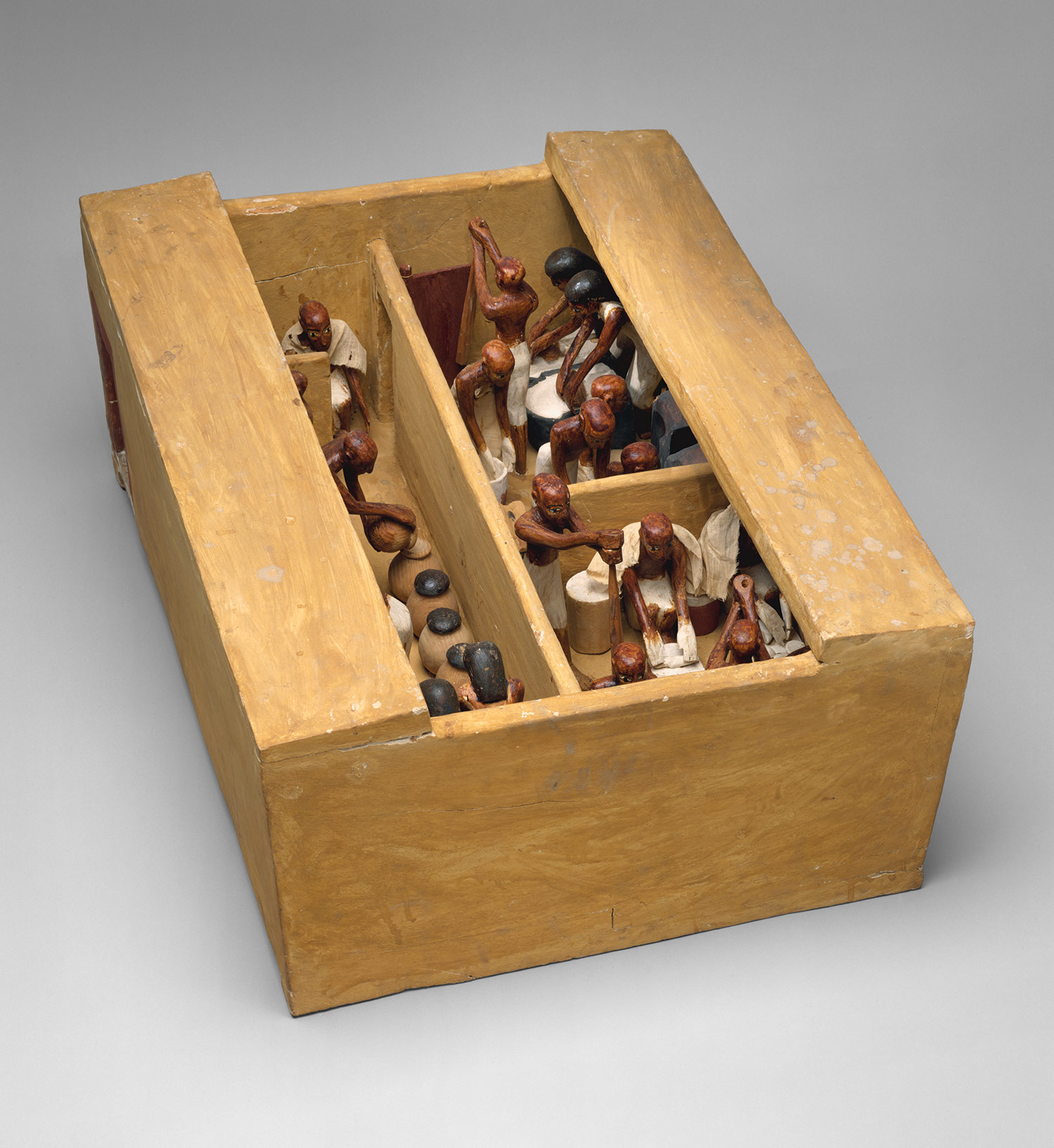
We found a copy of the Usborne Internet-Linked Encyclopedia of Ancient Egypt, and it's proved to be a lovely treasure-trove of information and they have some great links. That's how we discovered Abu-Simpel, and we also read about Ramases II, and about the Middle Kingdom. And they pointed us in the direction of some cool online exhibits from the Metropolitan Museum of Art, where we read about a scribe named Wah, his employer Meketre, and the cool funary models they had in their tombs.

Model of a bakery & brewery, courtesy of the Metropolitan Museum of Art.


LinkWithin

Blog Widget by LinkWithin