In June, I was called to be the new Lead Family History Consultant, which I was excited about, but also more than a little intimidated: my family has been members of the Church of Jesus Christ for a very long time; I count both early leaders and a number of faithful genealogists among my ancestors, and the easy research is long since done and gone. I've been poking my family tree for the past twenty years or so, trying to persuade it to produce temple names, but only once in all that time did I find a few names for a handful of sealings for one family. It was, as people say, a very special experience to take my own family names to the temple, but mostly, when people would talk about needing to go and do work for family members at the temple, I just felt left out: I knew there was people there to find, but I didn't know how to find them.
Between reading Find Names for the Temple: A Step-by-Step Method for Success by Nicole Dyer and Diana Elder, and some training from the Stake, things have changed: I have what I am confident will be the first of many temple cards printed out and ready to go, and I'll be making the trip to the temple (it's 3 hours from here) sometime in the next month or so. I can't even say how excited I am to finally have the skills to be able to find these people that have been hiding in my tree!
Showing posts with label book review. Show all posts
24 September 2018
19 February 2018
Heirloom Audio: Wulf the Saxon {Crew Review}
at
7:00 AM
We were excited when we got the opportunity to review Wulf the Saxon, and audio drama from Heirloom Audio Productions. We've had the chance to review In the Reign of Terror and Captain Bayley's Heir from them before, and found both of them to be excellent, so it was exciting to have a go at another of their titles.
I was particularly interested in hearing the Heirloom Audio version of Wulf the Saxon, because this is a story that we discovered about six months ago when Dragon(7) was learning about the Battle of Hastings, and we have listened to the Librivox version several times since then: it's become a favorite. I suspected that Heirloom Audio would bring something special to the story, and I was not disappointed. Although this version is much shorter - right about 2.5 hours, compared to just over 12 on Librivox - but the abridgement is done masterfully, and I found that all my favorite parts are included.
25 January 2018
The Gospel at 30,000 Feet {Book Review}
at
10:54 PM
I always love Brother Uchtdorf's airplane stories, both because he's an excellent storyteller, and also because he's got a knack for turning the airplanes that he loves so much into fantastic parables and allegories that clearly and effectively teach the gospel of Jesus Christ. So it's not surprising that only few pages into his new book, The Gospel at 30,000 Feet, which I was sent to review, I was reaching for my commonplace book.
To follow Christ is to become more like Him. It is to learn from His character. As spirit children of our Heavenly Father, we do have the potential to incorporate Christlike attributes into our life and character. ... This leads me back to my aerodynamic analogy from the beginning. I spoke of focusing on the basics. Christlike attributes are the basics. The are the fundamental principles that will create "the wind beneath our wings".
-page 4-5
The airplane story here is fun (aren't they always?) but the things that he's saying about the importance of the basics really resonate. It's the same way in the martial arts: the "magic" is in the basics. You master those, and you master the art. It's very much easier said than done! Likewise in the gospel, the basics are what makes the indelible marks upon your soul.
18 September 2017
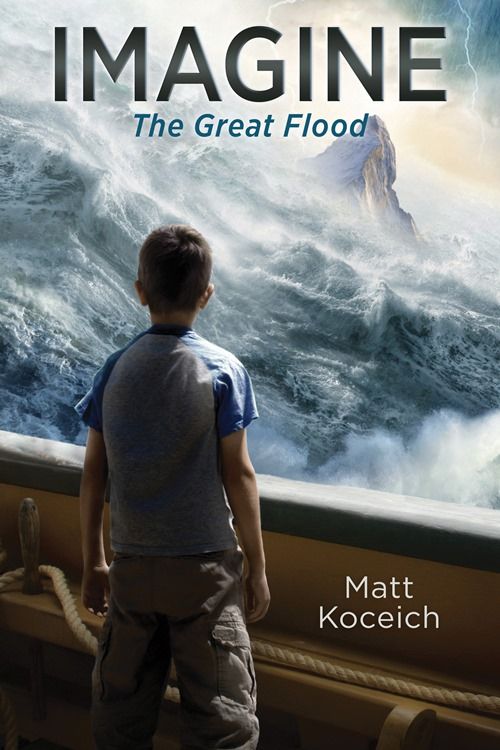
Imagine... The Great Flood {Crew Review}
at
7:00 AM

Books in the mail again; what fun! This time we were given Imagine. . .The Great Flood by Matt Koceich to review, which is published by Barbour Publishing. It's a short Biblical fiction book: 100 pages of largish type; I sat down and read it in an hour, and then gave it to Dragon(7) as a free read: he's required to read at least one chapter, but allowed to read as much more than that as he would like.
It's a cute story, about Corey, a modern boy. His family is moving to Florida, and he's very unhappy about it. His mom tries to teach him that God will care for their family, but it isn't really sinking in. Then Corey finds himself transported to the time immediately before the Flood, where he meets Shem, Ham, Japeth, Noah, and a whole bunch of animals -- and he meets Noah's family's enemies. Although it was such a short, easy book, I learned something new: in the story, the "Nephilim" are Noah's enemies. "Nephilim" is the Hebrew word for giants (see Strong's Concordance for Genesis 6:4, for example). They certainly made for formidable enemies in the story! Corey is captured by them at one point. In addition to a cute story, I liked that the author doesn't beat you over the head with moralizing about the application of the Bible story and principles to Corey's life. He trusts his story to be strong enough to teach without needing to beat you about the head and shoulders with his point -- and he's right to do so. The ending is satisfying and the point is strongly present without being preachy.
Dragon liked the book enough that at one point he fell asleep with it still in his bed, and I had to fish it out when it fell down by the wall the next time he needed to read it. It was never very hard to get him to work on reading it some more, and at one point he even told me that he was pacing himself so that the book didn't end too soon!
Dragon said: "I like all of the stuff even. It's full of adventures, but at the same time, he's getting captured alot! He just got trapped in a cave, and he keeps on slipping and just falling down. I have a positive review."
If you want to read more reviews from the Homeschool Review Crew and their families of Imagine... The Great Flood by Matt Koceich, click the banner below.


12 September 2017
Carole P. Roman Books {Crew Review}
at
7:00 AM

Books in the mail is always some of the best kind of mail! This time, I received several picture books to review this time, all written by Carole P. Roman:
- If You Were Me and Lived in... Ancient China
- If You Were Me and Lived in... Elizabethan England
- If You Were Me and Lived in... the Ancient Mali Empire
If You Were Me and Lived in... the Ancient Mali Empire
This was a fun book. There are many areas in Africa that we have not hit very much thus far in our educational journey, and it was fun to learn a little bit about one of them. Ancient Mail was new and interesting for us to read about. The book is 68 pages, plus a glossary, and it covers quite a bit of ground, including touching on clothing, housing, customs, and some history. The pictures aren't fancy, and often suggest, rather than spell out, which leaves plenty of space for the child's imagination to fill in the details.
If You Were Me and Lived in... Ancient China
This is also an interesting book. I gave it to Dragon(7) to read, and while I thought that he would find it interesting, it wasn't his favorite. However, I think that has more to do with where he was at (not in the mood for a book that I picked for him) than with the book itself. It's a really nice book, filled with all kinds of interesting information about China. It's full of interesting bits about housing, clothing, religion and culture, silk production, major professions, and a number of other things, all presented in the story of a young boy from ancient China. I enjoyed reading it. Like the book about Ancient Mali, it's a substantial one, with more than 60 pages.
If You Were Me and Lived in... Elizabethan England
Hero(10) started reading this in the car, but when he realized how long it is, he stopped and just read it himself. Like the rest of these "If You Were Me and Lived in Ancient _____" books we received, it's more than 60 pages, and I think that he didn't want to wait around long enough to read it out loud. The pages do have quite a bit of text on them; it's a lot to read out loud in a single sitting. He easily finished it before we finished our trip to Grandpa's House.
Hero(10)'s review: It was cool because it was interesting. I learned that you would be an apprentice at a far younger age than today, and I learned that there was actually a rule: they said no meat on certain days because it allowed the fishing industry to recover from the week. It was a time of no war, not to mention a new class of people had emerged: merchants.
If you want to read more reviews of Carole P. Roman's books - there are lots of titles the Crew is looking at- click the banner below.


01 August 2017
In the Reign of Terror Audio Drama {Crew Review}
at
9:51 AM

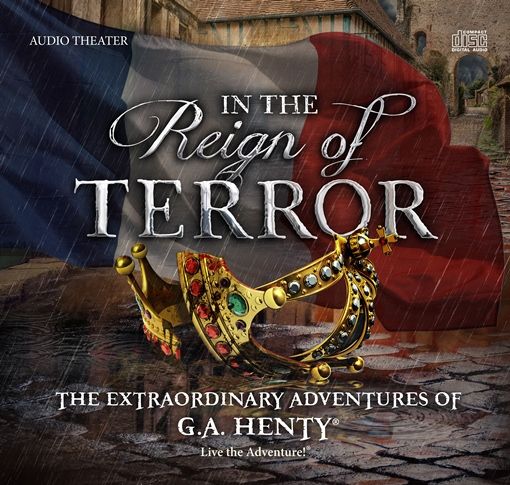
For this review, we were listened to In the Reign of Terror, and audio drama by Heirloom Audio Productions on CD, which is an adaptation of G.A. Henty's book In the Reign of Terrorm, and the downloadable study guide that goes with it.
The story is gripping. I didn't realize it at first, but this is not our first story from G.A. Henty. So far, I've really enjoyed all of his works -- and making it an audio drama, where they've gone a step further than just reading the story, and given it a sound track and audio effects, just really enhances the story. The characters, each portrayed by a different actor or actress, really come to life. The English sound English, and the French characters sound French. That actually made us work at understanding, particularly at first, because the French accent has always been one that's a little bit difficult for me to follow, and it's pretty thick at times. But our ears adapted, and we were able to follow without serious issues. The story is about 16 year old Harry Sandwith, who in the months just prior to the reign of terror, is engaged to be a companion to the five children of the Marquis de St Caux, and live with them in their country home some miles outside of Paris. Harry's family feels that, even if there is unrest due to the revolutionaries, it is unlikely to touch the home of the Marquis, but of course the revolution becomes both more widespread and more violent than anybody predicted, and Harry gets caught up in quite the adventure.
The recording is beautiful. The sound track is lovely -- both the music and also the various noises that they use to bring it to life. You can see the kind of attention to detail they put into sounds of all sorts in the clip they include on their "Who We Are" page, where they show how they collect the authentic sound of a door handle in a church for another title, In Freedom's Cause. In the Reign of Terror sounds like it's had that same attention to detail and high level of excellence as well.
I don't want to give away too much of the story, because I think you're going to love it, but of course things turn far more violent than the Marquis or anybody else anticipated at the outset. Harry has just enough time to learn some French and get comfortable with the family, and then things get crazy as the revolution picks up its pace. There are mobs, the Marquis rushes off to fight for the king. There is heroism in many places, betrayal, rescue -- at one point Harry even ends up briefly working as Robespierre's personal secretary!
Henty has included in his story a number of points of commentary that bring out the substantial differences between the French Revolution and the American Revolution, which I really appreciated because it made it really easy to have a series of conversations about the differences, and while, while the one was a noble thing that actually brought freedom to a nation, the other used noble verbage but descended into worse tyranny than what the existing rulers had exercised. As one character puts it, "It is not égalité, equality, the canaille -- that is, the common people, desire, but a reversal of roles." In the Reign of Terror starts with a bit of an introduction, where these ideas are given voice by Henty himself: "The difference was in their hearts. The difference was their attitude toward God."
In addition to the audio drama itself, we were also given a study guide, which is beautiful and extensive: 43 pages. The study guide is available through their Live The Adventure site. It starts out with some interesting background on G.A. Henty, and on a few of the key players in the French Revolution.
The study guide includes a lot of comprehension questions -- they have some for every chapter, if you are so inclined. We listened to this the way that we would a read aloud: no comprehension questions, and I didn't ask for narrations, but just let the discussion happen organically, which it did. If we had used it as a school book, I would have spread it out over a number of weeks, perhaps even a month or two, and we would have made greater use of the extension activities in the study guide. It's full of extra information: definitions of French words, and information boxes that help to paint a more complete picture of what it was like in France in that time, and the sharp contrast between the privilege and privation that existed.
There are two sets of questions for each chapter. The first are just basic comprehension questions, covering the sorts of things that we usually cover in narrations. But the second are really thought-provoking questions that could be discussion topics, or a jumping off point for writing papers for older students.
One thing that I particularly appreciate is that the questions both encourage the student to consider the story in relation to scripture and the gospel, but they are worded in a way nearly completely nondenominational, and while a one or two questions do suggest a total depravity/original sin perspective, it would be a very simple thing to adapt these questions to reflect the LDS understanding of the nature of man, which rejects original sin or holding children responsible for the crimes of parents, and embraces the inherent goodness that is implied by the Biblical assertion that we are the children of God. The study guide also encourages students to consider some of the great questions in government, relating to the purposes of government, what good governance looks like, and highlights the way that pretty rhetoric can disguise ugly intentions and deeds.
We had enough other stuff use of all the resources, but there is a lot of good stuff in the study guide, and you could use In the Reign of Terror and its study guide to do a really in-depth study of the differences between the American Revolution (which the introduction suggests shouldn't even really be called a revolution, but instead ought to be thought of as a "War for Independence") and the French Revolution, and a stepping stone to some great conversations about a host of important topics. And the study guide is written in a way that encourages you to consider things in light of what scripture teaches on the matter.
The story itself is great, and the study materials are outstanding. My first grader enjoyed the story, my fifth grader and I had some good conversations, and you could probably use this study guide with high schoolers for papers and discussions on a wide variety of important topics.
If you want to read more reviews of In the Reign of Terror click the banner below.


18 July 2017
Doctor Aviation {Crew Review}
at
7:00 AM

My kids, particularly Hero(10), who loves all things airplanes, were really excited when I told them we would have the opportunity to learn about aviation history while we review Doctor Aviation. It's a six-month aviation course that consists of 15 video lessons, each with an accompanying PDF with all kinds of extras: readings from a variety of books and magazines, YouTube videos, links to virtual tours, and suggestions for relevant places to visit if you happen to be local, as well as activities to do. We are doing it as an enrichment course, but there's enough here that you could easily do it for a high school full credit course, or as a continuing education project for adults. It's really flexible, though, and I've been able adapt and springboard off of the suggested activities for my younger kids as well, even though they are not at all the intended audience. I find the videos to be informative, with plenty for me to learn -- and they hold the attention of both Hero(10) and Dragon(7).
When you log in there's a nice dashboard that shows your current lesson and your progress through the course. It's easy to navigate; the video is at the top, with a list of right under it, and the PDF resources below that.
The lessons are all structured so that, first you learn about "Technical Trivia", where he explains the parts and pieces of aircraft, and how they work, then he covers "Notable Innovators" where he talks about major contributors to the field of aviation, and finally "Legendary Aircraft" where he covers particular airplanes. The videos are each about an hour long, and Dr. Aviation himself is easy to listen to and informative. He alternates between lecturing next to a small aircraft, and showing pictures of the planes and people that he's teaching about.
As soon as we started doing the course, a couple of things started happening in our family. One is that a large percent of the many Lego creations that my boys turned out since we started the review are airplanes. As they'd learn about things, this would be incorporated into increasingly realistic replicas, limited more by the pieces available than anything else: the kids clearly understand what they're doing well enough that it could have been better if they'd had the parts. The other lovely result is the boys, in addition to devouring the materials from the course, would look at all kinds of additional aviation documentaries on YouTube in their free time. I love it when learning inspires enough enthusiasm that the kids seek out more on their own! There has definitely been a lot of self-directed learning that has expanded and explored on these topics.
In addition to the videos, the PDFs for each lesson also always includes recommended books for further reading. This was one area where the course really shines. While my boys love airplanes, and want to know all about how they work, I've always been content that they do work. But the books recommended include several biographies, of notable aviators, and I love those. So this course has a fair amount to offer, even if you're not really into airplanes, because the people around airplanes are really interesting people, and the books I've read have been very interesting. Hero is a strong reader, so in addition to watching the videos, I've had
him choose several books from the suggestions to read. Hero and I didn't always read the same ones, but he's also been very happy with the titles he chose. Keeping the
videos at the pace of his reading has slowed things to somewhat less
than the intended schedule, so we will probably not do the readings for
all the units in order to see all the videos before our subscription runs out, but it's been very beneficial to him to do the readings
that he has done. Although our library has occasionally not had the exact titles recommended, we've been able to find ones by the same author, or on topics that we would not have explored if we hadn't had the book list to help me know what to look for. Finding Dragon a few age appropriate titles on the same topics has also
been easy, even though these are not included in the materials. In addition to additional reading material, the PDFs also include activities that you can do. One of the ones that I would like to do with the kids, but haven't yet, is to chalk out the outline of the Wright Flyer on the ground in order to get an appreciation of the scale the Flyer was built on. It's too large to draw on our driveway, and I haven't made it up to the church to borrow the parking lot, but I think that's a really cool way to bring home the scale of the thing. There are also additional resources for finding videos, websites, and virtual tours related to the lesson topics. For the high school or adult learner, you could really go quite in-depth with the materials provided.
Feeling, as I do, that education ought to be thoroughly Christian, there are a number of things I appreciate about this course. Dr. Aviation does not shy away from mentioning God and His involvement in history. Perhaps it is because I grew up with education and faith so strictly compartmentalized by the strong anti-religion taboos in public schools, but I always appreciate it when He is acknowledged as naturally as occasionally is the case in these videos. After reading the recommended McCullough biography on the Wright Brothers, I was as much or more impressed by their character as I was by their genius, and have added that one to my wish list as one I would like to add to our home library. The videos have also emphasized the positive character of other aviators. It's nice that my kids can learn about aviation, but I love that the course is holding up such great role models for my kids; character is the true aim of education.
This course has been great for us. It's extremely adaptable to meet the needs of a wide range of ages, and my kids hang on every word.


19 June 2017
Rush Revere {Crew Review}
at
7:00 AM

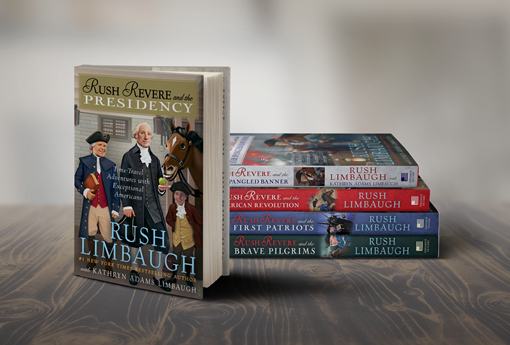
I follow politics the best I can, and care deeply about the Constitution, but I don't enjoy talk radio at all. So, to be honest, I wasn't overly excited about the Adventures of Rush Revere Book Series by Rush Limbaugh. However, I've been very pleasantly surprised by the Adventures of Rush Revere #1 New York Times Bestselling Book Series by Rush and Kathryn Adams Limbaugh. They've been fun to read myself, and I feel like they're a great way to introduce kids to some of the key events in American history. There are five volumes in the series:
|
|
![]() |
| Diagram of the Mayflower; Brave Pilgrims |
I read the introduction, and it really resonated:
I want to try to help you understand what "American Exceptionalism" and greatness is all about. It does not mean that we Americans are better than anyone else. It does not mean that there is something uniquely different about us as human beings compared to other people in the world. It does not mean that we as a country have never faced problems of our own.American Exceptionalism and greatness means that America is special because it is different from all other countries in history. It is a land built on true freedom and individual liberty... In most parts of the world, dreams never become more than dreams. In the United States, they come true every day. There are so many stories of Americans who started with very little, yet dreamed big, worked very hard, and became extremely successful.The sad reality is that since the beginning of time, most citizens of the world have not been free. For hundreds and thousands of years, many people in other civilizations and countries were servants to their kings, leaders, and government... The United States of America is unique because it is the exception to all this. Our country is the first country ever to be founded on the principle that all human beings are created free people. The Founders of this phenomenal country believed all people were born to be free as individuals. And so, they established a government and leadership that recognized and established this for the first time ever in the world! ... America is a place where you can think, believe, and express yourself as you want. You can dream as big as you can and nothing is holding you back.
It was dinner time; I was supposed to be cooking, but by this point, I was curious, so I flipped to the introduction. I was also skeptical: the main character is named after a radio personality. How good can they be? A page and a half later, I was pleasantly surprised to find myself hooked, suddenly annoyed by the fact that I needed to cook dinner, rather than sit down and read.
![]() |
| Rush Revere and students; Star-Spangled Banner. |
![]() |
| Painting of the Pilgrims; Brave Pilgrims. |
- These books clearly distinguish between historical figure and modern additions. This distinction is clear in the text and in the illustrations, where all modern characters are cartoonish, but the pictures of the historical figures are real art. The difference is obvious. The time travel device makes clear who is made up and who is real: all fictional characters are modern observers. One of the weakness of historical fiction is the way that it can be hard to pick the real from the make-believe, but that's not the case here.
- They show the role of God in history. So many times He is excluded, but these books really do a beautiful job of shedding light on how the participants in our history were very aware of God in their lives, and that this was a thing that they very much wanted. Their awareness of their need for God, and their gratitude for His assistance is included, but not in an overdone kind of way: it's just a natural part of the story. For example, from the story of how John Howland, who later became the 13th signer of the Mayflower Compact, nearly went overboard:
After several more minutes, the man was hauled back into the boat. He rolled to his side and coughed up seawater."Take him to my cabin!" the captain ordered.
Two sailors pulled the man to his feet. They helped him up the ladder to the quarterdeck and into the captain's cabin.
"He's lucky to be alive," I said as I patted William on the back.
"Not luck," William said. "It's a miracle. Surely, this is a divine sign. We will ask Elder Brewster. Whenever there is doubt or fear among the passengers we can always turn to him for guidance and strength. He has great wisdom and spiritual strength."
-Brave Pilgrims, p76
A little about Brave Pilgrims from Hero(10): "It was a time-jumping horse that Revere had, named Liberty, and he and Liberty traveled back in time for the history lessons. He recorded the history lessons while he was there on his phone, and it transmitted back to a receiver in the classroom. And talked with some Pilgrims that were going to the new world. I learned that some of them traveled aboard the Mayflower, and I had no idea about the Mayflower Compact, which happened later on. The Mayflower Compact was important because it set the building blocks for the new colony. It was an agreement that the people there would help each other in times of need, as well as other things. One surprising part was when the Billington boys snuck down between decks and fired off a musket. William Bradford, one of the colony's leaders, was rather unhappy when he discovered that the Billington boys had fired off the musket because it was extremely dangerous! I bet it was possible that they could have sunk the ship!"
![]() |
| Document reproduction; First Patriots. |
I believe God wants men to be free. I choose to believe that there is a force greater than our own here tonight. I can feel it in the air and see it in the stars. God willing, we will accomplish this mission. It is only the beginning of what we will need to do. Fear will try to stop us, but we will not let it. People who live with fear will never be free. Remember this, Tommy and Cam: We are the fear chasers. We are the hope givers. We are the freedom builders. We are the Sons of Liberty!"
-First Patriots, p195
Samuel Adams is, after reading this book, somebody that I'd like to read more about. I've seen him spoken of as being a blunt and sometimes abrasive person, but this story depicts him as being quite hard to get along with, and now I'm curious and want to learn more. That, I think, is a sign of a good introductory work: it leaves you hungry for more, wanting to go deeper.
![]() |
| Cannon transport. American Revolution |
Hero and I both enjoyed the books, and I think that they are a valuable addition to our family library, and would happily recommend them to others.
If you want to read more reviews of the Rush Revere books, click the banner below.


If you want to read more reviews of the Rush Revere books, click the banner below.


04 April 2017
Shepherd, Potter, Spy, and the Star Namer {Crew Review}
at
7:00 AM
I haven't read any historical fiction that centers on the Bible in a very long time, so when we were asked to review Shepherd, Potter, Spy--and the Star Namer from Peggy Consolver - Author, I was looking forward to it. And the book did not disappoint.
The author's story is fascinating: she'd been interested in writing about the Gibeonites for a while, but was having a hard time placing them in their historical and geographical setting when she had the opportunity to travel with the Associates for Biblical Research and work on a dig in the Holy Land. She tells her story on their website, and it, like so much else on that site, is pretty interesting.
"I had begun writing historical fiction about the Gibeonites of Joshua 9 and 10 from the point of view of a young shepherd boy and his family of potters. Struggling with describing the historical and geographical setting one day, I quipped to my husband, 'If I really write this story, maybe I should go there.'"
-Shepherd, Potter, Spy and the Star Namer
I knew the story of the Gibeonites -- but not their name -- so I had a quick refresher, which was easy, because the relevant chapters are right on the back of the book: the Gibeonites are the ones that trick the Israelites. They dress up in old, old clothing, and they take old food, and they tell Joshua and the elders that they're from far, far away, when in reality they're from right there, neighbors with Jericho. And they make an alliance, though they should not have been able to, had they not deceived the Israelites. (I've always been a little amazed it worked, and that Joshua didn't say, "Wow. You low-life lying scum. You can't do that!" and attack them anyway -a fraudulent contract isn't really a contract, I thought- but that's not how the story goes. Which makes me ponder modern ideas of honor.)
The story deals with the horrors of the worship of Molech, but does so in a very delicate way: my 10 year old did not pick up on what was going on, though to me, already knowing, it was pretty obvious. I suspect that the story could probably be read aloud to a group with younger kids in it without needing to explain that worship of Molech involved infanticide, though we already had a read-aloud going, so I didn't actually read it to my younger kids. I would be comfortable doing it in the future, though, when we had time for it.
While I really liked the insights into the situation that the book offered (more on that in a minute), I didn't like the way that the story ended. On the one hand, it was a foregone conclusion: they make the alliance, and for their duplicity, they're condemned to slavery. But, although the characters had been three-dimensional and relatable throughout, in the last chapter or two they're suddenly content with slavery: turns out there's a family curse that condemns them to be slaves, but in this case slavery is salvation because it turns out that the vague belief in a "star-namer" deity (certainly far preferable to Molech) is actually a tradition that more or less becomes worship of the Hebrew God, and within a few hours of arriving at the Israelite camp the main character, a thirteen year old young man, has more or less reconciled himself to his slavery. He shows insight and adaptivity that a tribal elder would struggle to display... I just can't buy it from a thirteen year old that's just been given as a hostage and is suddenly a slave, rather than the son of a respected craftsman, tribal leader, and freeman. I like the story - lots, really; I could see myself re-reading this book in a year or two. But the ending was much more tidy than real life really is. There's not a lot to go on in the Bible, as far as the reaction of the Gibeonites to their new status, and I think that figuring out how to do the ending might be the hardest part of doing this particular story, and I'm not sure that I could do it better. But it felt too pat. Too easy. The rest of the story had been complex and intriguing, but then the ending was tied up in a nice bow, perfect and tidy. Real life isn't tidy, and this is a (dramatization of a) real story.
Overall, though, I think that the book is well worth reading anyway. It was really interesting, watching the story unfold from the point of view of the condemned peoples. Challenging. The rumors, as the Israelites are still a ways out, the terror from the miraculous crossing of the Jordan and the stunning destruction of Jericho. Anger. Fear. Refugees. I'd never considered the refugee situation that it would have created as people fled. Food shortages. Shortages of everything. Extra work trying to defend against the unstoppable force of the Hebrews' god. Reading the book made me think about the Conquest in a whole new and challenging way. Watching the family the story follows try to cope with this impossible situation really made the story come alive. It made me think deeply about a passage of scripture that I'd previously just read, scratched my head at the different customs, and moved on. I will never look at this story quite the same way. This book makes the Gibeonites and other Canaanites into real people. It takes them from being a faceless mass of people who are easy to perceive as just a mob of Bad Guys, and transforms them into a group of father and mothers and cousins and neighbors -- and it does that for both the Gibeonites and, to a somewhat lesser extent, the Israelites. That's valuable.
I had Hero read the story, then asked him three questions:
1. Describe your favorite scene in the story.
My favorite scene is "When the Sun Stood Still", the last chapter. It was where Joshua and the Hebrews chased King Zedek's men, and chased them until they were all dead. And the reason is, at this point, the potters of Gibeon were servants to the Hebrews, and the Hebrews were defending their servants, and, it's not as bad as it sounds. And so, when the battle was going on, Zedek's men were blindsided, and Keshub got a new bronze sword. And then, Joshua looks at the sun, and just after he'd issued a command to kill every one of Zedek's men, I think it's because Zedek's men would continue to hunt and kill the Gibeonites and Hebrews, and then, after he'd issued the command, he went up to a nearby hill, lifted his arms, and told the sun to stay still.
2. Tell something that the main character, Keshub, learns in the story.
Probably the biggest thing that Keshub learned is that what the Gibeonites called the "Star Namer" is really the Hebrew God. And he could call him that, because Heavenly Father does know each of the stars by name.
3. Who do you think would like this book?
People who like historical fiction would probably like Shepherd, Potter, Spy and the Star Namer.
It took a long time for Hero to read this book, for reasons I never did figure out, so we didn't do tons with it, but there is a nice study guide to go with the book. However, he was quite interested in the weapons videos that are included in the study guide resources, and I wouldn't be surprised to see him and his best friend try to make a bow this summer or attempt to make a sling. His friend has already been researching how to do it from PVC, and they've been plotting. It's amazing the stuff they come up with!
To read more reviews on this book, and to see how other families used it in their homeschool, please click the link below:


To read more reviews on this book, and to see how other families used it in their homeschool, please click the link below:


21 March 2017
Bessie's Pillow {Crew Review}
at
7:00 AM
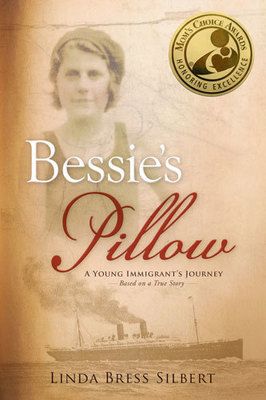
Bessie's Pillow, written by Linda Bress Silbert, is a historical novel, based on the true story of the author's grandmother and her immigration from Lithuania's Jewish ghetto to escape persecution, which we were given to reveiw. After reading the excerpt on the publisher, Strong Learning, Inc., website, I was hooked, and when it arrived (finally!) I sat down and started it.By the end of the day, I'd read half the book.
If I hadn't been trying to get over the flu, I would have been seriously tempted to stay up late and finish it. Instead, I finished the story before noon the next day. It was a beautiful story and a page-turner. I added this excerpt to my commonplace book, from an exchange Bessie has with her father early in the book:
"No, Tateh, I am afraid," I say, and begin to cry.
"Boshka," he replies, "There will come many times in your life when you are afraid. In these moments, you must surrender your fear and go wherever [the moment] takes you, and trust that you have the strength to do what you must to survive."
-Bessie's Pillow, p36
I think this piece of timeless wisdom, all the more poignant for having come from a rabbi in a ghetto who, knowing he will never see her again, sends his daughter away to safety, encapsulates the message of the book. The story is the story of how she lives this counsel, over and over and over again throughout her life.
Once I had read the book myself, I knew that it wasn't suitable for a family read-aloud, which is what I had first planned for it: my younger two are not ready for all of the challenges Bessie faces. Bessie is fortunate to be able to travel first class, and to have well-off friends and family to assist her when she arrives in America as a refugee. But she comes from the Jewish ghetto, where the pogroms -mobs that attacked the Jews- go on violent rampages with torches and weapons, where parents try to protect their daughters from rape at the hands of the pogroms, and and where the Russians conscript Jews and send them, poorly clothed and often unarmed, to the front lines of the war. Most of the Jewish conscripts do not come home. It's a harsh life, and the author does her readers the favor of showing the reality of it. At one point after coming to America Bessie takes a job for a few days in a sweatshop sewing factory, where she is locked in with all the rest of the women who are sewing, and treated very poorly, before she is unjustly fired. Bessie also sees the harsh realities of tenement living. And the author remains faithful to her family history when scarlet fever takes the two of Bessie's children, only a day apart. All this is done tastefully, and it's particularly good and timely to have this kind of story when there are so many refugees in the world right now, and immigration is such a hot topic. It's good to have stories of why people become refugees and immigrants, even if it's only part of the book. But I think it's a little much for Dragon(6) and Peanut(4). However, Hero(10) is old enough and mature enough to begin to see the hard realities of the world, and this book did nicely as his next lesson on that point, both in the lessons of seeing the things that Bessie saw, and also in terms of Bessie's own reaction to these things, which was uniformly compassionate and caring. She really was a remarkable woman.
At that point, having read it myself, it was time to give it to my son. I talked to him after he'd started it, to make sure that he understood why it was worth it to Bessie's family to send her away like they did: he hadn't. Although he knows something about our Church's history, and the mobs that our people faced even here in America, I don't think that it's terribly real to him yet, and he didn't understand this either. So we had a conversation about that. And he kept going back to the story. I'd asked him to read the first three chapters (they're short; that was about 15 pages), and he just kept going: he was hooked. It didn't take him a lot longer to read it than what it took me. I know that he kept thinking about it, though, because a week or two after he'd finished the book, he was sweeping the kitchen and commented on a part of the story where Bessie chases someone with a broom. I like a book that keeps us thinking, even after it's done. That's one of the marks of good literature.
Because we got sick (and that was so fun we did it again), we didn't really dig into the extras that the author has collected on her site, as we've spent a lot of this winter just trying to keep our heads above water on the basics while we caught Every Cold Invented. But there are some really fun-looking resources on there: radio shows, dance steps, recipes, all kinds of things to help you place Bessie in her historical context in a more visceral way. There are also other resources for looking through Ellis Island immigration records, and information about the ships that Bessie and her brothers traveled on, the Hamburg-American line, including fun things like diagrams of the ships and menus for what they ate on board. I think that, if you get a chance to read other reviews (click the banner below for a list of all the Review Crew members who are reviewing this book), that some members of the Review Crew even found that they had ancestors who came through Ellis Island!


Subscribe to:
Posts (Atom)