09 10
Showing posts with label history. Show all posts

19 March 2018

A Civil War Foldout for our Book of Centuries {Crew Review}


I was excited when I looked through the Á La Carte products from Home School in the Woods for review this time and realized that The War Between the States Timline was included in the wide range of products that they offered crew members: Hero(11) is just starting to study the Civil War era, and I wanted to include it in our Book of Centuries as a foldout. They have a whole collection of timelines available, but this one is just perfect for where we're at.

There's so much going on in the war, and in the events both before and after, that I think that it'll be good to have a special fold-out, which will leave room for other world events from that time on the main pages of our timelines. We don't have a lot of wall space, so our timelines have always been in binders. This has a number of advantages, including that they last really well, and so we can accumulate a lot of the different things we read about into the timeline over years of reading, so I was excited to have a space-efficient way to include a lot of information about this important period of American history.

27 February 2018

Drive Thru History: Bible History {Crew Review}


When we had the opportunity to review Drive Thru History Adventures, my first questions were about theological compatibility, as these are, I believe, Protestant-made materials. I was pleased to find that the Bible History Adventures materials draw on the shared Christian tradition, and that the theological variances between Protestants and Mormons are not an issue in any of the lessons we have done thus far. We have really enjoyed learning about the life of Christ, and the history and geography that relates to His ministry in the Holy Land.  Drive Thru History Adventures also has an Ancient History and an American History course (other Crew members are checking those out). But we've been quite enjoying the Bible History course.

19 February 2018

Ezekiel 13: Peace-- But There is No Peace!


I have long loved Patrick Henry's address to the Virginia Convention: the "Give me liberty or give me death!" speech. Someday, I want to use Benjamin Franklin's method of studying, and this speech is the first thing that I want to dive into (probably followed by George Washington's Farewell Address). But tonight, in reading to Hero from the Bible, I discovered an allusion that Henry made that makes that final, powerful paragraph even more powerful.

Here's the end of the speech:


It is in vain, sir, to extenuate the matter. Gentlemen may cry, Peace, Peace-- but there is no peace. The war is actually begun! The next gale that sweeps from the north will bring to our ears the clash of resounding arms! Our brethren are already in the field! Why stand we here idle? What is it that gentlemen wish? What would they have? Is life so dear, or peace so sweet, as to be purchased at the price of chains and slavery? Forbid it, Almighty God! I know not what course others may take; but as for me, give me liberty or give me death!


Tonight, as we read in Ezekiel 13, I noticed this:


Because, even because they have seduced my people, saying, Peace; and there was no peace; and one built up a wall, and, lo, others daubed it with untempered mortar:
-Ezekiel 13:10  (emphasis added)


Heirloom Audio: Wulf the Saxon {Crew Review}


We were excited when we got the opportunity to review Wulf the Saxon, and audio drama from Heirloom Audio Productions. We've had the chance to review In the Reign of Terror and Captain Bayley's Heir from them before, and found both of them to be excellent, so it was exciting to have a go at another of their titles.


I was particularly interested in hearing the Heirloom Audio version of Wulf the Saxon, because this is a story that we discovered about six months ago when Dragon(7) was learning about the Battle of Hastings, and we have listened to the Librivox version several times since then: it's become a favorite. I suspected that Heirloom Audio would bring something special to the story, and I was not disappointed. Although this version is much shorter - right about 2.5 hours, compared to just over 12 on Librivox - but the abridgement is done masterfully, and I found that all my favorite parts are included.

01 August 2017

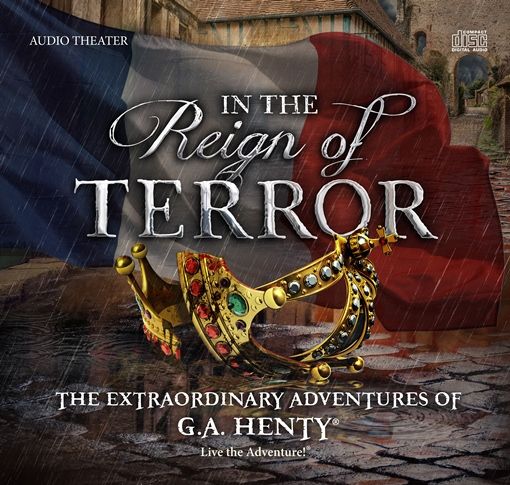
In the Reign of Terror Audio Drama {Crew Review}

In the Reign of Terror


For this review, we were listened to In the Reign of Terror, and audio drama by Heirloom Audio Productions on CD, which is an adaptation of G.A. Henty's book In the Reign of Terrorm, and the downloadable study guide that goes with it.

The story is gripping. I didn't realize it at first, but this is not our first story from G.A. Henty. So far, I've really enjoyed all of his works -- and making it an audio drama, where they've gone a step further than just reading the story, and given it a sound track and audio effects, just really enhances the story. The characters, each portrayed by a different actor or actress, really come to life. The English sound English, and the French characters sound French. That actually made us work at understanding, particularly at first, because the French accent has always been one that's a little bit difficult for me to follow, and it's pretty thick at times. But our ears adapted, and we were able to follow without serious issues. The story is about 16 year old Harry Sandwith, who in the months just prior to the reign of terror, is engaged to be a companion to the five children of the Marquis de St Caux, and live with them in their country home some miles outside of Paris. Harry's family feels that, even if there is unrest due to the revolutionaries, it is unlikely to touch the home of the Marquis, but of course the revolution becomes both more widespread and more violent than anybody predicted, and Harry gets caught up in quite the adventure.


The recording is beautiful. The sound track is lovely -- both the music and also the various noises that they use to bring it to life. You can see the kind of attention to detail they put into sounds of all sorts in the clip they include on their "Who We Are" page, where they show how they collect the authentic sound of a door handle in a church for another title, In Freedom's Cause. In the Reign of Terror sounds like it's had that same attention to detail and high level of excellence as well.

I don't want to give away too much of the story, because I think you're going to love it, but of course things turn far more violent than the Marquis or anybody else anticipated at the outset. Harry has just enough time to learn some French and get comfortable with the family, and then things get crazy as the revolution picks up its pace. There are mobs, the Marquis rushes off to fight for the king. There is heroism in many places, betrayal, rescue -- at one point Harry even ends up briefly working as Robespierre's personal secretary!

Henty has included in his story a number of points of commentary that bring out the substantial differences between the French Revolution and the American Revolution, which I really appreciated because it made it really easy to have a series of conversations about the differences, and while, while the one was a noble thing that actually brought freedom to a nation, the other used noble verbage but descended into worse tyranny than what the existing rulers had exercised. As one character puts it, "It is not égalité, equality, the canaille -- that is, the common people, desire, but a reversal of roles." In the Reign of Terror starts with a bit of an introduction, where these ideas are given voice by Henty himself: "The difference was in their hearts. The difference was their attitude toward God."

In addition to the audio drama itself, we were also given a study guide, which is beautiful and extensive: 43 pages. The study guide is available through their Live The Adventure site. It starts out with some interesting background on G.A. Henty, and on a few of the key players in the French Revolution.


The study guide includes a lot of comprehension questions -- they have some for every chapter, if you are so inclined. We listened to this the way that we would a read aloud: no comprehension questions, and I didn't ask for narrations, but just let the discussion happen organically, which it did. If we had used it as a school book, I would have spread it out over a number of weeks, perhaps even a month or two, and we would have made greater use of the extension activities in the study guide. It's full of extra information: definitions of French words, and information boxes that help to paint a more complete picture of what it was like in France in that time, and the sharp contrast between the privilege and privation that existed.


There are two sets of questions for each chapter. The first are just basic comprehension questions, covering the sorts of things that we usually cover in narrations. But the second are really thought-provoking questions that could be discussion topics, or a jumping off point for writing papers for older students.


One thing that I particularly appreciate is that the questions both encourage the student to consider the story in relation to scripture and the gospel, but they are worded in a way nearly completely nondenominational, and while a one or two questions do suggest a total depravity/original sin perspective, it would be a very simple thing to adapt these questions to reflect the LDS understanding of the nature of man, which rejects original sin or holding children responsible for the crimes of parents, and embraces the inherent goodness that is implied by the Biblical assertion that we are the children of God. The study guide also encourages students to consider some of the great questions in government, relating to the purposes of government, what good governance looks like, and highlights the way that pretty rhetoric can disguise ugly intentions and deeds.


We had enough other stuff use of all the resources, but there is a lot of good stuff in the study guide, and you could use In the Reign of Terror and its study guide to do a really in-depth study of the differences between the American Revolution (which the introduction suggests shouldn't even really be called a revolution, but instead ought to be thought of as a "War for Independence") and the French Revolution, and a stepping stone to some great conversations about a host of important topics. And the study guide is written in a way that encourages you to consider things in light of what scripture teaches on the matter.

The story itself is great, and the study materials are outstanding. My first grader enjoyed the story, my fifth grader and I had some good conversations, and you could probably use this study guide with high schoolers for papers and discussions on a wide variety of important topics.


If you want to read more reviews of In the Reign of Terror click the banner below.

http://schoolhousereviewcrew.com/adventures-of-rush-revere-book-series-reviews/


Crew Disclaimer

18 July 2017

Doctor Aviation {Crew Review}

Doctor Aviation


My kids, particularly Hero(10), who loves all things airplanes, were really excited when I told them we would have the opportunity to learn about aviation history while we review Doctor Aviation. It's a six-month aviation course that consists of 15 video lessons, each with an accompanying PDF with all kinds of extras: readings from a variety of books and magazines, YouTube videos, links to virtual tours, and suggestions for relevant places to visit if you happen to be local, as well as activities to do. We are doing it as an enrichment course, but there's enough here that you could easily do it for a high school full credit course, or as a continuing education project for adults. It's really flexible, though, and I've been able adapt and springboard off of the suggested activities for my younger kids as well, even though they are not at all the intended audience. I find the videos to be informative, with plenty for me to learn -- and they hold the attention of both Hero(10) and Dragon(7).

When you log in there's a nice dashboard that shows your current lesson and your progress through the course. It's easy to navigate; the video is at the top, with a list of right under it, and the PDF resources below that.


The lessons are all structured so that, first you learn about "Technical Trivia", where he explains the parts and pieces of aircraft, and how they work, then he covers "Notable Innovators" where he talks about major contributors to the field of aviation, and finally "Legendary Aircraft" where he covers particular airplanes. The videos are each about an hour long, and Dr. Aviation himself is easy to listen to and informative. He alternates between lecturing next to a small aircraft, and showing pictures of the planes and people that he's teaching about.

As soon as we started doing the course, a couple of things started happening in our family. One is that a large percent of the many Lego creations that my boys turned out since we started the review are airplanes. As they'd learn about things, this would be incorporated into increasingly realistic replicas, limited more by the pieces available than anything else: the kids clearly understand what they're doing well enough that it could have been better if they'd had the parts. The other lovely result is the boys, in addition to devouring the materials from the course, would look at all kinds of additional aviation documentaries on YouTube in their free time. I love it when learning inspires enough enthusiasm that the kids seek out more on their own! There has definitely been a lot of self-directed learning that has expanded and explored on these topics.


In addition to the videos, the PDFs for each lesson also always includes recommended books for further reading. This was one area where the course really shines. While my boys love airplanes, and want to know all about how they work, I've always been content that they do work. But the books recommended include several biographies, of notable aviators, and I love those. So this course has a fair amount to offer, even if you're not really into airplanes, because the people around airplanes are really interesting people, and the books I've read have been very interesting. Hero is a strong reader, so in addition to watching the videos, I've had him choose several books from the suggestions to read. Hero and I didn't always read the same ones, but he's also been very happy with the titles he chose. Keeping the videos at the pace of his reading has slowed things to somewhat less than the intended schedule, so we will probably not do the readings for all the units in order to see all the videos before our subscription runs out, but it's been very beneficial to him to do the readings that he has done. Although our library has occasionally not had the exact titles recommended, we've been able to find ones by the same author, or on topics that we would not have explored if we hadn't had the book list to help me know what to look for. Finding Dragon a few age appropriate titles on the same topics has also been easy, even though these are not included in the materials.

In addition to additional reading material, the PDFs also include activities that you can do. One of the ones that I would like to do with the kids, but haven't yet, is to chalk out the outline of the Wright Flyer on the ground in order to get an appreciation of the scale the Flyer was built on. It's too large to draw on our driveway, and I haven't made it up to the church to borrow the parking lot, but I think that's a really cool way to bring home the scale of the thing. There are also additional resources for finding videos, websites, and virtual tours related to the lesson topics. For the high school or adult learner, you could really go quite in-depth with the materials provided.

Feeling, as I do, that education ought to be thoroughly Christian, there are a number of things I appreciate about this course. Dr. Aviation does not shy away from mentioning God and His involvement in history. Perhaps it is because I grew up with education and faith so strictly compartmentalized by the strong anti-religion taboos in public schools, but I always appreciate it when He is acknowledged as naturally as occasionally is the case in these videos. After reading the recommended McCullough biography on the Wright Brothers, I was as much or more impressed by their character as I was by their genius, and have added that one to my wish list as one I would like to add to our home library. The videos have also emphasized the positive character of other aviators. It's nice that my kids can learn about aviation, but I love that the course is holding up such great role models for my kids; character is the true aim of education.

This course has been great for us. It's extremely adaptable to meet the needs of a wide range of ages, and my kids hang on every word.


If you want to read more reviews of the Doctor Aviation program -some Crew members used as a high school credit- click the banner below.

http://schoolhousereviewcrew.com/adventures-of-rush-revere-book-series-reviews/


Crew Disclaimer

19 June 2017

Rush Revere {Crew Review}

Adventures of Rush Revere


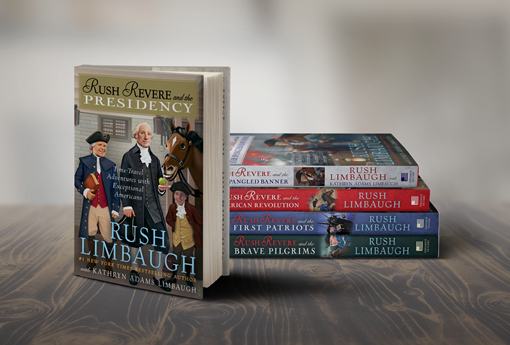
I follow politics the best I can, and care deeply about the Constitution, but I don't enjoy talk radio at all. So, to be honest, I wasn't overly excited about the Adventures of Rush Revere Book Series by Rush Limbaugh. However, I've been very pleasantly surprised by the Adventures of Rush Revere #1 New York Times Bestselling Book Series by Rush and Kathryn Adams Limbaugh. They've been fun to read myself, and I feel like they're a great way to introduce kids to some of the key events in American history. There are five volumes in the series:


  • Brave Pilgrims
  • First Patriots
  • American Revolution
  • Star-Spangled Banner
  • The Presidency
Adventures of Rush Revere


Diagram of the Mayflower;
Brave Pilgrims
I'm not one that sniffs pages of old books because they smell a little like vanilla, but I do enjoy beautiful books -- and these books are beautiful. They're hardcover, with dust jackets, and they arrived tied up in a blue ribbon. The paper is a delight. Just the right weight. The drawings are colored brightly without being garish. The layout is lovely. My office supplies loving heart was unexpectedly delighted by handling these books. I opened up the first one -Brave Pilgrims- and the first thing I found was an amazingly detailed diagram of a ship, with cut-aways, so you can see into the interior, and labels for all the ship terms that I usually just gloss over. It's the clearest ship diagram I've seen in a while, and I spent several minutes just exploring it, reading through all the various labeled parts before I started reading the story. Typically, I just flip to the story and dive in, but the diagram was so inviting and I lingered over it a little.

I read the introduction, and it really resonated:

I want to try to help you understand what "American Exceptionalism" and greatness is all about. It does not mean that we Americans are better than anyone else. It does not mean that there is something uniquely different about us as human beings compared to other people in the world. It does not mean that we as a country have never faced problems of our own. 

American Exceptionalism and greatness means that America is special because it is different from all other countries in history. It is a land built on true freedom and individual liberty... In most parts of the world, dreams never become more than dreams. In the United States, they come true every day. There are so many stories of Americans who started with very little, yet dreamed big, worked very hard, and became extremely successful. 

The sad reality is that since the beginning of time, most citizens of the world have not been free. For hundreds and thousands of years, many people in other civilizations  and countries were servants to their kings, leaders, and government... The United States of America is unique because it is the exception to all this. Our country is the first country ever to be founded on the principle that all human beings are created free people. The Founders of this phenomenal country believed all people were born to be free as individuals. And so, they established a government and leadership that recognized and established this for the first time ever in the world! ... America is a place where you can think, believe, and express yourself as you want. You can dream as big as you can and nothing is holding you back.

It was dinner time; I was supposed to be cooking, but by this point, I was curious, so I flipped to the introduction. I was also skeptical: the main character is named after a radio personality. How good can they be? A page and a half later, I was pleasantly surprised to find myself hooked, suddenly annoyed by the fact that I needed to cook dinner, rather than sit down and read.

Rush Revere and students;
Star-Spangled Banner.
It's a fun premise: Rush Revere is a substitute history teacher, and the stories are the tales of his shenanigans, taking some of his students back in time to be eye-witnesses to history. As an adult reader, I found that I had to actively choose to suspend disbelief: the Pilgrims didn't seem at all bothered by a history teacher accompanied by modern-reference dropping kids who pops in, is absent for months at a time, and then stops by again just in time for another major event. Knowing that less than 100 years from the Mayflower Compact, that same colony would experience the Salem witch trials, I found it hard to believe that they would be so calm about modern strangers showing up at random intervals with flimsy cover stories. However. I think that it's worth the effort suspending disbelief for these books. They do a couple of things really well:

Painting of the Pilgrims;
Brave Pilgrims.
  • These books clearly distinguish between historical figure and modern additions. This distinction is clear in the text and in the illustrations, where all modern characters are cartoonish, but the pictures of the historical figures are real art. The difference is obvious. The time travel device makes clear who is made up and who is real: all fictional characters are modern observers. One of the weakness of historical fiction is the way that it can be hard to pick the real from the make-believe, but that's not the case here.
  • They show the role of God in history. So many times He is excluded, but these books really do a beautiful job of shedding light on how the participants in our history were very aware of God in their lives, and that this was a thing that they very much wanted. Their awareness of their need for God, and their gratitude for His assistance is included, but not in an overdone kind of way: it's just a natural part of the story. For example, from the story of how John Howland, who later became the 13th signer of the Mayflower Compact, nearly went overboard: 
  •  

    After several more minutes, the man was hauled back into the boat. He rolled to his side and coughed up seawater.
    "Take him to my cabin!" the captain ordered.
    Two sailors pulled the man to his feet. They helped him up the ladder to the quarterdeck and into the captain's cabin. 
    "He's lucky to be alive," I said as I patted William on the back.
    "Not luck," William said. "It's a miracle. Surely, this is a divine sign. We will ask Elder Brewster. Whenever there is doubt or fear among the passengers we can always turn to him for guidance and strength. He has great wisdom and spiritual strength."
    -Brave Pilgrims, p76


A little about Brave Pilgrims from Hero(10): "It was a time-jumping horse that Revere had, named Liberty, and he and Liberty traveled back in time for the history lessons. He recorded the history lessons while he was there on his phone, and it transmitted back to a receiver in the classroom. And talked with some Pilgrims that were going to the new world. I learned that some of them traveled aboard the Mayflower, and I had no idea about the Mayflower Compact, which happened later on. The Mayflower Compact was important because it set the building blocks for the new colony. It was an agreement that the people there would help each other in times of need, as well as other things. One surprising part was when the Billington boys snuck down between decks and fired off a musket. William Bradford, one of the colony's leaders, was rather unhappy when he discovered that the Billington boys had fired off the musket because it was extremely dangerous! I bet it was possible that they could have sunk the ship!"  


Document reproduction;
First Patriots.
I also read First Patriots, which is set just prior to the American Revolution. Readers are introduced to Benjamin Franklin, Paul Revere, Samuel Adams, King George III, and other figures from the time, as well as several of the key events in the pre-Revolution period. Rush Revere and his students even participate in the Boston Tea Party, which gives readers ringside seats to events, and it does a good job of explaining why things happened the way they did. One thing that was brought out that had never occurred to me was that the Patriots did the Tea Party with eyes wide open to the likely reaction of the Crown to their actions: they knew they were kicking the hornets' nest, and they thought the principle of the matter was worth the trouble it was going to cause them. I had never really considered that aspect of the event before. The Tea Party scene contained one of my favorite quotes from the book, attributed to Samuel Adams:

I believe God wants men to be free. I choose to believe that there is a force greater than our own here tonight. I can feel it in the air and see it in the stars. God willing, we will accomplish this mission. It is only the beginning of what we will need to do. Fear will try to stop us, but we will not let it. People who live with fear will never be free. Remember this, Tommy and Cam: We are the fear chasers. We are the hope givers. We are the freedom builders. We are the Sons of Liberty!"
-First Patriots, p195


Samuel Adams is, after reading this book, somebody that I'd like to read more about. I've seen him spoken of as being a blunt and sometimes abrasive person, but this story depicts him as being quite hard to get along with, and now I'm curious and want to learn more. That, I think, is a sign of a good introductory work: it leaves you hungry for more, wanting to go deeper.


Cannon from Ft. Ticonderoga
American Revolution

Cannon transport.
American Revolution
After he read Brave Pilgrims, Hero chose to read American Revolution. He said: "It covered the three battles, Bunker Hill, Lexington and Concord, and the Fort Ticonderoga, where they got all those cannons from. They brought back 59 cannons. A cool part was that they used flat-bellied boats to haul the cannons back. There was pictures of that. And then, when they got back, pretty soon after that they declared their Independence."

Hero and I both enjoyed the books, and I think that they are a valuable addition to our family library, and would happily recommend them to others.

If you want to read more reviews of the Rush Revere books, click the banner below.

http://schoolhousereviewcrew.com/adventures-of-rush-revere-book-series-reviews/


Crew Disclaimer


01 June 2017

Commonplace Book: May


A commonplace is a traditional self-education tool: as you read, grab a notebook. Write down things that embody Truth, Goodness, and Beauty. Write down notable quotes, with or without your own thoughts about them. Write down the questions you have as a result of the text you are reading. You will find the book becomes a record of your own growth, and it becomes a touchstone for memory of things you have studied in the past. These are a selection of the passages that I've included in my commonplace book this month:


Zina Diantha was deeply stricken by her mother's death on 8 July  1839. Months later,  her mother's words came into her mind and spoke comfort to her: "Zina, any sailor can steer on a smooth sea. When rocks appear, sail around them."Zina Diantha took comfort in these words and prayed, "O Father in Heaven, help me to be a good sailor, that my heart shall not break on the rocks of grief."
-Women of Nauvoo, 42


A testimony of the gospel is a personal witness borne to our souls by the Holy Ghost that certain facts of eternal significance are true and that we know them to be true. Such facts include the nature of the Godhead and our relationship to its three members, the effectiveness of the Atonement, the reality of the Restoration.

A testimony of the gospel is not a travelogue, a health log, or an expression of love for family members. It is not a sermon. President Kimball taught that the moment we begin preaching to others, our testimony has ended.
-Dallin H. Oaks, Testimony, April 2008


In the first place, I should like to remark that it is a mistake for any human being, and especially for a branch secretary, to be content with what he can get! He who aims at getting what he wants is pretty sure to be successful. The very thing you want is there, somewhere, most likely in your close neighborhood. ...in other words, determine to have a lecture on a certain subject, think of the people in your neighborhood whose thoughts are likely to have turned in that direction, ask for a lecture with a given title, and most likely you will get it. It should not be forgotten that one of the objects of the Union is to draw forth the educational thought of workers & thinkers who would not otherwise give expression to the lessons of wisdom which life and reflection have brought them.
-Charlotte Mason, Teaching in the Branches

This reminds me of the Church and our lay clergy: we take turns teaching. Somebody -- or one of their friends -- probably knows the thing you want to have a class or fireside about. And asking them to take a turn as the teacher gives both listener and the teacher a chance for growth.


"None of the communication technologies involved human touch; they all tend to place us one step removed from direct experience. Add this to control-oriented changes in the workplace and schools, where people are often forbidden , or at least discouraged, from any kind of physical contact, and we've got a problem," she says. Without touch, infant primates die; adult primates with touch deficits become more aggressive. Primate studies also show that physical touch is essential tot he peace-making process. "Perversely, many of us can go through and average day and not have more than a handshake," she adds. Diminishing touch is only one by-product of the culture of technical control, but Dess believes it contributes to violence in an ever more tightly wired society.
-Last Child in the Woods, 66


Frank Wilson, professor of neurology at the Stanford University School of Medicine, ... says "We've been sold a bill of goods -- especially parents -- about how valuable computer-based experience is. We are creatures identified by what we do with our hands." Much of our learning comes from doing, from making, from feeling with our hands; and though many would like to believe otherwise, the world is not entirely available from a keyboard. As Wilson sees it, we're cutting off our hands to spite our brains. Instructors in medical schools find it increasingly difficult to teach how the heart works as a pump, he say, "because these students have so little real-world experience; they've never siphoned anything, never fixed a car, never worked on a fuel pump, may not even have hooked up a garden hose. For a whole generation of kids, direct experiences in the backyard, the tool shed, in the fields and woods, has been replaced by indirect learning, through machines. These young people are smart, but they grew up with computers, they were supposed to be superior -- but now we know that something is missing."
-Last Child in the Woods, 66


As a champion for outdoor play, Moore has written that natural settings are essential for healthy child development because they stimulate all the sense and integrate informal play with formal learning.
-Last Child in the Woods, 85


You see, many people love bamboo. They love the bamboo trees, and they love the bamboo wood, but very few people understand the process of growing bamboo. You dig up the soil and make sure it is good soil, and then you plant a bamboo seed. You must then faithfully water it every day. After three months, guess what starts to happen?

Nothing! You see absolutely nothing happening. You keep watering it and watering it, but you continue to see nothing happening for one year, then two years, then three years. Do you know what happens after three years?

Nothing! You see absolutely nothing.

What you don't see happening is what is taking place beneath the surface. Beneath the surface, a massive, dense foundation of roots is spreading all throughout the ground to prepare for the rapid growth that the bamboo will experience. So you keep watering it and watering it, and eventually, after five years of seeing nothing at all happen above the surface, the bamboo tree shoots up to over ninty feet tall in just six weeks!

Most people want the ninety-foot-tall bamboo tree without the five years of the process. They want the bamboo to grow to ninety feet tall in six weeks, but without the five years of invisible growth, the bamboo wouldn't have a solid foundation, and it could never sustain the massive and rapid growth that occurs.
-Chop Wood, Carry Water, by Joshua Medcalf, quoted on a Facebook group.


Twenty froggies went to school
Down beside a rushy pool.
Twenty little coats of green,
Twenty vests all white and clean.

"We must be in time," said they,
"First we study, then we play;
That is how we keep the rule,
When we froggies go to school."

Master Bullfrog, brave and stern,
Called his classes in their turn,
Taught them how to nobly strive,
Also how to leap and dive;

Taught them how to dodge a blow,
From the sticks that bad boys throw.
Twenty froggies grew up fast,
Bullfrogs they became at last;

Polished in a high degree,
As each froggie ought to be,
Now they sit on other logs,
Teaching other little frogs.
-George Cooper


Unless I am convinced by proofs from Scriptures or by plain and clear reasons and arguments, I can and will not retract, for it is neither safe nor wise to do anything against conscience. Here I stand. I can do no other. God help me. Amen.
-attributed to Martin Luther


A complete cure fora  terrible disorder of the mouth commonly called "Scandal":
Take a good nature, one ounce; of an herb called by the Mormons "mind your own business", one ounce, to which add of the oil of benevolence, one drachim of brotherly love, two ounces. You must mix the preceding ingredients with a little charity for others, and few sprigs of "keep your tongue between your teeth". Let this compound be allowed to simmer fora short time in a vessel called circumspection, and it will be ready for use.
Symptoms: The symptoms are a violent itching in the tongue and roof of the mouth when you are in the company with a species of animal called "Gossips".
Applications: When you feel a fit of the disorder coming on, take a teaspoonful of the mixture, hold it in your mouth, which you must keep closely shut till you get home.
 -quoted in Women of Nauvoo, 115-116


To a person uninstructed in natural history, his country or seaside stroll is a walk through a gallery filled with wonderful works of art, nine-tenths of which have their faces turned to the wall.
-Thomas Huxley, quoted in Last Child in the Woods, 133


Man's heart, away from nature, becomes hard; [the Lakota] knew that lack of respect for growing, living things soon leads to lack of respect for humans too.
-Luther Standing Bear, quoted in Last Child in the Woods, 123


My heart was made to rejoice in the privilege of once more commemorating the death of him whom I desire to behold. Roll on ye wheels of time! Hasten thou long anticipated period when He shall again stand upon the earth!
-Eliza R. Snow, quoted in Women of Nauvoo, 169

21 December 2016

Odd Bits: December


A grab-bag of things that caught my eye the past little while.

Something For Mom:

The American tradition of self-education has gone so far underground that most people find "get an education" and "go to school" to be synonymous, and that which is self-taught often feels like it doesn't "count" -- but it wasn't always that way, and not everybody's forgotten. Mom doesn't need to loose herself in her Mothering. But it takes some mindful effort, and probably learning some new skills, to work on educating yourself: we don't typically leave home armed with the tools of self-education! The good news is, we don't have to make it all up from scratch. For instance. This lovely bit from Afterthoughts Blog is actually an introduction to a whole series on the topic of Mom's self-education. And they're working on a Mothers' course at Ambleside Online! It's going to be a while before it's ready to go, but there's enough there to give some good ideas for starting now. She touches on reading (audio books while you get dinner count!), on listening to lectures (we often call those podcasts, now), on getting in touch with nature, and a number of other things. And many of them can be squeezed in the cracks of daily life, even if we have minimal time to carve out for it.


Something Current: 

I'm a big fan of the Bill of Rights. I love that the Constitution is written, more or less, in plain English: you don't need a law degree to understand what it was they had in mind.  The Bill of Rights just had its 225th birthday, mostly without any fanfare. But Rand Paul wrote a great piece about it, and then The Blaze had a pretty good article about Paul's work. Here's my favorite bit from Paul:


Not all of these 225 years have been kind to the Bill of Rights, though.  It’s been challenged, debated, and far too often just ignored. Don’t be fooled into thinking this would have surprised the Founders. We have the Bill of Rights precisely because the Founding Fathers knew government can’t resist stretching its limits. When some in government say “of course we can,” you and I are supposed to use the Bill of Rights to say, “No, you can’t.” Some believe government has grown too large to hold down with these chains, that it’s too late to rein it back in.  If the Bill of Rights were mere words on paper, perhaps we could afford to indulge that feeling. But they are not mere words.  They are principles fundamental to who we are as a people and what we represent as a nation.

Something Seasonal:

It's a Wonderful Life has been my favorite Christmas movie for as long as I can remember (rivaled only by White Christmas). I'd never given much thought to the actors; it's all about the story for me. But this year, when I watch it, I'm going to be looking at Jimmy Stewart, as well as at George Bailey. Turns out that this great movie also has a great story.


Something Educational: 

I came across this, from Memoria Press, about how a Classical approach to phonics works. I don't know tons about the history of phonics instruction, but what they describe about how a "classic" approach (a structured, orderly approach, with plenty of well-timed practice) works makes a great deal of sense to me, and has been very successful with my kids: Hero reads well, and Dragon is coming along beautifully. I particularly liked this bit:


The traditional phonics sequence is effective because it is systematic, not random. It reveals the underlying order of the great variety of English spelling patterns, one pattern at a time. This orderly presentation is an aid to memory and is the very heart of phonics. Without it, many students are unable to recognize, master, and read English words fluently, for the English language has the most irregular spelling of any of the modern languages.


I've seen some say that, because there are a large number of irregulars in English, we shouldn't bother burdening kids with phonics. However, English is something more than 90% regular, and it seems absurd to ignore that fact. Your average educated native speaker of English knows about 35,000 words (about 20% of the current contents of the language), which makes 32,500+ of those words rule-following words. Teaching the rules -and in a rational order- seems pretty sensible, when compared with the daunting task of trying to memorize all 35,000 words individually! For the chronically curious, there's a follow-up article. And a pretty interesting discussion of how many words there are in various languages, and how many of those words are typically used by natives and non-natives of various stripes.

Something About History:

Way back when, a guy named Roger Williams had these radical ideas about how the law ought to stay out of dictating convictions and faith -- what we now call Freedom of Religion, or Freedom of Conscience. He left England shortly after the Puritans founded Massachusetts, but found that though they enjoyed being able to worship their own way, they hadn't learned to allow the same to others -- he ended up getting banished from their colony, so he set up his own: the Providence Plantation. Which became famous for its religious toleration. And he wrote The Bloudy Tenent of Persecution, which came highly recommended after a recent Facebook conversation. I'm looking forward to digging into it.


15 November 2016

Book of Centuries

We have kept a binder timeline for a while now, and even added to it pretty regularly recently. But I've had this nagging feeling that it was more of a timeline than a Book of Centuries. We started with this simple printable a long time ago, and even though it's labeled a Book of Centuries, since then I've seen a couple things that made me think maybe this isn't what Miss Mason was talking about when she said "Book of Centuries". It's nice, and I'm glad we do it, I'm just not sure that it's the same thing.

See, Miss Mason would take her kids to the museums, and they'd draw stuff. Museums like that are far away... but we have the internet, which is almost like having a museum, if you close one eye and squint. And I've read how she would have them draw stuff they saw, and that they were especially encouraged to pick one type of item and draw that thing from a bunch of different cultures and times. Which is a pretty cool idea. The sample I remember was shoes. Draw shoes from all over. Not very inspiring.

Enter Pinterest.

This morning, I was looking for a blackline map of Mesopotamia for another project, and I came across this cute little guy.

And all the sudden I thought, what if I did birds, instead of shoes?! Oh, that could be cool. I wonder if I could find paper thick enough to use watercolor sometimes, if I had the time and inclination?

All the sudden, it sounds very interesting. So I went and started reading some more about Books of Centuries. I'm not the only one that is too far from a museum, Brandi of Afterthoughts is, too. And I found some lovely pictures from another blogger, and she's got a great idea for how to lay it out -- I may have to try something similar in mine. Here's another sample and free download, this time with boxes for each of the years, and sample pages. They all seem to emphasize drawing, which is interesting. And the one that was my favorite to look at had drawings all over the place.

I want to put that cute Mesopotamian birdie in my book. And I want to keep an eye peeled for other birds as we look at other periods of history. I like birds.

And I want to read more about how other people do this, and figure out what we're doing with ours and make them a little more purposeful. This could be fun.

23 September 2016

A Day in the Life

A pretty typical day in our life. The kids are 5th grade, 1st grade, and preschool.

4:00am - Wake up (I heard the Daddy's alarm) and send him off to work. It's really early.

4:20 - back to bed.

8:00am - Wake up again, still tired. I think that I'm anemic, so I'm thinking about what I can have for breakfast that will help with that. Look at my phone -- text helps my brain to focus.

8:10 - The kids attack me for snuggles. Hero asks if he can make mac n cheese for breakfast. Gross. I say yes, but there's no way I'm eating that. They laugh; they're used to me hating it. We snuggle a few minutes, then I get up and try to think. I hate being anemic; makes morning time really rough, no matter how much sleep I get. Hero shows me the dragon he drew this morning.


8:40 - Hero's got the mac n cheese almost done. I'm putting up today's list of things that need to happen. There's cool art on my markerboard again; I try to make the list around it, so that it doesn't get erased too soon. I also move last week's Brahms piece to the bottom of our playlist so that we can listen to a new one first this week. Dragon asks for his Legos down.


9:00 - I'm done messing with the computer, and inspect a transformer Dragon made on my way to turn on Brahms.


9:15 - I have the Duplos off the floor, and I'm enjoying the Brahms, about to do some yoga. Hero turns up with his violin, and I ask him to do that after we've had a few more minutes with Brahms. He decides he'd like to vacuum for his chore today instead, so I put off my yoga and ask him to do the computer room as well as the living room. And I remember that one of Dragon's books grew legs yesterday and walked away. Gotta find that book, soon, or something else that will work in its place.

9:30 - Hero's done with the vacuuming and moves on to reading; Dragon is working on some 100s chart games on the computer. I give him a couple patterns to color on his chart, he makes up a couple patterns, and then chooses some other educational games. I text the Daddy a couple times -it's his break time- and then go try again with the yoga.


10:05 - Yoga's done, and it went well. I started working on Crow Pose about a year ago because I read that it was a good beginner arm balance. I have no idea how long it usually takes people to learn to balance (though I've read the scoliosis makes it harder to do - and mine was bad, before I started yoga), but I'm super happy to finally hold it for a second or two today. This is the first time that I'd say that I was actually able to balance in the pose for a second or two; that feels good.


When I'm done with yoga I look at Dragon's game he wants to show me, then remind him that (although Christmas lights games are cool) he's supposed to be playing math games. He heads back to do some dot-to-dots when I tell him his math time is almost up. Peanut is sitting next to him, watching what he's up to, and commenting on the pictures he makes. "That's a purple dinosaur!" 


I pick up a towel left on the floor last night, and straighten out the bookshelves, hoping that I'll find the missing book -- which I do. Hero starts practicing his violin. School ran late yesterday, almost till bedtime, and he is not looking for a repeat. We try to finish everything early, but it seems like every now and then the kids need a reminder of why that's a good idea.


I put my clothes in the bathroom, planning for a shower, then tell Dragon his math games are done, and help get Peanut some day clothes. 


10:30 - Dragon and I finish reading about ancient Egyptian gods and mummies. He narrates beautifully. Hero is setting up our calendar and wants to do Morning Basket next. Works for me. 

We start with our calendar, which we do in Japanese. Mostly. Except for the part where I tell Dragon to stop acting crazy. That's English. 


The Wise Man and the Foolish Man, in Japanese, with actions. We skip the new one, Popcorn Popping on the Apricot Tree. Up next: poems. Those are a fan favorite. All of the kids have their own set: Peanut gets Nursery Rhymes, and then as usual, insists on looking at the pictures in her book; Dragon is in A Child's Book of Poems; and Hero's meeting Emily Dickinson. They each get one:

I Saw Three Ships
I saw three ships come sailing by,
Come sailing by, come sailing by,
I saw three ships come sailing by,
On New Year's Day in the morning.

And what do you think was in them then,
Was in them then, was in them then,
And what do you think was in them then,
On New Year's Day in the morning?

Three pretty girls were in them then,
Where in them then, were in them then,
Three pretty girls were in them then,
On New Year's Day in the morning.

One could whistle, and one could sing,
And one could play the violin;
Such joy there was at my wedding,
On New Year's Day in the morning.


The Friendly Cow
The friendly cow, all red and white,
 I love with all my heart;
She gives me cream with all her might,
 To eat with apple tart.

She wanders lowing here and there,
 And yet she cannot stray,
All in the pleasant open air,
 The pleasant light of day,

And blown by all the winds that pass
 And wet with all the showers,
She walks among the meadow grass
 And eats the meadow flowers.


The Bee is Not Afraid of Me
The bee is not afraid of me,
I know the butterfly;
The pretty people in the woods
Receive me cordially.

The brooks laugh louder when I come,
The breezes madder play.
Wherefore, mine eyes, thy silver mists?
Wherefore, O summer's day?


We also do our memory work - most of it fast and yelling, and do the scripture boxes. Dragon's attention is going fast today, and he ends up in a timeout near the end, but recovers quickly. We've had three days or so of rain, and he needs to be outside; it shows.

11:00 - I eat some peaches and to leftover deviled eggs, set Hero up with reading Age of Fable, then take his narration. And finally get my shower. There's voluntary reading going on; I like that, and don't interrupt it.


11:30 - When I get out, I announce that everybody needs to get shoes on and go outside for 20 minutes. In the middle of the happy scramble, there's a squirrel out front that needs to be watched, so they pause and do that. Hero goes out the door with a book in his hand; that must be my kid.


While they are outside, I work on this blog post, and start gathering up some easy crockpot recipes I promised a friend of mine. I've got a timer set so that I don't get too involved and sabotage the kids' efforts at doing school efficiently today.

11:55 -- There's tears outside; Peanut got too close to an active swing. Everybody comes back inside and has a cheese stick. I need to do some lunch. Probably with black beans, since they have iron. Hero grabs our Japanese text and we finish off the first unit; next time we'll be in chapter 2! We're moving slowly, but I think it's working pretty well. After that, he reads some stories to Peanut. Dragon is playing with his Legos again. 


12:30 - Hero wants math. I'm trying to get lunch, but stop and get him started. I persuade Dragon to get out his violin. He does a nice job once he settles into it. 


Peanut builds a cool circle track for the "train-train" -- all by herself!


Next I have Dragon work on his hiragana (Japanese alphabet) using flashcards today. He's doing a really nice job, and getting better at recognizing the exotic letters -- and reading them. I am pleased. 


1:15 - Lunch is getting close. I have got to get better at doing it earlier. Our new schedule is still foreign-feeling, and hoping that the Daddy finds something better, soon, isn't helping me adjust. I put some biscuits in the oven to go with the chili, and check Hero's math. He needs more practice on multiplying; I send him back to correct his work. He's really ready to do something else. I tell him to finish. And warn Dragon and Peanut that fighting over trains will lose them the trains. Peanut gets sent to her room to finish whining.


1:30 - Lunch is on. It's tasty. Soup - the first soup of the fall - and biscuits. After the prayer, I read Lamb's Shakespeare to the kids; we're working on Comedy of Errors, and everyone is doing really well with it. I am surprised at how much I'm enjoying it; Shakespeare is a new experience for me, too.  This is our second play, and I'm pleasantly surprised at how funny it is. The boys do a sort of tandem narration, with both of them contributing bits, and they're following it quite well.


1:45 - My best friend calls, and I invite her over to join us for lunch. She says she'll be here in 20 minutes, so we quit Shakespeare and I grab Secrets of the Woods. Officially, this is Dragon's book, so he's the only one that narrates, but we don't get far because I realize that he doesn't know what it means to "tap a tree", so we're off to YouTube to learn about that.


2:00 - I get Dragon to take out the recycles for his family work - he's delighted with the job and does it in the noisiest way possible. It is very loud. My friend arrives, and I banish the kids to the yard. Dragon is still experimenting with how loud he can possibly be. Peanut joins him. I tell them no water; it's not warm enough. Go. Out. Side. My friend and I exchange stories of our days - mine with the kids, hers driving school bus. We laugh and shake our heads at Dragon's antics.

2:30 - The Daddy calls; he's done with work, and do I want anything from Walmart? I do - Hero wants an Optimus Prime cake for his birthday campfire party tomorrow, so I need sugar to make frosting. My friend and I continue chatting.

3:00 - Daddy's home! He joins the conversation, which is delightful. Tells about today's antics from the powers that be at work. It's amazing they stay in business. Dragon asks for some computer time; Hero is reading. Peanut finds her purple boa and is prancing around with it.

3:45 - My friend has to leave, and the Daddy heads out again to do some home teaching.

4:10 - Dragon and Peanut request play-doh. And all the play-doh tools. Hero is playing a video game; he asks me to set the time for 30 minutes, which is about half his screen time. I set up the play-doh, then go look for the cake pan Hero requested. 


4:20 - More dishes. Only, I need to do some laundry. So I get that started first. {Can I just say how much I love me a labor-saving device!}Back to the dishes While I work, I set up some Japanese YouTube videos for passive listening; passive exposure makes a huge difference in our language study.

4:25 - My sister called. Yay!! We chat for a while, she wants to know about how the new job is going; I ask about her kids. And tell Dragon, "Go find a thing to do," about 4 times in the half-hour conversation. When it's done, I turn the Japanese back on. And try to get a few dishes done. And do a thing for a kid. And wash a dish.

Dishes are the job I used to throw tantrums over when I was a kid. They're still not my favorite. But that's not why they're not getting done very efficiently today. I have actually learned to enjoy a clean kitchen -- enough to put forth the effort necessary to get it there. But I have a hard time staying on task. {sigh} One of these years, I'll have a clean house.

5:10 - The Daddy calls. His home teaching people asked for a little help, so he's slower than he anticipated. I love when he calls; I know very well that he doesn't have to do it, but it's so nice. I work very hard at not dropping the phone into the water -- I'm holding it with my head while I attempt to get a few dishes clean.

5:20 - The Japanese is back on, now that I'm not on the phone. (Nobody's paying attention, including me, but it's amazing what the brain does in the background, as far as sorting patterns, when you're not really paying attention.) I just want a nap. Which reminds me: I still haven't looked to see if I've still got iron supplements, or if they're still good. I need to do that. And it's about time to move the laundry. And I've got to make that cake. Which means butter needs to be out warming up...  I feel like I'm not getting any closer to the bottom of my to-do list... which just might be getting longer. All I want is a nap.

Hero is building Poke-balls from cardboard to play with his friends tomorrow. 


6:00 - I found the iron. It, along with a good collection of other expired stuff is now in the trash. I flipped the laundry. And finally made some progress on the dishes. {When we finally fix or replace the dishwasher, it will be nice.} But the kitchen is looking almost reasonable, and it shouldn't be too bad to keep it that way while I make dinner. I hope. 


After a while the Daddy came home again. Dragon enlisted his help cutting out a Poke-ball of his own. 


I remembered that Peanut hadn't practiced her violin yet. She was delighted to do it, and she's making really good progress at fingering. After that she gets a shower.


7:30 - One pizza made; two warmed up, and a birthday cake in the oven. We settle in for some Avitar: Last Airbender. 


8:30 - Show's over; ice cream is eaten. The cake is out and looks good. Hero is super excited about; totally worth the effort. 


8:40 - Family scriptures and prayers.

8:55 - Kids head upstairs to brush teeth and stuff. Everybody is tired. There's tons of things still on my to-do list, but I feel pretty good about most of the day anyway. Somehow, there's always more tasks than time, but the important stuff gets done most of the time.

9:00 - Personal scriptures and prayers with the boys; Peanut barely made it. Since she's not wearing diapers to sleep anymore, I send her potty one last time. She looks asleep by the time it's her turn for scriptures, but when I go to leave, she manages to mumble, "I not asleep..." So I kiss her and read her two verses. 

9:25 - All the kids and the Daddy are asleep. I sit in the dark and do some Japanese flashcards and make a move in my chess.com games.

9:40 - Downstairs again. The house is delightfully quiet. I check on the baked goods, but some of them aren't cool yet, so I play Minecraft for a little bit, have a drink of water, and listen to some clawhammer banjo.


10:15 - I'm itching to play my own banjo, so I turn off the tunes, and get mine out, just for a couple minutes. Can't do long; it's getting late.


Day In the Life Aug 2015
Day In the Life Nov 2011


LinkWithin

Blog Widget by LinkWithin