09 10
Showing posts with label reading list. Show all posts

25 September 2010

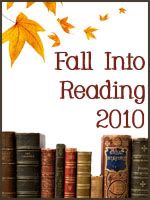
Fall Into Reading 2010


The idea is to create a reading list for this fall. I have three books, all ones that I have started and not finished, but would like to:

1. Understanding Exposure. My sister and I were blogging our way through this book, but we got distracted last spring, and never got it going again. I want to finish. I've learned tons, I want to learn more.

2. 1776. Another one my sister and I started together. She finished, I didn't. I love the Founding era, and want to finish this one.

3. Les Miserables. I'm 280 pages into the unabridged version, and I wasn't ready at the time to tackle the second section. I just couldn't get into the chapter on Waterloo, and I understand there's quite a bit of this in the book, so I set it aside for a while. I'm ready to go back.


Wish me luck! I've always been inclined to flit from one thing to the next as my interest drew me, and I'm trying to cultivate the ability to finish things. Since I was enjoying these books, it seems reasonable to suppose that I will again, if I'd just pick them up. This challenge is the perfect excuse.

22 June 2009

Thrifted Books

A visit to Goodwill a couple of days ago resulted in a pretty good stack of new books, which I am pleased with. Here's what we got for our home library this time:

Crime & Punishment, by Fyodor Dostoevsky
*James & The Giant Peach, by Roald Dahl
*Old Yeller, by Fred Gipson
*A Midsummer Night's Dream, by William Shakespeare
The Boxcar Children #4: Mystery Ranch, by Gertrude Warner
Black Trillium, by Marion Zimmer Bradley, Julian May, & Andre Norton
The Davinci Code, by Dan Brown
The Hitchhiker's Guide to the Galaxy, by Douglas Adams

The starred books are ones that are on the 1000 Good Books list, so I am twice pleased with those. It all cost less than $20, even though the Hitchhiker's Guide is a huge leather bound thing with about 4 books that was almost $7 all by itself. Several of the others were on clearance for less than $1. In addition, today we visited Barnes & Nobel, and I picked up Island of the Blue Dolphins by Scott O'Dell, which is also on the 1000 Books list. This one is particularly exciting because I used to have a copy, but it got lost somewhere along the way. I'm thinking that it may become our next read-aloud.

24 March 2009

America's Constitution: Part II

Quite some time ago, I started reading America's Constitution: A Biography, and blogged about the preface. I'm still munching away at the book, and thought I'd post a bit about it again. It's part of my ongoing effort to remedy my own appalling ignorance about America's Constitution in order to be educated enough to do my duty as a member of the body known as "We, the People."


Chapter 2: New Rules for a New World

Vocabulary

Unicameral: Having or consisting of a single legislative chamber.

Bicameral: composed of two legislative bodies

Statesmen: 1. a person who is experienced in the art of government or versed in the administration of government affairs. 2. a person who exhibits great wisdom and ability in directing the affairs of a government or in dealing with important public issues.

Magistracy: 1. The position, function, or term of office of a magistrate. 2. A body of magistrates. 3. The district under jurisdiction of a magistrate.

Magistrate: a civil officer charged with the administration of the law.

Ex post facto: Ex post facto law, a law which operates by after enactment. The phrase is popularly applied to any law, civil or criminal, which is enacted with a retrospective effect, and with intention to produce that effect; but in its true application, as employed in American law, it relates only to crimes, and signifies a law which retroacts, by way of criminal punishment, upon that which was not a crime before its passage, or which raises the grade of an offense, or renders an act punishable in a more severe manner that it was when committed. Ex post facto laws are held to be contrary to the fundamental principles of a free government, and the States are prohibited from passing such laws by the Constitution of the United States. --Burrill. --Kent.

Bill of Attainder: an act of legislature finding a person guilty of treason or felony without trial.


Summary

Congress: Although there had been a "Congress" under the Articles of Confederation, the new Congress, under the Constitution was considerably different and in many ways much more powerful than the old Congress had been, although now it was exclusively a legislative body and one of three branches of the government, rather than a single preeminent continental body. But this change was not without risks:

Precisely because the new Congress could make enforceable law operating directly on individuals, it posed a vastly greater risk to liberty than had its predecessor. ... As the Philadelphia drafters explained in an official letter accompanying their proposed Constitution, "the impropriety of delegating such extensive trust to one [unicameral, undifferentiated] body of men is evident." (Page 58-59)


To solve this problem the founders put a number of "checks" in place to limit the power. These were far more nuanced than the usual "checks & balances" among the branches of the government they tell us about in school. The two houses check each other by rejecting unconstitutional legislation, and the executive also checks by vetoing or refusing to enforce unconstitutional laws. But the most interesting commentary was on the judiciary:

"Grand Juries could refuse to indict whenever they doubted a criminal statute's constitutionality. Trial juries, widely viewed as the lower half of a bicameral judiciary, likewise had the power (and perhaps even the right and duty) to acquit with finality in such cases, even if the bench had already adjudged the law to be constitutionally sound. Within this larger context, judicial review was less a unique attribute of judges than a symmetric counterpart to the constitutional negatives enjoyed by coordinate branches." (Page 61)


By separating the various powers of the government, the Founders were enshrining the rule of Law. Congress makes the laws, but they don't enforce them. It makes it harder to play favorites. Specifically prohibiting ex post facto laws and bills of attainer were limits placed on Congress to further ensure the rule of Law and maintain liberty.


Ponderings

Although there are a number of intragovernmental checks designed to limit the government to its proper place, it would appear that the ultimate check placed on the government is the People. We, the People, need to know our rights and duties and love our freedoms if we wish to maintain them. The problem is that the teaching required to do this has been gradually excluded from the public schools, until people don't even see the value in having it there, or object because it's "too political." While there is a fine line to walk between teaching government and endorsing your own politics in the classroom, it seems criminal that my "civics" course focused more on the proper use of birth control than it ever did on any civic matters. The very word "civics," meaning "a social science dealing with the rights and duties of citizens" should indicate that there will be serious consideration given to the Constitution, but I don't recall much if anything useful being offered in that class. I do recall feeling like it was a waste of my time. I was irritated that it was a required class and felt like I could have found something better to do with that hour. Now I look at the education commonly given to the People with outrage: our freedoms are at stake, and people don't even know it! There is much more to knowing your civic duty than knowing that there are three branches of government with checks and balances designed to keep them in their place. But it takes effort to learn it, and requires more than just a brief overview of the history of the Revolution. The Constitution needs to be more than just a footnote in American History. Civics class needs to teach civics.

Can it possibly be a coincidence that as the government moves further and further from its' Constitutional grounding education also included less and less of the principles that guarantee us our freedoms? I suspect trying to find out which caused the other is rather like trying to find determine if the egg or the chicken came first: an exercise in futility. But the solution seems clear enough: education must include significant treatment of the Constitution, and the reasons that the Founders did and did not do things. In addition to books like this biography, the Federalist and Anti-Federalist Papers seem like good starting places. They are certainly on MY reading list!

13 November 2008

Reading List

There's been a lot of discussion on the LDS Classical Homeschool yahoo group about what sort of Constitutional education we should give our children. Or, in several people's case (including my own) our own education. Here are some of the titles recommended:


*The Constitution
*The Bill of Rights
*The Law by Bastiat
*The Proper Role of Government by Ezra Taft Benson
*The Improper Role of Government by H Verlan Andersen
*"Stand Up For Freedom" a Speech by Ezra Taft Benson
*"Protecting Freedom - An Immediate Responsibility" by Ezra Taft Benson Oct 1966 Conference
*Webster's 1828 Dictionary
*Underground System of Education by John Taylor Gatto
*The Making of America by Cleon Skousen
*The 5,000 Year Leap by Cleon Skousen
*Uncle Eric books (Whatever Happened to Penny Candy, How Ancient Rome affects us Today, and more available at www.bluestockingpress.com )
*The Federalist Papers
*John Locke (I think it's 2 treatises on government)
*Someone named "Montesquieu" who influenced Madison
*Study Shakespeare - if you follow his language you'll be able to handle the Founder's language
*Glen Kimber's I Love America series (www.kimberacademy.net)

And some others I've found:

A Glorious Standard by Chris Bentley
America's Constitution: a biography by Akhil Reed Amar

16 May 2008

Homeschool Sites

that I'll be checking out in the next little while.

Heart of Wisdom
An Old Fashioned Education
and the related Yahoo Group, 3RHomeschooling
CurrClick
1000 Good Books list

Oh yes, and the completely unrelated Full Bust Alteration for sewing clothes that fit.

But right now I could use to be asleep.

15 September 2007

Baby Steps to Orginization

Yep. It's definitely going to take a LOT of those little Baby Steps. But I feel the need to do it. Time Management, that's a big one, and it's Time to Overcome.

So, I bought a planner. And a book on organization called Organizing Plain & Simple. And I'm going though it with my notebook in hand so I can answer the questions she raises & really think about what I'm reading. I also did a search for time management in the LDS.org library. There's some good stuff in there! Like This Day, from Brother Eyring at the April conference. Brother Monson addressed the same thing right after 9-11:

And so I ask, “What are we doing with today?” If we live only for tomorrow, we’ll have a lot of empty yesterdays today. Have we been guilty of declaring, “I’ve been thinking about making some course corrections in my life. I plan to take the first step—tomorrow”? With such thinking, tomorrow is forever. Such tomorrows rarely come unless we do something about them today. As the familiar hymn teaches:

There are chances for work all around just now,
Opportunities right in our way.
Do not let them pass by, saying, “Sometime I’ll try,”
But go and do something today.


Brothe Scott says some very similar thing in talking about First Things First. I especially like this talk from Brother Maxwell on doing things in Wisdom and Order, and plan to come visit that one with my notebook in hand. (Did I mention that I love LDS.org's search feature? It makes it so easy to find the words of the Prophets, on whatever topic!)

I am Resolved. I am a little bit nervous. That's the perfectionist in me speaking. But the Lord can do anything - even make me efficient!

09 March 2007

Science

Andy is a scientist. He works on linear particle accelerators for a living. I've seen several physicists of our acquaintance drool over a chance to see these wonderful(?) machines he works with every day. At home he looks into the mysteries of over-unity motors and he presides over the inner works of our computers and the network he set up between them. He knows an amazing amount about the human body, ranging from chiropractic adjustments to reflexology, acupressure, and massage. He occasionally ponders concepts of time travel and flight in his spare time.

Not surprisingly, the math/science component of Monkey's education is a topic of great concern for him.

So when I set out browsing through HEM this afternoon, I perked right up when i saw that they're featuring science right now. Here is something interesting. Something I am going to need to know about. I dived right in.

First, an article about teaching high school science from a scientist, "Learning and Doing Science," by Cafi Cohen. She's clearly unimpressed with regular high school science, and the reasons she gives for it are valid.

Classroom science ... focus[es] on ... the "body of facts" and "systematic knowledge" and "general laws." The result? Students taking biology read the text, complete worksheets, bumble through "experiments" (which, sadly, have but One Right Answer), and take exams to demonstrate that they can differentiate porifera from coelenterates. Classroom science... rewards memorization and regurgitation. Answers are prized; questions are discouraged.


Although I would say that my most intense and memorable science teacher worked hard to bring us interesting labs and was truly committed to seeing us reach our potential (he was also the class advisor), a lot of both the physics and chem classes I took from him were just like she describes: memorize, the stress over coming to the "right answer" in the lab, rehash on the test.

In contrast, real world scientists practice definition (2) above, "knowledge of the physical world gained through observation and experimentation." ...

They focus on doing, rather than on memorizing what everyone else has done. Instead of rehashing another's explorations and discoveries, real world scientists study the unknown, the not-yet-understood. Their questions are just as important as the answers. Unlike the situation with classroom science, real world scientists are often rewarded for asking new questions and for creative experimental design.


Interestingly, as I consider the dichotomy Cohen talks about between "real" science and "class" science, I realize that even when we did have a nice open-ended project - for instance building little balsa wood bridges to see how much weight we could get them to hold - it was often more competitive (whose bridge holds the most) than comparative (what design elements hold the most). Cohen talks about her son's ongoing interest in model rocket design. She tells a little about how he played with various elements of his rockets as he entered competitions. That's experimentation. How much more will he have learned from doing the "same" thing 50 different ways in search of the best flight possible? I'm quite sure that he learned more about rockets than I did about the strength of balsa wood or the strongest architectural shapes it can be made into: I only got to do it once. Then we moved on to something else.

Lesson for me: There is wisdom in letting an interest run its course, in finding materials for repeated experiments. Even when the Monkey manages to choose something that I'm not terribly interested in, which I'm sure he'll do at least once or twice.


Several of the other article I read were as much a list of reviews of science-related books as articles. Here are some of the books that appear most likely to find their way to our family's bookshelves:

The Amature Naturalist by Gerald Durrell

From Franklyn M. Branley's "Let's-Read-and-Find-Out" Science Series:
Snow Is Falling
Hurricane Watch
Tornado Alert
Sunshine Makes the Seasons
Flash, Crash, Rumble, and Roll

The Cloud Book by Tomie de Paola

It's Raining Cats and Dogs: All Kinds of Weather and Why We Have It by Franklyn Branley (this one's supposed to cover pink(!) snow)

Cloudy With a Chance of Meatballs by Judi Barrett

How Artists See the Weather: Sun, Wind, Snow, Rain by Colleen Carroll

Weather Dude: A Musical Guide to the Atmosphere by Nick Walter

The Weather Factor by David Ludlum (weather's impact on history!)


Yeah, I know, I'm showing my own biases in what is interesting, but with the Monkey so small at all I'm not sure where else to start. And even a few of those books would add to the foundation of science books already in our personal library.

18 December 2006

Books I Gotta Get

Alright, I keep seeing people recommend books. Just tonight I've seen enough reading material on homeschooling to keep me reading for a month or more - and I read relatively quickly. Here's a few that look the most interesting:

Dumbing Us Down by John Taylor Gatto
How to Homeschool: a practical approach by Gayle Grahm
The Right Choice: homeschooling by Christopher Klicka
Is There Life After Housework by Don Aslett
Introduction to Classical Education by Christine Miller
Preparing for a Great Books Education by Wes Callihan
How to Read a Book by Mortimer J. Adler & Charles van Doren
Tom Brown's Field Guide to Nature & Survival for Children by Tom & Judy Brown

Guess I better get to the library and see if they've got any of these and see what I can get started on. I did peek at one, and Amazon had a used copy for less than $5, so I may look into that as well. In deciding to homeschool, I suspect that our personal library will be growing quite a bit over the next several years. Right now we've got a good start - there are 6 bookshelves in our home already, mostly full of books, but it's not a library that will give a well rounded education just yet.

LinkWithin

Blog Widget by LinkWithin