09 10
Showing posts sorted by relevance for query commonplace book. Sort by date Show all posts

27 September 2010

Commonplace Book Meme

A commonplace book is basically a book journal. You copy into it quotes that strike you and perhaps add some of your own commentary.


"Commonplacing is the practice of entering literary excerpts and personal comments into a private journal, that is, into a commonplace book or, to use a 17th century synonym, a silva rerum ("a forest of things"). Typically the excerpts were regarded as exceptionally insightful or beautiful or as applicable to a variety of situations, and so as such they are often especially quotable. . . . The practice of commonplacing can be traced back in the European tradition to the 5th century B.C.E. and the Sophist, Protagoras.
-Norman Elliott Anderson, quoted by Lucia Knoles


I love my commonplace book. I write things I read in it; I ponder the scriptures and literature in it. I sometimes copy my favorite blog posts into it. I choose poetry and other beautiful language to do for "copywork" and practice beautiful writing in it. I'm giving my children a Classical Education, and I want one for myself. My commonplace book is the physical location of the various self-education projects I have going at any given time.


Classical self-education demands that you understand, evaluate, and react to ideas. In your journal, you will record your own summaries of your reading; this is your tool for understanding the ideas you read. This - the mastery of facts - is the first stage of classical education. (Well Educated Mind, pg 39)


Remember that the goal of grammar-stage reading is to know what the author says; the goal of logic-stage inquiry is to understand why and how. The final stage of reading - your rhetoric-stage pass through the book - has a third goal. Now you know what, why, and how. The final question is: So what? (Well Educated Mind, pg 46)


I thought I'd try a new meme. Tuesdays, I'll post a bit from my commonplace book. The plan is for this to be a bit that's gone in this week, though in a pinch I'd put up something from a while ago! You post what you've written, and then come on over and link up. I even made a button.


29 September 2014

My Commonplace Book

I got asked, today, how I organize my commonplace book, so I'm sharing my system. This is the same system I've used for years; this notebook is more than1/2 full, and I have another two like it stashed. 


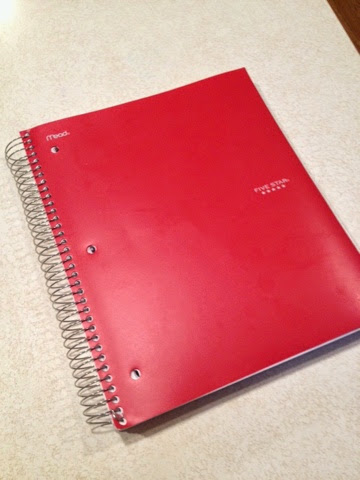
The notebook itself is pretty ordinary. I do sping for the plastic cover, since that's more durable. It's a 5-subject notebook, and I like the big ones because they last. I'm not very good about going through old ones and reviewing what I learned, so I like a big sturdy one that lasts. 
One of the challenges, with a book like this, is organizing it. I decided that, in the top right corner of each page, I'd write the topic and the date. When I run out of room on the back of this page, I turn to the next clean page and label it, and continue as if there was no interruption -- even if there is a huge distance between the pages. Since I tend to have several books going at once, and often other projects as well that get tucked into my notebook, this system seems to work out well.

Figuring out what to put in my book was a bit of a challenge, at first. I learned about it when I was reading The Well-Trained Mind, and then later read this online:

"Commonplacing is the practice of entering literary excerpts and personal comments into a private journal, that is, into a commonplace book or, to use a 17th century synonym, a silva rerum ("a forest of things"). Typically the excerpts were regarded as exceptionally insightful or beautiful or as applicable to a variety of situations, and so as such they are often especially quotable. . . . The practice of commonplacing can be traced back in the European tradition to the 5th century B.C.E. and the Sophist, Protagoras.
-Norman Elliott Anderson, quoted by Lucia Knoles


My own personal style is a blend of literary excerpts, note-taking, essays I write for my blog, and even lists for long-term projects and goals. Since the notebook is large enough to last for several years, it has been a particularly effective place to lists of house and yard projects. It's not, classically speaking, something that belongs in a commonplace book, but it sure works well for me, so I keep it there. It's actually really nice to periodically review what commonplacing is, at its core, about. For whatever reason, the literary excerpts and quotes are easy to let fall by the wayside somewhat. Reading this reminded me that I need to do more of that again.

Here are some pictures of several different pages from my current notebook:

The quote in the box I actually copied from a friend's facebook post, explaining how formality/humility works in Japanese. I'd been studying this for years, and she made it all come into focus in about 3 sentences.  (Ah, the advantages she has for that sort of thing, living in Japan!)


This page is a segment of an essay that I wrote a while back, 7 Lessons From the Bad Guys. That post grew out of noticing a several month pattern in what the Spirit pointed out to me, and then several weeks of trying to coax it into words. I wanted to remember it, even if the blog disappeared.


This one is actually an excerpt and commentary. My sister and her husband gave me a lecture series, The Great Debate, a while back, and because I can't just listen to it, I have to read every single extra reading they list, and that slows down the process greatly. It's slooow... but I'm such a happy camper.


 Several times, in doing the work for The Great Debate, I found that I needed to know more about the geography of the early States. (No fancy markers; I'm pretty sure I just used the kids' crayolas from their art box.) This time, I drew a picture. I found that I couldn't write on the back of the page, and that bothered me, so next time...

I printed and glued in maps. This has some plusses, but also some drawbacks. I may do both techniques again. (Don't you love the Angry Birds Star Wars sticker? It was a gift from my seven year old, who asked that I put it in my notebook.)

This page has both a quote, and a practice art for my scripture journal, with which I get a lot more fussy about the artsy elements.


I love my notebook. I read more deliberately, and remember more consistently since I started using it, and I highly recommend the practice. I don't have too many rules for myself. If it strikes me (and I have time), it goes in. Sometimes I make a point of practicing writing, particularly with the literary excerpts, in a particular style, and in that way I've developed a couple of options for beautiful handwriting. And sometimes I just use everyday printing, or even occasionally all caps. It's very mood-driven. I'm a pen snob (my husband teases me about an over-fondness of the office supplies isle), and so the pens around the house tend to be ones that write well, but other than the pen has to be pleasant to write with, I use whatever pen comes to hand.

Hopefully that helps. Enjoy your own commonplace journal journey!


P.S. I'm so glad you stopped by to read about the adventures at our house! If you want more, "Like" my blog on Facebook to get posts (and the articles n things I wish I had time to blog about) in your feed. Wanna see all the projects and ideas that I may or may not get around to? Follow me on Pinterest. Thanks for stopping by!

15 March 2017

Odd Bits: Folk music, Archaeology, and More...


::1::

One of the things that homeschooling has done for me is to introduce me to some lovely folk music. I'd like to learn to play it on the Banjo, a lot of it, but so far, that's an item on my to-do list that isn't so easy to get crossed off. In the mean time, I'm absolutely loving listening to Jesse Ferguson, who sings Scottish folk songs. Have a listen; he's lovely. I always wonder if my Scottish ancestors knew or loved any of these songs.


::2::

On the first of every month, I post a collection of thoughts from my commonplace book, which is one of my favorite self-education tools. I love that using it is participating in the great English and American tradition of self-education, and continuing personal development. Occasionally, I'm asked what it is. The article I've taken this quote from has a pretty good explanation, some pictures, and instructions for how to start one.


A commonplace book is essentially a scrapbook / compilation of information that the creator deems relevant. Commonplace books became popular with thinkers in 15th century England and were eventually promoted as a scholarly tool by major universities such as Yale and Harvard.
-Jamie, Project: Start a Commonplace Book


::3::

I stopped buying cereal a couple years ago, and breakfast, which the kids mostly take care of on their own, continues to be a little hap-hazard. Lots of times, the kids will eat leftovers, or open a can of fruit. But if we're low on those things, it can get interesting. I think I might try this idea out: homemade instant oatmeal. Looks like a piece of cake to make, which is perfect: I love that the kids are gaining independence and confidence in the kitchen by making their own breakfasts. She's got instructions on masking tape on her jars, which is brilliant. And it looks like it'd be easy to switch up the flavors, too.


::4::

Archeology is cool. Archeology that shows up just in time to dovetail with our work on Greece and Greek civilization is even better. And that's what this article about a warrior's grave they found in Greece is. And there's a Roman makeup case, with fingerprints visible in the cream that's still in it. Gotta love the never-ending search for the perfect beauty product! And there's the whole kingdom from Arthurian legend that they found. That's pretty awesome, too. Makes me want to go read something about King Arthur: it's been a while. Archeology is good stuff.


::5::

Marginalia. I only recently learned that there's a word for all the stuff that you write in the margins. They told us not to write in our books in school, cautioned that there would be Serious Consequences if we did, because Those Books Are Very Expensive. The caution stuck: I have never really been one to write or highlight in my books, and when I shop, I generally want a clean book, even used. The only book that I've seriously annotated is my scriptures, which I love "making tracks" through, because it helps me to remember what I've learned, find it later, and retain it longer. And it's a visual reference for which sections I've given serious attention to, and which ones still need that kind of treatment. But I think I'm going to start making more notes in other books, too:

I like to think of these little jottings as being little messages to Jemimah from those same ancestral tombs, that through them she will get to know these people from her history a little better.  She will know how they thought about things, and how they interpreted knowledge, and she will get their input into the very same words that she is reading.  When she reads How They Brought the Good News from Ghent to Aix, she will know to listen for how "the light, rollicking metre almost produces the effect of the hoof beats of the galloping horse" because her Great Grandmother will have told her to listen.
-Jeanne, A Peaceful Day: Marginalia

I love the idea that the notes that their family made in their books has become a connection between the generations, a way for departed loved ones to continue to teach long after they've left us. That's a beautiful, all by itself. It makes me wonder (again) whatever happened to my Grandmother's library, and if she made notes in any of her books. What would they tell me about her? Those little notes can have impact, especially if the reader is receptive, or has a connection to the note-taker:


As I read Rebecca’s copy of the book, I started to notice how her notes changed the way I was reading. The passages she chose to mark, and the notes she wrote at the end of chapters, framed the way I was reading the novel. ... I’ve read books in the past with marginalia – usually used books that had previous owners unknown to me – and while those notes also pointed out passages to me that I otherwise may have skimmed over or which may not have been necessarily significant to me upon first glance, I never really paid attention to it beyond those pauses. ... This experience – of reading Rebecca’s copy of The Engagements – was markedly different, though. Because we’re not just Book Riot colleagues, but also good friends, not only was my perception of the novel changed, my perception of Rebecca – as a friend, as a woman, as a reader – was also changed.
-Rachel Manwil, To Note or Not to Note: How Marginalia Changed the Way I Read


::6::

I ran across this interesting post about the difference between an educational system and an educational method. She's talking about how the Charlotte Mason philosophy is a method, not a system, and there are a lot of good insights about the reason the distinction is important, but the thing that struck me was the way that this applies to language learning. Around 2 or 3 years ago, I changed, dramatically, the way that I learn languages, and started studying sentences, harvested from either my dictionary's sample sentences, or from real native Japanese text and native speakers. I make flashcards from whole sentences, and study vocabulary, syntax, usage, and all that all in a single go. If that's all I did, it would still just be a system, but the other half of the idea was to create an immersive environment - a Japanese bubble - so that we also are hearing correct pronunciation, more correct grammar and syntax, and interacting with the languages in ways that are natural, organic, and fun. Fun, guilty pleasure (example: Minecraft videos) is actually desirable in this case. The combination is amazing. Families who successfully pass a heritage language generally do a couple of things, but one of the big ones is to arrange for roughly a third of the day to happen in the minority language: and that is surprisingly doable in a situation like ours where we are all learning together. Obviously, it would be faster and better if we had more live feedback, regular access to someone who knows more than me, but we are making good progress even with minimal contact with people who are fluent, which is pretty amazing.


Getting good is good. Those things are all good. It’s nice to be full and it’s nice to have a big vocabulary. It’s just that you’re more likely to eat more if you focus more or less totally on making and procuring tasty food than “efficient”, “filling” food. Similarly, if you focus just about exclusively on having fun through the language, while you still suck, while you’re not full yet, you’ll naturally “eat” more of it, and eat more often, and naturally get “fuller” faster.
-Khatzmuto, Why Don't You Learn Like You Eat?, emphasis original (content warning: this article is clean, but if you browse his site, be aware he's sometimes rude, and occasionally pretty crude)


01 January 2018

Commonplace Book: December

A sample from my commonplace book, and brief instructions for how to keep one.

A commonplace is a traditional self-education tool: as you read, grab a notebook. Write down things that embody Truth, Goodness, and Beauty. Write down notable quotes, with or without your own thoughts about them. Write down the questions you have as a result of the text you are reading. You will find the book becomes a record of your own growth, and it becomes a touchstone for memory of things you have studied in the past. This is what Mother Culture is all about: self-directed, conscious self-education. These are a selection of the passages that I've included in my commonplace book this month:


一万回分かり始まります。(10,000 times; then begins understanding.)


Repeptito mater memoriae. (Repetition is the mother of memory.)


All abuse of power is essentially a rejection of feelings too painful for the perpetrator. Each insult, each trespass helps him see the fear of these negative qualities outside of himself, once again proving that he is not the worthless one.

Attachment to status is based on fear.

Status serves as a fighting machine around a vulnerable, hurt part of the self. Empowermet brings that part to light, safely, by acceptance and nurturance. Power hides that part, perversely showing the world aggression instead of strength, control over others instead of self-control, and dehumanization instead of respect.


I would remind you “walking bundles of habits” that there is a relationship between thoughts, actions, habits, and characters. After the language of the Bible we might well say: “Thought begat Action; and Action took unto himself Habit; and Character was born of Habit; and Character was expressed through Personality. And, Character and Personality lived after the manner of their parents.” A more conventional way of linking the above concepts is found in the words of C. A. Hill: “We sow our thoughts, and we reap our actions; we sow our actions, and we reap our habits; we sow our habits, and we reap our characters; we sow our characters, and we reap our destiny (Home Book of Quotations, p. 845)."
-Carlos E. Asay, Flaxen Threads


There is no reason why the child's winter walk should not gbe as fertile in observations as the poet's; indeed, in one way, it is possible to see more in winter, because thethings to be seen do not crowd each other out.
-Charlotte Mason, 1:86


Our deepest fear is not that we are inadequate. Our deepest fear is that we are powerful beyond measure. It is our light, not our darkness, that most frightens us. We ask ourselves, Who am I to be brilliant, gorgeous, fabulous? Actually, who are you not to be? You are a child of God. Your playing small doesn't serve the world. There's nothing enlightened about shrinking so that other people won't feel insecure around you. We are all meant to shine, as children do. We are born to make manifest the glory of God that is within us. It's not in just some of us; it's in everyone. And as we let our own light shine, we subconsciously give other people permission to do the same. As we're liberated from our own fear, our presence automatically liberates others.
-attributed to Marianne Williamson


25 January 2018

The Gospel at 30,000 Feet {Book Review}

A review of The Gospel at 30,000 Feet by Dieter F. Uchtdorf, published by Deseret Book.


I always love Brother Uchtdorf's airplane stories, both because he's an excellent storyteller, and also because he's got a knack for turning the airplanes that he loves so much into fantastic parables and allegories that clearly and effectively teach the gospel of Jesus Christ. So it's not surprising that only few pages into his new book, The Gospel at 30,000 Feet, which I was sent to review, I was reaching for my commonplace book.
 

To follow Christ is to become more like Him. It is to learn from His character. As spirit children of our Heavenly Father, we do have the potential to incorporate Christlike attributes into our life and character. ... This leads me back to my aerodynamic analogy from the beginning. I spoke of focusing on the basics. Christlike attributes are the basics. The are the fundamental principles that will create "the wind beneath our wings". 
-page 4-5


The airplane story here is fun (aren't they always?) but the things that he's saying about the importance of the basics really resonate. It's the same way in the martial arts: the "magic" is in the basics. You master those, and you master the art. It's very much easier said than done! Likewise in the gospel, the basics are what makes the indelible marks upon your soul.

01 November 2017

Commonplace Book: October

A sample from my commonplace book, and brief instructions for how to keep one.

A commonplace is a traditional self-education tool: as you read, grab a notebook. Write down things that embody Truth, Goodness, and Beauty. Write down notable quotes, with or without your own thoughts about them. Write down the questions you have as a result of the text you are reading. You will find the book becomes a record of your own growth, and it becomes a touchstone for memory of things you have studied in the past. These are a selection of the passages that I've included in my commonplace book this month:


Do it immediately;
Do it with prayer;
Do it reliantly,
Casting all care;
Do it with reverence,
Tracing His Hand,
Who placed it before thee with
Earnest command.
Stayed on Omnipotence,
Safe 'neath His wing,
Leave all resultings,
Do the next thing.
-Said to be an Old Saxon poem


"... instead of a congerie [collection] of faculties, a single subjective activity, attention; and again, there is , "one common factor in psychical activity, that is attention." My personal addition is that attention is unfailing, prompt and steady when matter is presented suitable to a child's intellectual requirements, IF the presentation be made with the conciseness, directness, and simplicity proper to literature.
-Charlotte Mason 6:17


"You can never know everything," Lan said quietly, "and part of what you know is always wrong. Perhaps even the most important part. A portion of wisdom lies in knowing that. A portion of courage lies in going on anyway."
-Winter's Heart by Robert Jordan, p501


The fact was I had asked the Lord to lead me in the right way for my best good and the way to fit me for a place in His kingdom. He had told me how to go and I must follow in the path He dictated, and that's all there was to it.
-Martha Cragun Cox, quoted in All That Was Promised, p69


03 September 2017

Commonplace Book: August

A sample from my commonplace book, and brief instructions for how to keep one.

A commonplace is a traditional self-education tool: as you read, grab a notebook. Write down things that embody Truth, Goodness, and Beauty. Write down notable quotes, with or without your own thoughts about them. Write down the questions you have as a result of the text you are reading. You will find the book becomes a record of your own growth, and it becomes a touchstone for memory of things you have studied in the past. These are a selection of the passages that I've included in my commonplace book this month:


But a nobler animal was wanted, and Man was made. It is not known whether the creator made him of divine materials, or whether in the the earth, so lately separated from heaven, there lurked still some heavenly seeds. Prometheus took some of this earth, and kneading it up with water, made men in the image of the gods. He gave him an upright stature, so that while all the other animals turn their faces downward, and look to the earth, he raises his to heaven, and gazes on the stars.
-Bulfinch, Age of Fable, 10


No gain I experience must remain unshared.
-Charlotte Mason 6:9


Put forth your ability to learn as fast as you can, and gather all the strength of mind and principle of faith you possibly can, and then distribute your knowledge to the people. Give them virtue, knowledge, principle, truth, godliness.
-Brigham Young JD 8:144


Education is the highest of the arts in the sense that it imposes forms (ideas and ideals) not on matter, as do other arts (for instance carpentry or sculpture) but on mind. These forms are received by the student not passively but through active cooperation. In true liberal education, as Newman explained, the essential activity of the student is to relate the facts learned into a unified, organic whole, to assimilate them as the body assimilates food or as a rose assimilates food from the soil and increases in size, vitality, and beauty. A learner must use mental hooks and eyes to join the facts together to form a significant whole. This makes learning easier, more interesting, and much more valuable. The accumulation of facts is mere information and is not worthy to be called education since it burdens the mind and stultifies it instead of developing, enlightening, and perfecting it. Even if one forgets many of the facts once learned and related, the mind retains the vigor and perfection gained by its exercise upon them. It can do this, however, only by grappling with facts and ideas. Moreover, it si much easier to remember related ideas than unrelated ideas.
-Sister Miriam Joseph, The Trivium, 7


But, when we compare the mind with the body, we perceive that three "square" meals a day are generally necessary to health, and that a casual diet of ideas is poor and meager.
-Charlotte Mason 6:25


02 August 2017

Commonplace Book: July

A sample from my commonplace book, and brief instructions for how to keep one.

A commonplace is a traditional self-education tool: as you read, grab a notebook. Write down things that embody Truth, Goodness, and Beauty. Write down notable quotes, with or without your own thoughts about them. Write down the questions you have as a result of the text you are reading. You will find the book becomes a record of your own growth, and it becomes a touchstone for memory of things you have studied in the past. These are a selection of the passages that I've included in my commonplace book this month:


The best dividends on labor invested have invariably come from seeking more knowledge rather than more power.
-Orville & Wilbur Wright, quoted in The Wright Brothers by McCullough, 125


Darkness cannot persist in the presence of light. I do not know, I do not know anybody who does know, how to put darkness into a room to make light vanish.
-Boyd K. Packer, quoted on Instagram


Madam How is never idle for an instant. Nothing is too great or too small for her; and she keeps her work before her eye in the same moment, and makes every separate bit of it help every other bit. She will keep the sun and the stars in order, while she looks after poor old Mrs. Daddy-long-legs there and her eggs. She will spend thousands of years in building up a mountain, and thousands of years grinding it down again; and then carefully polish every grain of sand which falls from that mountain, and put it in its right place, where it will be wanted thousands of years hence; and she will take just as much trouble about that one grain of sand as she did about the whole mountain... Most patient indeed is Madam How. She does not mind the least seeing her work destroyed; she knows that it must be destroyed. There is a spell upon her, and a fate, that everything she makes she must unmake again; and yet, good an wise woman as she is, she never frets, nor tires, nor fudges her work, as we say in school... Madam  How is wiser than that. She knows that it will come to something.
-Madam How and Lady Why, 9-10


If no other knowledge deserves to be called useful but that which helps to enlarge our possessions or to raise our station in society, then mythology has no claim no the appellation. But if that which tends to make us happier and better can be called useful then we claim the epithet for our subject. For mythology is the handmaid of literature; and literature is one of the best allies of virtue and promoters of happiness.
-Bullfinch, Age of Fable, vii\


Perspective is to painting what the bridle is to the horse, the rudder to a ship... There are three aspects to perspective. The first has to do with how size of objects seems to diminish according to distance; the second, the manner in which colors change the further away they are from the eye; the third defines how objects ought to be finished less carefully the farther away they are.
-attributed to Leonardo DaVinci


... we must continue to understand and educate ourselves if we wish to have success in educating our children.
-Dean & Karen Andreola, Introduction to the Original Homeschooling Series, Charlotte Mason, 6:iv


We fail to recognize that as the body requires wholesome food and cannot nourish itself upon ANY substance so the mind too requires meat after its kind. If the war [WWI]  taught nothing else it taught us that men are spirits, and that the spirit, mind, of a man is more than his flesh, that his spirit IS the man, that for the thoughts of his heart he gives the breath of his body. As a consequence of this recognition of our spiritual nature, the lesson for us at the moment is that great thoughts, great events, great considerations, which form the background of our national thought, shall be the content education we pass on.
-Charlotte Mason, 6:5


28 September 2010

Commonplace Book: Lulabye to an Infant Chief

Sir Walter Scott (1771-1832)
Lullaby of an Infant Chief

O hush thee, my babie, thy sire was a knight,
Thy mother a lady, both lovely and bright;
The woods and the glens, from the towers which we see,
They all are belonging, dear babie, to thee.
O ho ro, i ri ri, cadul gu lo,
O ho ro, i ri ri, cadul gu lo.

O fear not the bugle, though loudly it blows,
It calls but the warders that guard thy repose;
Their bows would be bended, their blades would be red,
Ere the step of a foeman drew near to thy bed.
O ho ro, i ri ri, cadul gu lo,
O ho ro, i ri ri, cadul gu lo.

O hush thee, my babie, the time soon will come
When thy sleep shall be broken by trumpet and drum;
Then hush thee, my darling, take rest while you may,
For strife comes with manhood, and waking with day.
O ho ro, i ri ri, cadul gu lo,
O ho ro, i ri ri, cadul gu lo.


What's in your commonplace book this week? Post something to share, and then come link up. Not sure what a commonplace book is? Read more about it here.

04 October 2010

Commonplace Book Meme


Commonplace Book Meme


It's been a busy week for my commonplace book, since I took notes from General Conference in it. For whatever reason, I also browsed across several outstanding quotes on various blogs as well. Here's a selection from this week:

"The battle for Man's agency is still on."
-M. Russell Ballard


"To express gratitude is gracious and honorable.
To enact gratitude is generous and noble.
But to live with gratitude ever in our hearts is to touch heaven."
-Thomas S. Monson


"Power comes by doing and not by resolving."
-Charlotte Mason


"If the Devil says you cannot pray when you are angry, tell him it is none of his business, and pray until that species of insanity is dispelled and serenity is restored to the mind."
-Brigham Young


"Our doubts are traitors,
And make us loose the good we oft might win,
By fearing to attempt."
-Shakespeare


What's in your notebook this week?

01 February 2018

Commonplace Book: January

A sample from my commonplace book, and brief instructions for how to keep one.

A commonplace is a traditional self-education tool: as you read, grab a notebook. Write down things that embody Truth, Goodness, and Beauty. Write down notable quotes, with or without your own thoughts about them. Write down the questions you have as a result of the text you are reading. You will find the book becomes a record of your own growth, and it becomes a touchstone for memory of things you have studied in the past. This is what Mother Culture is all about: self-directed, conscious self-education. 


 I've set a goal to read 118 books in 2018. This is this month's list: 

1. The Golden Fleece and the Heroes Before Achilles, -Padric Colum (Librivox)
2. しんごきの色、ーなぜ?どうして?
3. 北海道ほっかいどう荻田おぎた泰永やすながさんが1人ひとりあるいて南極点なんきょくてんまで
4. ヤコブ5
5. The Tale of Two Bad Mice, -Beatrix Potter
6. The Tale of Mrs. Piggy-Winky, -Beatrix Potter
7. The Raven and the Dragon, -GA Henty (Librivox)
8. ヤコブ6
9. ヤコブ7
10. あたらしいロケット「イプシロン」をげる
11. The Gospel at 30,000 Feet, -Dieter F. Uchtdorf 
12. All That Was Promised, -Blaine M. Yorganson


These are a selection of the passages that I've included in my commonplace book this month:


In Tyndale’s day, scriptural ignorance abounded because people lacked access to the Bible, especially in a language they could understand. Today the Bible and other scripture are readily at hand, yet there is a growing scriptural illiteracy because people will not open the books. Consequently they have forgotten things their grandparents knew.
-D. Todd Christofferson, The Blessing of Scripture

03 July 2018

Commonplace Book: June

A sample from my commonplace book, and brief instructions for how to keep one.

A commonplace is a traditional self-education tool: as you read, grab a notebook. Write down things that embody Truth, Goodness, and Beauty. Write down notable quotes, with or without your own thoughts about them. Write down the questions you have as a result of the text you are reading. You will find the book becomes a record of your own growth, and it becomes a touchstone for memory of things you have studied in the past. This is what Mother Culture is all about: self-directed, conscious self-education.

21 March 2017

Bessie's Pillow {Crew Review}


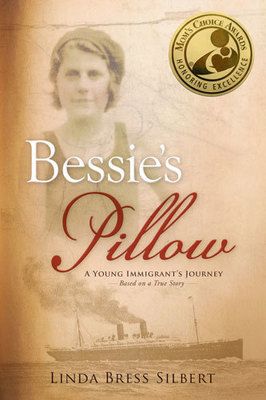
Bessie's PillowBessie's Pillow, written by Linda Bress Silbert, is a historical novel, based on the true story of the author's grandmother and her immigration from Lithuania's Jewish ghetto to escape persecution, which we were given to reveiw. After reading the excerpt on the publisher, Strong Learning, Inc., website, I was hooked, and when it arrived (finally!) I sat down and started it.

By the end of the day, I'd read half the book.

If I hadn't been trying to get over the flu, I would have been seriously tempted to stay up late and finish it. Instead, I finished the story before noon the next day. It was a beautiful story and a page-turner. I added this excerpt to my commonplace book, from an exchange Bessie has with her father early in the book:


"No, Tateh, I am afraid," I say, and begin to cry.
"Boshka," he replies, "There will come many times in your life when you are afraid. In these moments, you must surrender your fear and go wherever [the moment] takes you, and trust that you have the strength to do what you must to survive." 
-Bessie's Pillow, p36


I think this piece of timeless wisdom, all the more poignant for having come from a rabbi in a ghetto who, knowing he will never see her again, sends his daughter away to safety, encapsulates the message of the book. The story is the story of how she lives this counsel, over and over and over again throughout her life.

Once I had read the book myself, I knew that it wasn't suitable for a family read-aloud, which is what I had first planned for it: my younger two are not ready for all of the challenges Bessie faces. Bessie is fortunate to be able to travel first class, and to have well-off friends and family to assist her when she arrives in America as a refugee. But she comes from the Jewish ghetto, where the pogroms -mobs that attacked the Jews- go on violent rampages with torches and weapons, where parents try to protect their daughters from rape at the hands of the pogroms, and  and where the Russians conscript Jews and send them, poorly clothed and often unarmed, to the front lines of the war. Most of the Jewish conscripts do not come home. It's a harsh life, and the author does her readers the favor of showing the reality of it. At one point after coming to America Bessie takes a job for a few days in a sweatshop sewing factory, where she is locked in with all the rest of the women who are sewing, and treated very poorly, before she is unjustly fired. Bessie also sees the harsh realities of tenement living. And the author remains faithful to her family history when scarlet fever takes the two of Bessie's children, only a day apart. All this is done tastefully, and it's particularly good and timely to have this kind of story when there are so many refugees in the world right now, and immigration is such a hot topic. It's good to have stories of why people become refugees and immigrants, even if it's only part of the book. But I think it's a little much for Dragon(6) and Peanut(4). However, Hero(10) is old enough and mature enough to begin to see the hard realities of the world, and this book did nicely as his next lesson on that point, both in the lessons of seeing the things that Bessie saw, and also in terms of Bessie's own reaction to these things, which was uniformly compassionate and caring. She really was a remarkable woman.

At that point, having read it myself, it was time to give it to my son. I talked to him after he'd started it, to make sure that he understood why it was worth it to Bessie's family to send her away like they did: he hadn't. Although he knows something about our Church's history, and the mobs that our people faced even here in America, I don't think that it's terribly real to him yet, and he didn't understand this either. So we had a conversation about that. And he kept going back to the story. I'd asked him to read the first three chapters (they're short; that was about 15 pages), and he just kept going: he was hooked. It didn't take him a lot longer to read it than what it took me. I know that he kept thinking about it, though, because a week or two after he'd finished the book, he was sweeping the kitchen and commented on a part of the story where Bessie chases someone with a broom. I like a book that keeps us thinking, even after it's done. That's one of the marks of good literature.

Because we got sick (and that was so fun we did it again), we didn't really dig into the extras that the author has collected on her site, as we've spent a lot of this winter just trying to keep our heads above water on the basics while we caught Every Cold Invented. But there are some really fun-looking resources on there: radio shows, dance steps, recipes, all kinds of things to help you place Bessie in her historical context in a more visceral way. There are also other resources for looking through Ellis Island immigration records, and information about the ships that Bessie and her brothers traveled on, the Hamburg-American line, including fun things like diagrams of the ships and menus for what they ate on board. I think that, if you get a chance to read other reviews (click the banner below for a list of all the Review Crew members who are reviewing this book), that some members of the Review Crew even found that they had ancestors who came through Ellis Island!


Click to read Crew Reviews


Crew Disclaimer

01 July 2017

Commonplace Book: June


A commonplace is a traditional self-education tool: as you read, grab a notebook. Write down things that embody Truth, Goodness, and Beauty. Write down notable quotes, with or without your own thoughts about them. Write down the questions you have as a result of the text you are reading. You will find the book becomes a record of your own growth, and it becomes a touchstone for memory of things you have studied in the past. These are a selection of the passages that I've included in my commonplace book this month:


Passion does not arrive on a videotape or on a CD; passion is personal. Passion is lifted from the earth itself by the muddy hands of the young; it travels along grass-stained sleeves to the heart.
-Last Child in the Woods, Richard Louv, 158


We mothers have a lot of details to manage, a lot of responsibilities on our plates, whether or not we homeschool.  ...After all, in the end --and even in the middle-- life isn't really about getting it done. It's about serving, loving, and caring for others. We want to do so faithfully, day in and day out.
-Mystie Winckler, Simplified Organization


How strange a checker-work of Providence is the life of man! And by what secret differing springs are the affections hurried about as differing circumstances present? Today we love what tomorrow we hate; today we seek what tomorrow we shun; today we desire what tomorrow we fear; nay, even tremble at the apprehensions of... Such is the uneven state of human life. And it afforded me a great many curious speculations afterward, when I had a little recovered from my first surprise; I considered that this was the station of life the infinitely wise and good providence of God had determined for me; that as I could  not foresee what  the ends of Divine wisdom might be in all this, so I was not to dispute His sovereignty, who, as I was His creature, had an undoubted right by creation to govern and dispose of me absolutely as He thought fit; and who, as I was a creature who had offended Him, had likewise a judicial right to condemn me to what punishment He thought fit; and it was my part to submit to bear His indignation, because I had sinned against Him.
-Robinson Crusoe, 245-246


But it's never too late to be wise...
-Robinson Crusoe, 275


It was characteristic of all his family, Wilbur said, to be able to see the weak points of anything. This was not always a "desirable quality," he added, "as it makes us too conservative for successful businessmen, and limits our friendships to a very limited circle."
-The Wright Brothers, David McCullough, 79


Their nephew Milton, who as a boy was often hanging about the [Wright] brothers, would one day write, "History was being made in their bicycle shop and in their home, but the making was so obscured by the commonplace that I did not recognize it until many years later."
-The Wright Brothers, David McCullough, 113


The best dividends on labor invested have invariably come from seeking more knowledge rather than more power.
-Orville and Wilbur Wright, quoted in The Wright Brothers, David McCullough, 125


21 April 2017

5 Days of Books: Feed the Teacher, Too

Mother Culture is a type of self-care that helps us to be our best for ourselves and our families; it is *not* selfish to care for yourself. Mindful reading habits and a commonplace book can do wonders for our continuing education, very inexpensively.


There is so much that, as moms, we are responsible for - whether we homeschool or not. It's easy to become immersed in the day-to-day ordinary stuff of parenting, and forget that our children's minds are not the only ones that need to be fed! But it is every bit as important to feed our own minds and spirits as it is to feed our bodies. This sort of self-care is not selfish; it helps prevent burn-out and the depression that so often accompanies that used-up feeling. We are children of God; we do not stop needing to grow ourselves, just because we take on the responsibility of mothering!


It's the concept of "breathing" that I refer to. The biggest challenge to the mentor is to breathe, is to inhale, because the mentor, the teacher is always exhaling. And, if they never take the time to inhale, if they never take the time to feed themselves, that's the biggest challenge. Because we're always concerned about giving, about teaching, about leading, guiding, mentoring, doing things: output. And if we neglect the input, that can be harmful. 
-Quiddity #69: Why Mentorship Matters

Happily, it's a relatively simple matter to continue our own education, and thanks to the ready availability of books and technology, there's a number of easy ways to do it, many of them very inexpensive, and a number of them able to be done while we do necessary, but uninteresting, chores that are so much a part of life.

One traditional -and very cost-efficient- method of feeding ourselves is to keep a commonplace book. I've written about commonplacing a couple of times, but basically, what it is is a notebook. I use a regular spiral notebook, one of the tougher kind that has a plastic cover so it will last as I fill it over a period of months or years, including dragging it around in my backpack sometimes. In the notebook I copy out passages from my reading that strike me as being particularly good, true, or beautiful. Sometimes it's passages from scripture, sometimes it's from the fiction that I read either by myself or with the kids' school, and sometimes it's from nonfiction. Occasionally I'll add something from blogs or whatever else I read. The commonplace book has been all but forgotten, but it was once a pillar of self-education in both America (especially among women) and in Europe. Charlotte Mason kept one, which you can see at Afterthoughts. The Library of Congress has images from Thomas Jefferson's various notebooks. I can say that, having kept one for several years now, it's a powerful tool for self-education. All you really need is a notebook and something to read, and you can become more educated than you are right now.

There's lots of places that will help you find worthy things to read. The 1000 Good Books list and a host of other lists of classic works are great places to start. If you want to learn more about the Founders, then this list looks likely. I will be working on works from the Ambleside Online recommendations for a long while, I'm thinking, and I've been fortunate to be a part of a Mother's Education Group for many years now, which has helped me find other good books.

In addition to traditional paper books, there's audiobooks - Librivox has a great selection of classics that my kids and I enjoy. Audiobooks are great for making things like laundry go more quickly and pleasantly. And there's podcasts on every topic, and in a host of languages, so you can use them to support the language you learned in school, or that you're working to learn now. Even if you don't understand everything, listening to native speakers speak is hugely valuable to language study.

The reality is, we won't have energy for something big and meaty and deep every day. And that's ok. We do what we can, with what we have, and that includes our time and energy. I thought that this was some really great practical advice for moms who have to live in the real world, where good intentions meet day-to-day reality:


The wisest woman I ever knew--the best wife, the best mother, the best mistress, the best friend--told me once, when I asked her how, with her weak health and many calls upon her time, she managed to read so much, "I always keep three books going--a stiff book, a moderately easy book, and a novel, and I always take up the one I feel fit for!" That is the secret; always have something "going" to grow by.
-Mother Culture, Parents' Review Archives


All this week, I'm posting about books. Stop by again to read about:

The 5 Days of Books series is part of the Homeschool Review Crew Annual Blog Hop: 5 Days of Homeschooling. Click this graphic or browse the linky below to see what other Crew members are writing about.

5 Days of Homeschool Annual Blog Hop - 2017


01 May 2019

Commonplace Book: April 2019

A sample from my commonplace book, and brief instructions for how to keep one.

A commonplace is a traditional self-education tool: as you read, grab a notebook. Write down things that embody Truth, Goodness, and Beauty. Write down notable quotes, with or without your own thoughts about them. Write down the questions you have as a result of the text you are reading. You will find the book becomes a record of your own growth, and it becomes a touchstone for memory of things you have studied in the past. This is what Mother Culture is all about: self-directed, conscious self-education.

"I need space --thought space."
-Cheryl Swope, The Classical Teacher, Spring 2019, p48


"I remembered a quote I heard a number of years ago from F.W. Boreham. He was speaking of the events during the Napoleonic wars in the early part of the 19th century:
'. . . men were following, with bated breath, the march of Napoleon, and waiting with feverish impatience for the latest news of the wars. And all the while, in their own homes, babies were being born. But who could think about babies? Everybody was thinking about battles. . . .
. . . in one year. . . between Trafalgar and Waterloo, there stole into the world a host of heroes! . . . in 1809. . . Gladstone was born at Liverpool; Alfred Tennyson was born at the Somersby rectory . . . Oliver Wendell Holmes made his first appearance at Massachusetts . . . and Abraham Lincoln drew his first breath at Old Kentucky. Music was enriched by the advent of Frederic Chopin at Warsaw, and of Felix Mendelssohn at Hamburg. . . Elizabeth Barrett Browning [was born] at Durham. . . . But nobody thought of babies. Everybody was thinking of battles. Yet. . . which of the battles of 1809 mattered more than the babies of 1809? . . .We fancy that God can only manage His world by big battalions . . . when all the while He is doing it by beautiful babies. . . . When a wrong wants righting, or a work wants doing, or a truth wants preaching, or a continent wants opening, God sends a baby into the world to do it. That is why, long, long ago, a babe was born at Bethlehem.' (F. W. Boreham, Mountains in the Mist: Some Australian Reveries [1919], 166-67, 170)
"As was the case with the Napoleonic wars, during the years of World War II the news and the eyes of the world were on the battles and not focused on the babies. Yet in 1940, the year many of the western European countries fell and the air over England rained destruction during the Battle of Britain, babies were being born. Three of the babies born that year, you are familiar with. They are, Dieter F. Uchtdorf, Quentin L. Cook, and one who is the commencement speaker today, Jeffrey R. Holland. The eyes of the world were not on these babies in 1940--they were following world events--but the Lord's eyes were on them because He knew they would be called upon to help change the world."
December 17, 2011
Paul V. Johnson
Commissioner, Church Education System


01 January 2019

Commonplace Book: late 2018

A sample from my commonplace book, and brief instructions for how to keep one.

A commonplace is a traditional self-education tool: as you read, grab a notebook. Write down things that embody Truth, Goodness, and Beauty. Write down notable quotes, with or without your own thoughts about them. Write down the questions you have as a result of the text you are reading. You will find the book becomes a record of your own growth, and it becomes a touchstone for memory of things you have studied in the past. This is what Mother Culture is all about: self-directed, conscious self-education. 


Since the gospel embraces all truth, there can never be any genuine contradictions between true science and true religion. This doesn't preclude the need, however, of thinking through the interrelationships between religion and science as new and interesting discoveries are made. When properly done, the result is necessarily a deeper appreciation of divine goodness and of all the truths of the Gospel.
-Faith of a Scientist, Henry Eyring, 41


Thus, we are part of a grand scheme embracing all of creation, complicated and orderly beyond our most extravagant dreams. In it, there is the order of immutable law. Eclipses and certain atomic interactions can be calculated with any desired degree of accuracy. The universe has been likened to a fine watch, unexpectedly picked up in the desert. One might assume the watch was assembled by accident, but the only reasonable  assumption is that it had a creator who left it there. So it is with this magnificent universe. It is obviously more complicated  than a watch...
-The Faith of a Scientist, Henry Eyring, 44


 Communication of information involves both a sender and a receiver. The Gospel flows out from the Creator of the world who sees the end from the beginning. It flows out to all those who are able to receive it. Too many of those who are blind and deaf to this flow of information foolishly deny the existence of the Creator. How much wiser they would be if, like Helen Keller, they could overcome blindness and deafness and reach out and touch Him.
-The Faith of a Scientist, Henry Eyring, 48


Do not, therefore, attempt to obtain a perfect pronunciation at the first lesson. Talk yourself, talk continuously. At the commencement, let the pupil speak as little as possible; it is in his ear and not on his tongue that it is important to fix the word or the phrase. When the spring is abundant it will flow of itself, and the liquid supplied by it will have the advantage of being pure.

Let us not forget that the little child listens for two years before constructing a phrase, and that he has possession of both the sound and its idea, that is, the spoken word, long before attempting to produce it himself. ...

The spoken word must precede in everything and everywhere the word as read or written. ... Be certain of this, that it is only by thinking directly in the language studied that you will arrive at reading fluently a page of Virgil or a page of Homer.
-The Art of Teaching & Studying Languages, Gouin, p52


"Land is the only thing in the world that amounts to anything," he shouted, his thick, short arms making wide gestures of indignation, "for 'tis the only thing in this world that lasts, and don't you be forgetting it! Tis the only thing worth working for, worth fighting for --worth dying for."

"Oh, Pa," she said disgustedly, "you talk like an Irishman!"

"Have I ever been ashamed of it? No, 'tis proud I am. And don't be forgetting that you are half Irish, Miss! And to anyone with a drop of Irish blood in them the land they live on is like their mother. 'Tis ashamed of you I am this minute. I offer you the most beautiful land in the world --saving County Meath in the Old Country-- and what do you do? You sniff!"

Gerald had begun to work himself into a pleasurable shouting rage when something in Scarlett's woebegone face stopped him. "But there. You're young. 'Twill come to you, this love of the land. There's no getting away from it, if you're Irish. You're just a child and bothered about your beaux. When you're older, you'll be seeing how it is.
-Gone With the Wind, p49


02 April 2019

Commonplace Book: February & March 2019

A sample from my commonplace book, and brief instructions for how to keep one.

A commonplace is a traditional self-education tool: as you read, grab a notebook. Write down things that embody Truth, Goodness, and Beauty. Write down notable quotes, with or without your own thoughts about them. Write down the questions you have as a result of the text you are reading. You will find the book becomes a record of your own growth, and it becomes a touchstone for memory of things you have studied in the past. This is what Mother Culture is all about: self-directed, conscious self-education. 


If you can keep your head when all about you
Are losing theirs and blaming it on you,
If you can trust yourself when all men doubt yuo
But make allowance for their doubting, too,
If you can wait and not be tired by waiting,
Or being lied about, don't deal in lies,
Or being hated, don't give way to hating,
And yet don't look too good, nor talk to wise;

If you can dream --and not make dreams your master,
If you can think --and not make thoughts your aim,
If you can meet with Triumph and Disaster
And treat those two imposters just the same;
If you can bear to hear the truth you've spoken
Twisted by knaves to make a trap for fools,
Or watch the things you gave your life to, broken,
And stoop and build 'em up with worn-out tools:

If you can make a heap of all your winnings
And risk it all on one turn of pitch-and-toss,
And lose, and start again at your beginnings
And never breathe a word about your loss;
If you can force your heart and nerve and sinew
To serve your turn long after they are gone,
And so hold on when there is nothing in you
Except the Will which says to them, "Hold on!"

If you can talk with crowds and keep your virtue,
Or walk with kings --nor lose the common touch,
If neither foes nor loving friends can hurt you;
If all men count with you, but none too much,
If you can fill the unforgiving minute
With sixty seconds' worth of distance run,
Yours in the Earth and everything that's in it,
And -which is more- you'll be a Man, my son.
-Rudyard Kipling


Dust if You Must

Dust if you must, but wouldn't it be better
To paint a picture or write a letter,
Bake a cake or plant a seed,
Ponder the difference between want and need?

Dust if you must, but there's not much time,
With rivers to swim and mountains to climb,
Music to hear, and books to read,
Friends to cherish and life to lead.

Dust if you must, but the world's out there,
With the sun in your eyes, the wind in your hair,
A flutter of snow, a shower of rain,
This day will not come round again.

Dust if you must, but bear in mind,
Old age will come and its not kind.
And when you go -and go you must-
You, yourself, will make more dust.
-Rose Milligan


Cease endlessly striving for what you would like to do and learn to love what must be done.
-Gothe


A Psalm of Life

Tell me not, in mournful numbers,
Life is but an empty dream! --
For the soul is dead that slumbers,
And things are not what they seem.

Life is real! Life is earnest!
And the grave is not its goal;
Dust thou art, to dust returnest,
Was not spoken of the soul.

Not enjoyment, and not sorrow,
Is our destined end or way;
But to act, that each tomorrow
Find us further than today;

Art is long, and Time is fleeting,
And our hearts, though stout and brave
Still, like muffled drums, are beating
Funeral marches to the grave.

In the world's Broad field of battle,
In the bivouac of Life,
Be not like dumb, driven cattle!
Be a hero in the strife!

Trust no Future, howe're pleasant!
Let the dead Past bury its dead!
Act -act in the living Present!
Heart within, and God o'erhead!

Lives of great men all remind us
We can make our lives sublime,
And, departing, leave behind us
Footprints on the sands of time;

Footprints, that perhaps another,
Sailing o'er life's solemn main,
A forlorn and shipwrecked brother,
Seeing, shall take heart again.

Let us, then, be up and doing,
With a heart for any fate;
Still achieving, still pursuing,
Learn to labor and to wait.
-Henry Wadsworth Longfellow.


01 May 2018

Commonplace Book: April

A sample from my commonplace book, and brief instructions for how to keep one.

A commonplace is a traditional self-education tool: as you read, grab a notebook. Write down things that embody Truth, Goodness, and Beauty. Write down notable quotes, with or without your own thoughts about them. Write down the questions you have as a result of the text you are reading. You will find the book becomes a record of your own growth, and it becomes a touchstone for memory of things you have studied in the past. This is what Mother Culture is all about: self-directed, conscious self-education. 

11 October 2010

Commonplace Book Meme


Commonplace Book Meme


This is an excerpt from this talk, given by Boyd K. Packer. It's actually such a long quote that I haven't finished copying the whole thing into my notebook yet, but I'm working on it.


Elder Graham W. Doxey, who once served in the Second Quorum of the Seventy, told me of an experience. His mother, who was later a counselor in the Primary general presidency, also told me of this experience.

During World War II, he was in the navy posted to China. He and several others went by train to the city of Tientsin to look around.

Later they boarded a train to return to their base, but after more than an hour, the train turned north. They were on the wrong train! They spoke no Chinese. They pulled the emergency cord and stopped the train. They were put off somewhere in the countryside with nothing to do but walk back to the city.

After walking for some time, they found a small pump-handle car, the kind that the railroad workers use. They set it in the rails and began to pump their way along the tracks. It would coast downhill, but it had to be pushed uphill.

As they came to one steep downhill slope, they scrambled aboard the car and began to coast. Graham was the last to get aboard. The only place left for him was in the front of the car. He ran alongside and finally climbed aboard. As he did so, he slipped and fell. He was bouncing on his back with his feet against the car to keep from being run over. As the car quickly gained speed, he heard his mother’s voice say, “Bud, you be careful!”

He wore heavy military boots. His foot slipped, and the thick sole of his boot caught in a gear of a wheel and stopped the car just one foot (30 cm) from his hand.

His parents, who were presiding over the East Central States Mission at the time, were sleeping in a hotel room. His mother sat up at about 2:00 in the morning and awakened her husband: “Bud’s in trouble!” They knelt by the bed and prayed for the safety of their boy.

The next letter he received said, “Bud, what’s wrong? What happened to you?”

He then wrote to tell them what had happened. When they compared times, at the very time he was bouncing along that track, his parents were on their knees in the hotel room half a world away, praying for his safety.

These experiences of prompting and prayer are not uncommon in the Church. They are part of the revelation our Heavenly Father has provided for us.


What's in your notebook this week?
Learn about Commonplace Books here.

LinkWithin

Blog Widget by LinkWithin